
The latest data from the Australian Bureau of Statistics shows women get 27 minutes less leisure per day than men. Among employed, married parents with children under 5, that gap widens to 4.5 fewer hours per week.
But beyond the leisure deficit, it’s the quality of leisure time that paints a clearer picture. The issue isn’t just that women have less leisure time. It’s that much of it isn’t truly restorative.
Let’s take male-coded leisure time, to start. A round of golf. Watching football. Surfing. Heading out for a bike ride. A drink at the pub. These activities often happen away from home, away from responsibilities, and typically without the mental load of simultaneous task management.
For women, on the other hand, our minds rarely stop multitasking. We’re getting a pedicure while placing the online grocery order. Having coffee with a friend while supervising the children at the playground. Streaming our favourite TV series while checking the school notifications.
The difference isn’t about how men and women choose to spend leisure time. It’s about the invisible labour that follows women into every moment of supposed rest, and the belief that rest must be earned or needs to be productive.
Researchers call this “contaminated leisure”, and the consequences are measurable. Studies show that viewing leisure as wasteful or indulgent correlates with higher rates of stress, anxiety, and depression.
So what does genuine, restorative leisure look like?
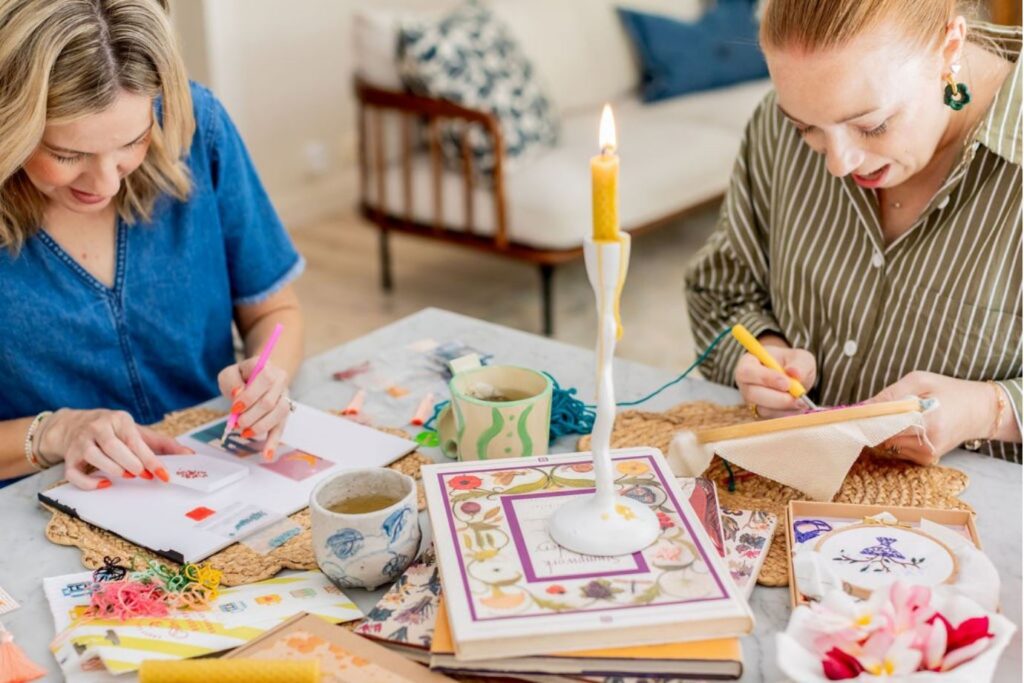
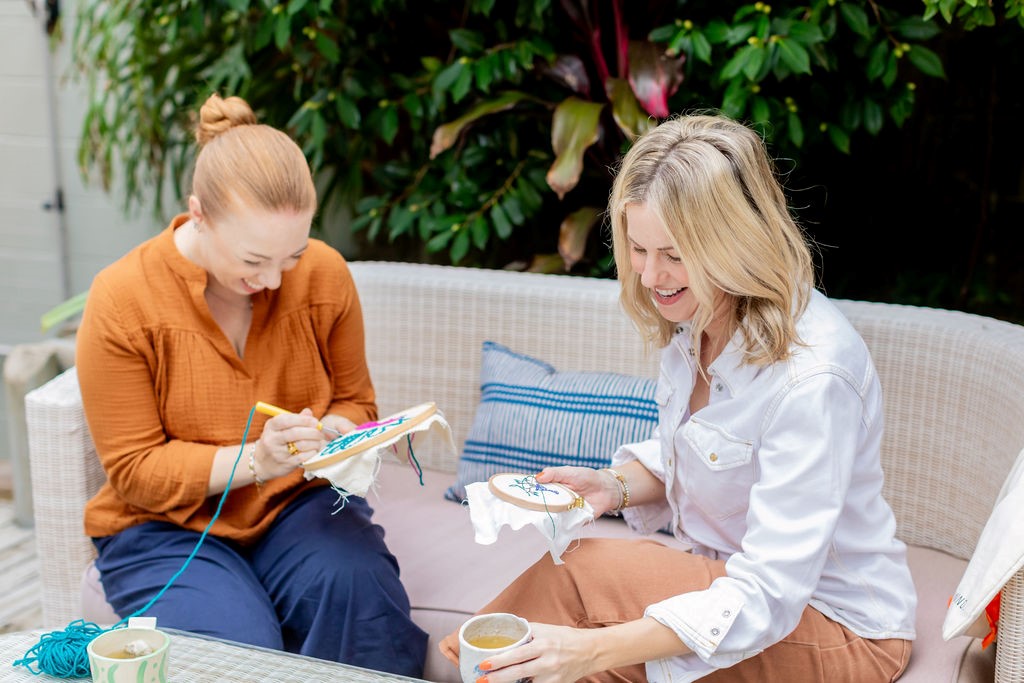
Research points to a surprisingly simple answer: activities like knitting, embroidery, cross-stitch, and painting, where your hands are busy and your brain can finally quiet. What these activities have in common is something most modern leisure doesn’t: they’re screen-free and require your full attention without demanding productivity.
Dr Kelly Lambert, a professor of behavioural neuroscience at the University of Richmond, knew creative hobbies possessed immense power yet were often dismissed as frivolous and unimportant, so she set out to prove otherwise. Her lab developed a series of findings they called “behaviourceuticals”—activities that function as drug-free medicine for the brain.
“I introduced the term to suggest that physical effort (as in creative hobbies) can activate reward and problem-solving areas of the brain and related neurochemicals in intentional ways,” Lambert explains.
“If you’re learning something new, then neuroplasticity may be enhanced. If the activity is done in the presence of others, then oxytocin is activated.”
The research is compelling.

- Forty-five minutes of creative activity reduces cortisol (the stress hormone) by 75%.
- A single creative session improves mood for up to 2 days.
- People who engage in artistic activities in middle age have 73% reduced risk of mild cognitive impairment.
Creative health scientist Katina Bajaj says these types of activities function as “strength training for our brains” and should no longer be considered “optional”.
“Physical, analogue creative expression isn’t a silly little hobby,” she explains.
“It’s a fundamental, essential component of our wellbeing. And without it, our brains are paying the price.”
So what actually needs to change?
Women have normalised strength training, protein targets, and recovery supplements. We’ve accepted that taking care of our bodies is non-negotiable. Yet creative hobbies—activities that maintain cognitive function, build neural resilience, and prevent mental decline—are still treated as optional indulgences.
We need to unlearn the idea that rest must be earned or justified. We need to recognise that doing something purely for enjoyment, with no productivity outcome, isn’t frivolous. And we need to treat creative engagement with the same seriousness we’ve learned to apply to physical health.
More time alone won’t solve the gender leisure gap. Not if that time is still filled with mental load, guilt, or the pressure to be productive. It will close when women give themselves permission to use the time they already have on their own terms.