
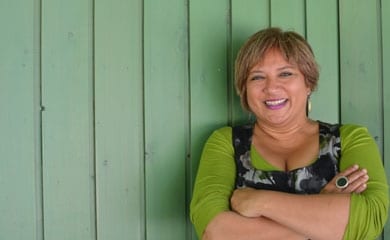

Growing up in Tanzania and Kenya, then living in many countries including Tonga, and New Zealand, sparked Ruth’s interest in the relationships between indigenous peoples, settlers and migrants and how they negotiate how to live.
Ruth became a nurse and worked in a range of areas including a methadone program, acute in-patient mental health units, community mental health, and crisis teams. However, it was her work in a post-natal ward that kindled a research interest in how institutions such as hospitals respond to and negotiate difference. Ruth’s PhD examined clinical interactions between nurses and migrant women and how these were linked to poorer health outcomes for migrant women.
Ruth has had many community leadership and governance roles and currently leads the research, policy and evaluation stream at the Centre for Culture, Ethnicity and Health, building a research program on the relationship between cultural competence and health care.
Growing up, what kind of career did you want to pursue?
I always wanted to be an explorer, I was born in Tanzania and grew up in Kenya before my parents migrated to Aotearoa, New Zealand. I was fascinated by the African landscape and wildness. I ended up becoming a nurse because I thought it was a way of making a difference with a very tangible and portable skill. The funny thing is that because of my nursing skills and then experience as an educator and a researcher, I’ve ended up travelling and being an explorer of life. And as a mental health nurse and therapist I’ve had the privilege of being able to explore life through the eyes of other people.
Who inspires you?
Firstly indigenous peoples, who have sustained their culture in the face of oppression. Secondly, people who migrate voluntarily or involuntarily, those who have the courage to leave the known to an unknown future. Thirdly, activists and those who put themselves on the line by taking action in the interests of a better world for us all.
Who (apart from you) is most surprised by your achievements?
I think my primary school teacher at St George’s Primary School in Nairobi, Mrs Arshad. She wrote in my school report when I was eight years old: “Ruth will do well, once she comes out of her reverie”. I think my reverie and being a dreamer have led me to imagine all kinds of futures and possibilities.
How have women helped shape your success to date?
My mother who returned to education at a later age has shown me the value of education, knowing my roots and maintaining connections with people. My dearest friend Ishbel, born in Glasgow has been my staunchest supporter. Her integrity, capability and capacity to be herself has been a constant inspiration to me.
What qualities do you most admire in a female colleague?
Generosity, the capacity to nurture the next generation and the ability to acknowledge those whose shoulders we stand upon. These are the qualities that I’ve learned to cherish and appreciate from my Maori and Pacific Islander women friends in Aotearoa New Zealand. These women have a beautiful, ego-less way of sharing space and acknowledging their foremothers and being completely able to get behind the next generation.
What’s the key to successfully balancing work and life?
Left to my own devices I would spend far too much of my time working or doing “jobs” around the house. The key is to have an exceptional partner! My love, Danny has been through the PhD journey with me, we were both working full time and studying part time and spent many years working on our PhDs over the weekend. We would go to my parents’ bach (holiday home) for a weekend and work on our theses and then catch some waves, cook some good seafood and drink sparkling wine. Our journey to Australia and the adjustment to life in a new country has been made possible and enjoyable through our ability to work hard and then enjoy the beautiful natural environment. We’ve carried on the tradition in South Gippsland where we now live.
If you had an afternoon to yourself, how would you spend it?
Walking along the fantastic coastal paths around Philip Island, so many spectacular sights and the chance to enjoy the elements. If Danny was with me, then waves would definitely be on the agenda.
Who do you regard as your mentor?
I have many, but I don’t think mentors have to be people who are always physically present, they can be people whose work you read and who shape your imagination. Being a scholar and academic I have many guides from afar who I have gotten to know personally in conversation with their writing. One example would be Sara Ahmed who has written about the feminist killjoy, a figure who ruins the moment because she disrupts something normative that is supposed to make us happy when it comes at the expense of women. This figure is a spoilsport, yet Sara calls to attention the way societies normalise the value of some people’s enjoyment over others. Sara and other feminist writers have helped me find a vocabulary for the politics that I am engaged in every day!

What personal attributes have you used to overcome adversity in your life?
Openness and optimism. I’ve also learned that being vulnerable is a form of strength and allows people to support you and see you as a human. As Leonard Cohen sings in Anthem:
Forget your perfect offering
There is a crack in everything
That’s how the light gets in.
If you could make one change to women’s lives, what would it be and why?
Gender equity and reproductive justice would be my two agendas and they are rather large. I guess gender equity would lead to reproductive justice.
What is the hardest part of your job?
I’m developing a research program with the Centre for Culture, Ethnicity and Health (CEH), Melbourne. It’s super exciting being located in Richmond and living in South Gippsland but a wonderful opportunity to enjoy the best of Victoria, the city and the country. The logistics of geography are challenging but it’s exciting to be developing an innovative research program outside a University.
What advice would you give to someone aspiring to success in your field?
Friendships and networks are important. It’s good to be genuinely curious and interested in other people. Enjoy yourself and be yourself.