
For decades, childbirth has remained one of medicine’s biggest paradoxes.
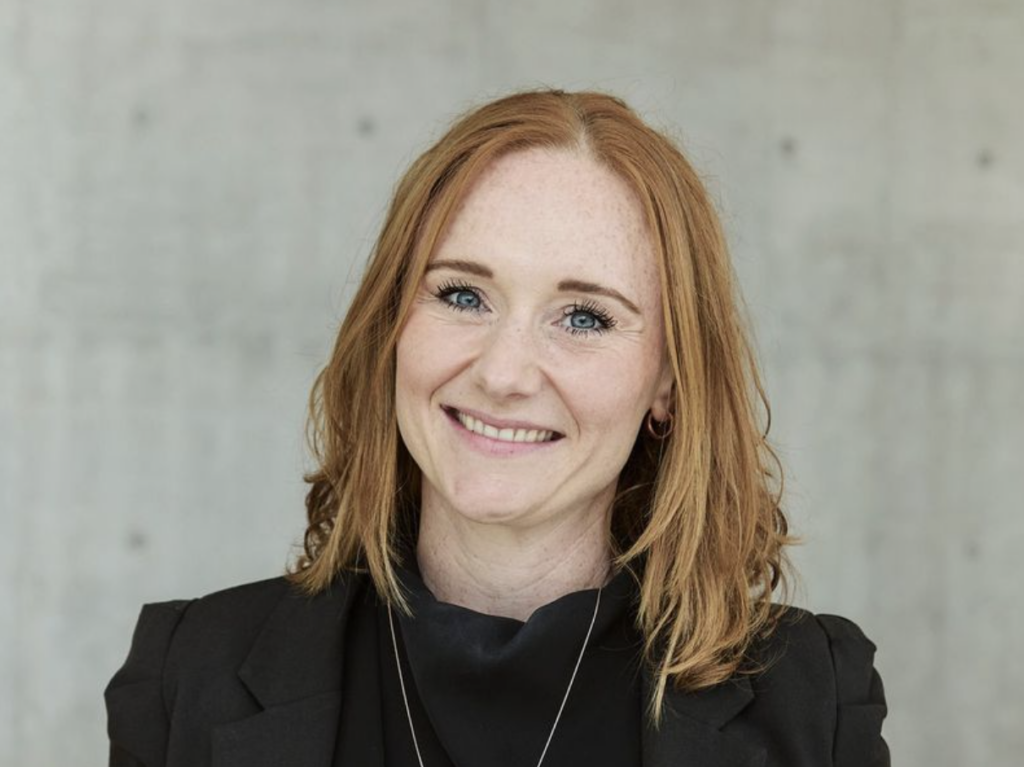
While healthcare has been transformed by data, AI and predictive technology, the way clinicians monitor mothers and babies during labour has changed remarkably little since the 1960s. For Tara Croft, CEO of Australian healthtech company Oli, that was a problem worth solving.
“I think we’ve accepted childbirth as inherently unpredictable for a very long time,” she says. “We’ve made advances across almost every other area of healthcare, yet in pregnancy and birth clinicians are still relying on technology that dates back to the sixties.”
“It’s not a reflection of clinicians—they are exceptional. It’s a limitation of the information available to them.”
Founded after Dr Sarah McDonald experienced the traumatic birth of her son in 2012, Oli has spent almost a decade developing a wearable device that uses AI to monitor maternal and fetal signals in real time. Rather than relying solely on fetal heart rate, maternal heart rate and contractions, the technology is designed to identify invisible warning signs before an emergency unfolds.
“For us, AI’s greatest value is helping clinicians see what they couldn’t see before,” Croft says.
“Instead of waiting for a complication to happen, clinicians are signalled to invisible risk before anything occurs, giving them more time to prepare, intervene or potentially prevent an emergency from unfolding.”
It’s an ambitious vision that’s beginning to attract serious backing. Oli has now secured more than $11.5 million in non-dilutive government funding, alongside more than $13 million in private investment. It’s a significant achievement in a sector where women’s health has long struggled to attract funding.
“We’ve worked incredibly hard for every dollar raised,” Croft says. “Everyone is touched by pregnancy and birth in some way. We all have a mother, are a mother or know a mother, yet historically it has been one of the most underfunded areas of healthcare innovation.”
She believes though, that attitudes are finally beginning to shift.
“Maternal health is not a niche healthcare issue—it is the foundation for societal health and one of the highest-return investments available.”
Indeed, globally, maternal mortality remains far higher than many people realise. Every day, the World Health Organization estimates around 800 women die from pregnancy-related causes, while postpartum haemorrhage claims the life of a mother every seven minutes, despite most of those deaths being preventable with earlier intervention.
“We can do better,” Croft says simply.
Beyond childbirth, Croft sees AI reshaping women’s healthcare far more broadly.
“Women’s health has been chronically under-researched and underfunded for so long that we have a unique opportunity to leap from analogue to AI in one fell swoop.”
She believes the next decade will see healthcare move away from isolated appointments and snapshots of data towards continuous, personalised monitoring.
“The future will be built around continuous understanding,” she says. “Women’s health is far broader than menstruation, maternal health and menopause. Cardiovascular disease, autoimmune conditions, osteoporosis and dementia are all examples where sex-specific biology influences outcomes. AI provides an opportunity to better understand these differences and deliver more precise and effective care.”
But there’s still a long road ahead.
“It’s definitely changing, but there’s still a long way to go. Female founders and women’s health companies continue to receive a small proportion of overall investment” despite them being “the next frontier.”
As Oli enters its final clinical trials across Australia and the United States, Croft is already thinking beyond the company’s first application in postpartum haemorrhage. Future uses include predicting fetal distress, uterine rupture and labour progression.
Ultimately, though, the technology isn’t the point.
“We’d love to see Oli in the hands of every clinician, every maternity team and every woman around the world, regardless of where she lives or her circumstances.”
As for the broader vision for how technology continues to shape healthcare?
“To date, the room has been built around the machine, but it’s time the machine disappeared into the background while still being the signal the room can trust.”
“Every birth should belong to the people in it—and that’s the future we’re working towards.”