
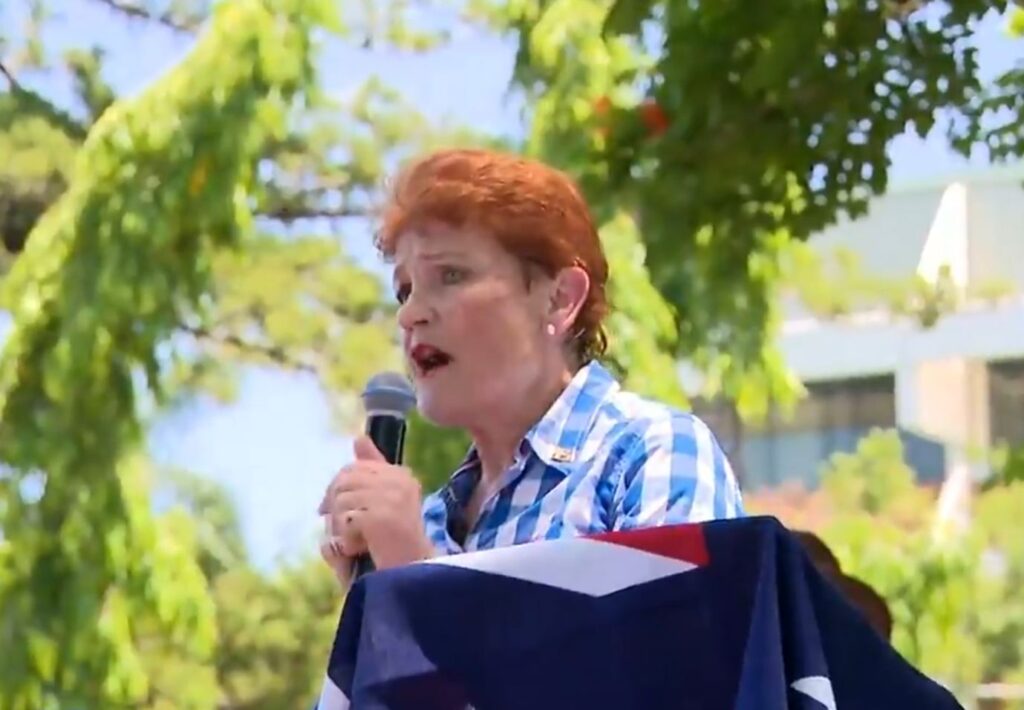
Pauline Hanson has moved ahead of Anthony Albanese as the preferred prime minister, the latest national polling shows, while One Nation now has a higher primary vote than Labor.
The surge in popularity for the party sees One Nation’s primary vote sitting at 29 per cent, while Labor sits just behind at 28 per cent. The Coalition has continued to collapse to 20 per cent, its lowest result yet. The poll, which took place in the wake of the budget in early June, shows Hanson (33 per cent) leading Albanese (29 per cent) on the preferred prime minister measure by four percentage points.
One Nation is often described as a right-wing populist party, with anti-immigration, and often racist rhetoric, dominating its messaging. But what else does the party actually stand for? And how does its parliamentary voting record match up? Beyond the headlines and polling momentum, One Nation’s parliamentary voting record reveals a much broader agenda, one that has implications for workers, women, LGBTQ+ Australians, Indigenous recognition and access to healthcare.
Alongside its anti-immigration rhetoric, which has dominated headlines ever since Hanson was first elected to parliament in the 90s, the party is also vehemently opposed to any form of climate action. The party is also proving to be a growing threat to Australians’ access to abortion healthcare, especially with Barnaby Joyce now onboard, recently fronting a rally in Sydney demanding tighter controls on abortion.
One Nation has advocated for the complete abolition of the Therapeutic Goods Administration (TGA) as part of its agenda to “slash government waste” with a similar approach to Elon Musk in the US. And we mustn’t forget Hanson’s decision to appoint a convicted rapist as its campaign director ahead of the federal election.
Meanwhile in 2024, Hanson was told to remove an Israel-themed scarf that went against the rules of the Senate.
Absent from key sitting days
One Nation’s rise in the polls comes amid criticism that Hanson has been increasingly absent from the Senate. Labor claimed recently she had been absent from 88 per cent of Senate estimate hearing days over the last decade.
It prompted Liberal Senator James Patterson to say: “She’s paid very well to turn up and ask questions on behalf of her constituents. For an oppositional crossbench Senator, Senate estimates is the place where you can do some of your best work.”
“For her to not bother showing up while still taking a salary, for that I think it reflects very badly on her and her commitment to her job,” Patterson said.
Hanson brushed off the criticism, saying he time was far better spent speaking with and listening to Queenslanders than asking questions to bureaucrats.
She has also missed a number of key sitting days since the 2025 election, including when she attended a Conservative Political Action Conference in Texas. She also received a seven-day suspension from parliament after disrupting the chamber with her time-wasting, burqa-wearing stunt.
Minimum wage

Despite positioning itself as the party looking out for ordinary Australians, One Nation has been opposed to raising wages for Australia’s lowest paid workers. As the Fair Work Commission awarded a 4.75 per cent pay increase to minimum wage earners this month, Hanson said she was opposed to the change. Over the years, Hanson has consistently voted against improvements to workers’ conditions from penalty rates, job security, to criminalising wage theft.
Multiculturalism and immigration
Opposition to immigration has been one of the party’s defining positions since its founding. Hanson famously warned Australia was being “swamped by Asians” in her maiden speech and One Nation continues to advocate significantly lower migration levels. More recently, she has warned Australia is being “swamped by Muslims”.
Climate
Pauline Hanson has denied climate change is man-made, and has long advocated for Australia to scrap net zero and build more coal-fired plants. She generally supports nuclear energy and wants to build a nuclear reactor in New South Wales. Hanson wants Australia to follow in the footsteps of the US and remove itself from the Paris Agreement on climate action.
Gun ownership
Barnaby Joyce, who made the switch from the Nationals to One Nation, voted against new gun laws introduced by the government early this year following the Bondi Beach terror attack. Hanson was not in the Senate chamber when the vote took place.
One Nation also voted against the hate speech laws introduced after the Bondi attack, citing concerns over free speech.
Housing
One Nation’s housing priorities are closely tied to its agenda on immigration. The party wants to stop the sale of property to non-residents and non-citizens, and slash immigration by 130,000 visa holders. This is despite research that shows migration is not the primary driver of the housing crisis. Hanson has generally voted against other measures that are aimed at improving housing affordability like incentives for first home buyers, and investments in social and public housing.
There was recent confusion over the party’s policies on housing when multiple members misspoke or could not answer questions on it, forcing Hanson to intervene.
Abortion rights
While abortion is still considered a conscience vote inside One Nation, the party has advocated against current abortion laws in Australia, with its policy platform aiming to roll back access, reinstate a doctor’s right to conscientious objection, and limit gestational timeframes.
LGBTQ+ rights
Hanson declined to vote for the same sex marriage bill that passed in 2017 and has consistently voted against LGBTQ+ rights, including access to gender-affirming healthcare for transgender children and young people.
Hanson has repeatedly opposed expanding legal protections for LGBTQ+ Australians. She has also publicly opposed same-sex adoption and made comments linking marriage equality to broader societal changes she viewed negatively.
Indigenous recognition and reconciliation initiatives
One Nation has opposed a range of Indigenous recognition measures over the years. The party campaigned against the Indigenous Voice to Parliament and Hanson has frequently criticised policies she argues provide special treatment based on race.