
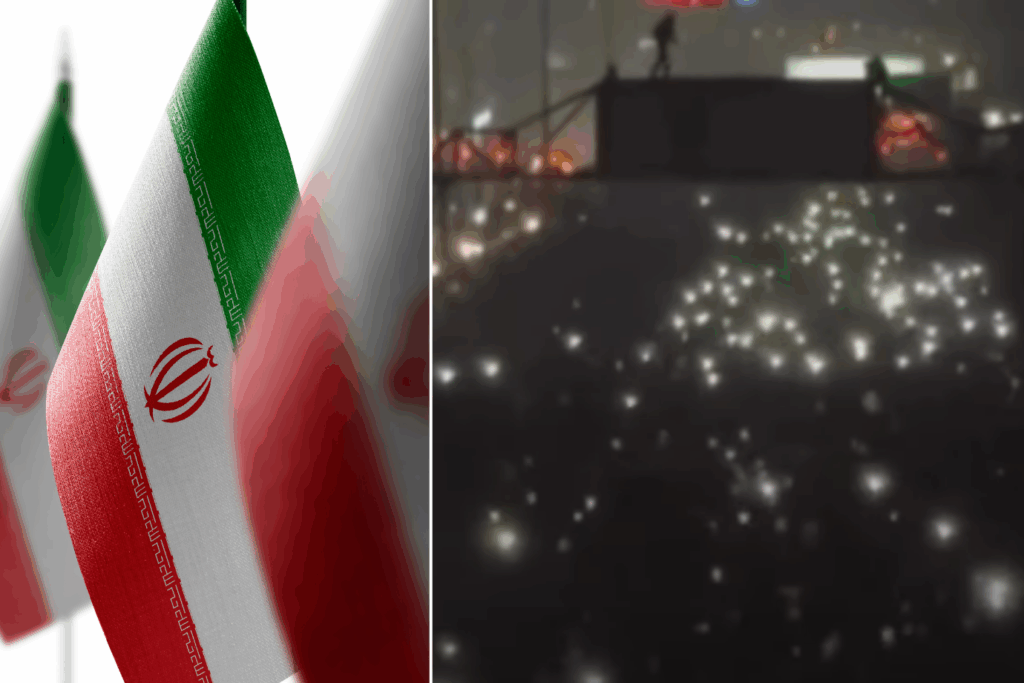
Protests in Iran have profoundly escalated in recent weeks, with an economic crisis fueling an ongoing anti-government movement.
Experts are calling the unrest the most destabilising period the Iranian regime has faced in years.
The demonstrations began on 28 December over a sudden dip in the value of the country’s currency, with tens of thousands of protesters taking to the streets, shouting slogans like “death to the dictator”, referencing the Iranian supreme leader, Ayatollah Ali Khamenei.
In response, on Thursday night, Iranian authorities shut off internet and mobile access across the country. This cut off the Iranian people from the rest of the world, which many rights groups have condemned as an avenue to carry out a brutal crackdown against protesters.
Since the protests began, more than 2,500 people have been killed in the protests, with more than 90 per cent reported as demonstrators, according to the US-based Human Rights Activists News Agency (HRANA).
Meanwhile Iran International, a group of journalists based in London, is claiming the death toll is as high as 12,000. They say the events happening are the “largest killing in Iran’s contemporary history”.
Local doctors in Iran are saying hospitals and emergency wings are being overwhelmed with protesters who have been shot. They also say the death toll is likely much higher than the numbers being reported amid the internet blackout.
Notably, the types of injuries being seen by medical staff are leading local doctors and rights groups to believe that authorities are deliberately targeting the eyes of protesters.
The Iranian regime’s militia forces, the Basij, enforce the Islamic Revolutionary Guard Corps (IRGC). In the past, they’ve been accused of grave human rights violations, including torture and rape.
Human rights lawyer Gissou Nia from The Atlantic Council has said that while the economic crash was a catalyst for the protests, the core issue lies in a “profound dissatisfaction with the Iranian regime and the desire for that regime to disappear.”
This dissatisfaction with the Iranian regime was evident in Iran’s 2022 Woman, Life, Freedom movement as well.
How is the US involved?
US president Donald Trump has threatened numerous times that Washington could intervene in Iran with the military if there is a violent crack down on protesters.
On Wednesday, it was reported that some US personnel had been advised to leave the United States military’s al-Udeid Air Base in Qatar, the largest US base in the Middle East. This heightened fears of a US strike and potential retaliation from the Iranian regime.
This wouldn’t be the first time Trump has employed military force in Iran. In June 2025, the US bombed three Iranian nuclear sites during Iran’s 12-day war with Israel. The US strikes followed more than a week of Israeli strikes on Tehran’s military and nuclear sites.
Since then, the US military presence in the Middle East has decreased, with military craft being moved towards Latin America. However, the US still does have a broad network of military sites in the Middle East.
Trump has said the US “will take very strong action” against Iran if the regime starts to execute people. He has also urged protests to continue.
“Iranian Patriots, keep protesting – take over your institutions!!! … help is on its way,” Trump said in a post on Truth Social on Tuesday. This comes a day after the White House press secretary said airstrikes were among “many, many options” the US president was considering.