
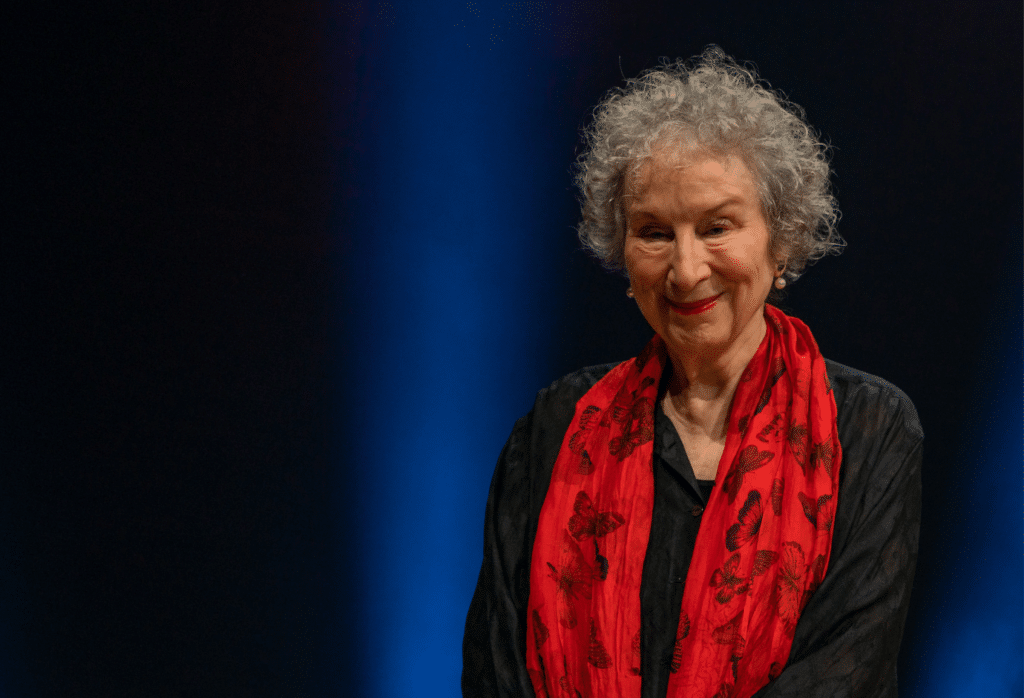
Literary icon Margaret Atwood has written a powerful resistance letter to the women of Afghanistan, urging them to preserve their dignity and hopefulness in the face of the Taliban’s growing authoritarianism regime.
The two-time Booker winner and celebrated Canadian author implored Afghan women to document what is happening and preserve what they have achieved: “A certificate, a university degree, an award you have received.”
“Keep these records close to your heart,” she wrote. “The Taliban cannot take away from you your thoughts, your story, your words, your pen. Don’t forget who you are, what you’ve done, and the vision of possibilities that keeps you going despite all the difficulties.”
The letter was written at the request of Zahra Nader, Editor-in-chief of ZanTimes, an Afghan women-led media in exile, who explained in an editorial how she had reached out to the prolific writer.
“What we need now is visible, global solidarity,” Nader said.
“When a voice heard around the world speaks directly to Afghan women, it does more than make a statement. It tells a young girl in Kabul, Herat, Helmand, Badakhshan or Bamyan that she is not invisible. It tells her that the world sees what is happening. It reminds her that history is not finished.”
Atwood’s letter was published in ZanTimes, and compares the lives of Afghan women to the daily realities of living in the Republic of Gilead, Atwood’s imagined totalitarian state in her most famous book, The Handmaid’s Tale, which was published in 1985.
“An important fight is to remember history – who we were, the things we did, the dreams we had – and pass it on to the rising generation, to the girls and boys and kids who are being born in the Taliban’s republic of Gileadin Afghanistan,” Atwood continued.
She accused the Taliban of trying to erase women’s intellectuality and numb their capacity to think, and “to envision a better future for women.”
“That is what the Taliban are afraid of,” she added, before encouraging women to continue to write and run secret schools and online schools to educate themselves and the next generation of women.
“I am sending you my best wishes for solidarity, strength, and support, and for your fight for basic human rights,” she concluded. “Basic human rights include women – they are full human beings, which some consider a radical idea.”
Nadar echoed the author’s words, explaining that reading The Handmaid’s Tale several years ago left her feeling “an unsettling familiarity.”
“The lives of women in Gilead did not feel like distant fiction; they echoed the first Taliban regime my mother’s generation had witnessed,” she wrote.
“I did not imagine that, years later, women of my own generation would again find themselves living under a system that so closely resembles that dystopia.”
Nadar urged supporters to champion the rights of Afghan women by reading the work of Afghan women journalists and writers on Zan Times and becoming a monthly subscriber to the publication.
“Solidarity should not be only symbolic,” Nadar said. “We are building a sustainable, reader-supported newsroom so Afghan women can continue to report, investigate, and tell their own stories. That future depends on committed readers.”
Financial aid from readers will ensure that journalists can continue to work, and more Fellowships can be awarded to burgeoning writers.
You can Invite your friends to read Zan Times.