
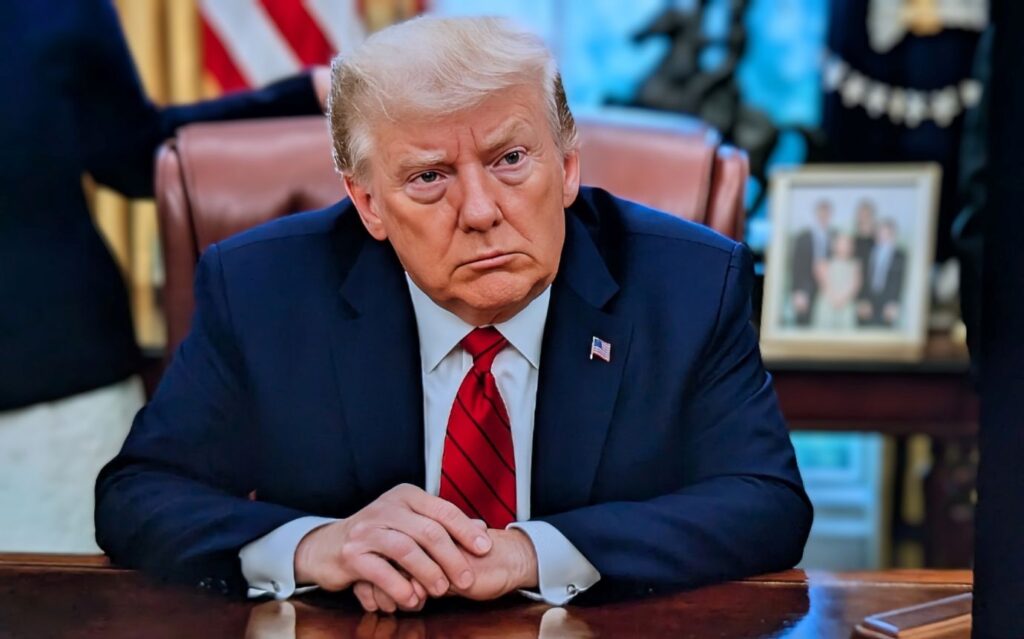
There is a particular kind of awkward that only comes from loudly declaring you do not need anyone, only to spend the following week ringing doorbells asking for help. Most of us experienced this in school. Donald Trump is experiencing it right now, on the world stage, in front of everyone.
Here is the situation. Three weeks ago, the United States and Israel launched strikes on Iran. The war is now entering its third week, with Iran retaliating by putting a virtual chokehold on the Strait of Hormuz, which is the narrow waterway through which one-fifth of the world’s oil exports normally pass. About 1,000 oil tankers are currently stranded, and oil has crept past $100 a barrel, and petrol prices are biting ordinary people everywhere from Melbourne to Manchester.
So, Trump, hat metaphorically in hand, turned to his allies. He called on China, France, Japan, South Korea, the UK, Australia and others to send warships to keep the Strait open. He took to Truth Social, diplomacy’s most prestigious venue, to announce that countries should send warships “in conjunction with the United States of America.” Then he hopped on Air Force One and said, with zero apparent self-awareness: “We will remember.”
And the world said: yeah, nah bro.
Japan, South Korea, Britain, Australia and Germany all declined or stalled. China, unusually, stayed silent despite being a US rival. Luxembourg’s Foreign Minister Xavier Bettel perhaps best captured the vibe of the entire international community when he said simply: “Blackmail is not what I wish for.” Germany’s Foreign Minister was equally direct: “Will we soon be an active part of this conflict? No. We will not participate in this conflict.”
These countries, including Australia, despite being US allies, have been hit with steep tariffs by the Trump administration over the last year. Experts have pointed out that if the tables were turned, Trump would almost certainly demand something in return for assistance. Which is a fair point, really. But what would allies get in return for providing assistance, because a ‘safer’ world cannot be guaranteed, as past wars tell us no.
There is also the small matter of process. American, European and Asian diplomats are growing increasingly frustrated with the Trump administration’s refusal to use traditional diplomatic channels. You know, the channels that exist specifically for situations like “we have started a war and now need everyone’s help.” Remarkably, when diplomats were asked who was actually leading the allied outreach effort, one US diplomat replied simply: “DJT?”, suggesting the president was personally running the whole show via social media. Which explains a lot.
Then came the plot twist nobody expected but everybody deserved. Joe Kent, who led the National Counterterrorism Center and was a top aide to intelligence director Tulsi Gabbard, has overnight become the first senior Trump administration official to resign over the war. Kent, an Army Special Forces veteran with 11 combat deployments to the Middle East and a lifelong Republican and devoted Trump loyalist, said he could no longer “in good conscience” support the war, stating plainly that Iran “posed no imminent threat to our nation” and that the war was started “due to pressure from Israel and its powerful American lobby.” He also revealed that his own wife had been killed in Syria in a conflict he now described as one “manufactured by Israel.”
Trump’s response? He called Kent “weak on security” and said it was “a good thing” he’d left. Classic Trump.
Here is what those of us outside the MAGA media bubble have known for some time: diplomacy exists for a reason. Allies exist for a reason. You cannot spend a year humiliating partners, slapping them with tariffs, leaking their private conversations, and calling their leaders fools and then expect them to sail their warships into your war on a weekend’s notice.
The world’s people are watching civilian casualties in real time on their phones, paying $2.60 a litre at the bowser, and asking the question that always comes eventually: What exactly is this for?
Trump is, as my kids would say, currently in the FAFO phase of foreign policy. And by all accounts, he is finding out.