
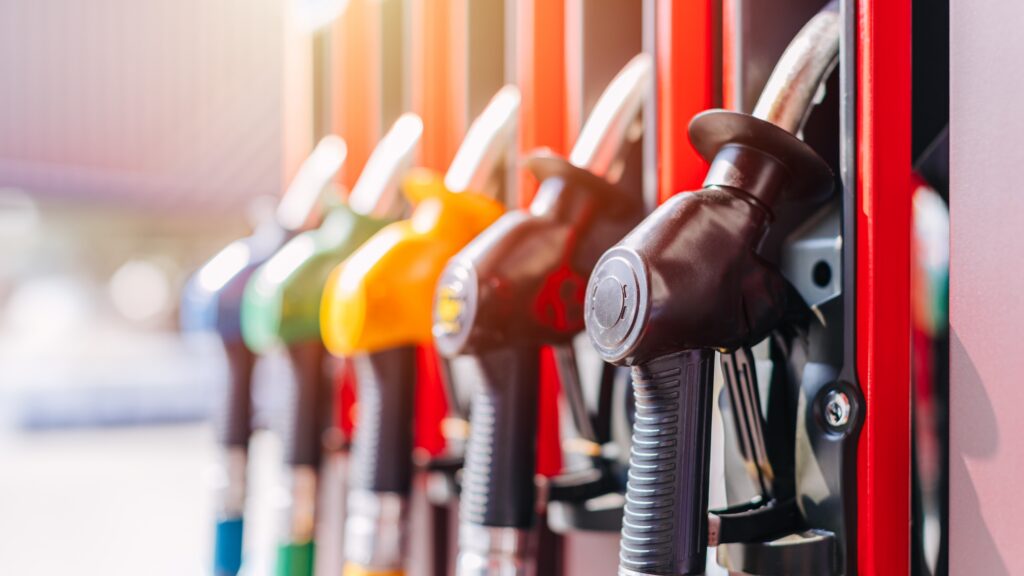
Women on lower incomes have long been described as the “shock absorbers of poverty” during an economic crisis.
And we’re now seeing how that pans out internationally amid surging fuel prices.
The fuel crisis gripping much of the world is often presented as an economic story, even more than as a geopolitical one and a consequence of war.
But it is also a gender story, given how such a crisis is and will impact women, given the gender pay gap, unpaid work commitments, the flow-on added impacts on the cost of essentials including food, and the fact women are far less likely to own more fuel-efficient vehicles or EVs.
Petrol prices hit a record-high average of $2.38 a litre on Wednesday, as the US-Israel war with Iran shows few signs of letting up. More than 500 petrol stations across Australia were without fuel, according to Energy Minister Chris Bowen on Thursday.
Prices are surging globally amid supply disruptions from the war. While countries are contending with supply issues — such as creating four-day school weeks in Sri Lanka and putting government workers on four-day workweeks in the Philippines — they must also contend with how hard a spike in petrol prices will hit those already struggling with the cost of living.
So, how does it impact women in Australia?
First and foremost, women earn less, which means fuel costs take a bigger bite out of their weekly earnings. That $50 fuel bill hits differently when comparing the average $1,200 full-time salary for a woman to the $1,350 one for a man. And it hits much harder again when comparing a part-time salary (with the vast majority of the part-time workforce being female) to that of a full-time working man.
Now, further consider the challenge facing sole-parent households, the vast majority of which are headed up by mothers. Especially those in regional and remote areas.
Women also take on most of the unpaid driving: the school run, trips to doctors and health checkups, short drives to the supermarket, and visits to an elderly parent. These trips can’t simply be reduced by working from home, nor can they be billed back to an employer.
Meanwhile, women in Australia and globally typically take on the bulk of the uncare responsibilities and are therefore less able to increase paid work hours to immediately cover added expenses.
Meanwhile, the care sector in Australia, which is overwhelmingly dominated by women, typically requires day-to-day transport for workers to get to aged care facilities, hospitals, early childhood education centres, schools and community services.
As Anglicare Australia found, petrol prices and long distances are already interrupting access to support services in regional areas, with fuel prices hindering care workers’ ability to reach their clients. It’s creating a cycle where “those most in need of support are also those least able to reach it.
And then there is the added impact on food security, which can affect the health and well-being of mothers and babies.
Professor of Indigenous Health Yvette Roe from Charles Darwin University has raised concerns about Aboriginal women and girls across remote Territory communities who experience some of the poorest sexual, reproductive, maternal, infant and child health outcomes in Australia.
“Mums and babies who require regular check-ups, antenatal care, and access to nutritious food and prenatal vitamins are most at risk of poor health outcomes driven by unsustainable fuel prices. Poor health outcomes for babies increase the risk of illnesses, cognitive development and chronic disease in adulthood.”
Professor Roe notes that 46 per cent of household incomes are well under $500 a week in these remote areas, compared to 26 per cent in non-remote areas.
“While fuel prices have doubled recently, and are predicted to rise further, this burden is set to be passed onto food and consumables for remote communities. As mothers and young families’ costs rise, there is now concern that remote areas are facing starvation and a lack of sanitary and medical items if relief cannot be provided.
“We can expect to see health outcomes plummet if mothers aren’t supported with financial relief to access health care, food, and medications through this period.”
Australia’s most vulnerable need urgent support to contend with this immediate crisis.
And this entire saga serves as a good reminder of why the transition to clean energy and reducing dependence on volatile oil and gas markets is a women’s economic security imperative. It’s also a reminder of the unintended consequences of war.