
13 seasons, and there’s still a familiar script that plays out every year on Married At First Sight.
A handful of men arrive with grossly regressive views. They pretend control is “leadership”, dominance is “masculinity”, and in this year’s case one husband didn’t even attempt to mask his outright beliefs that inferior women should be submissive.
Ah, Tyson, what a treat he was.
The outrage follows. The clips go viral, and discourse explodes.
But something else is playing out on the show that Nine producers are making far less visible.
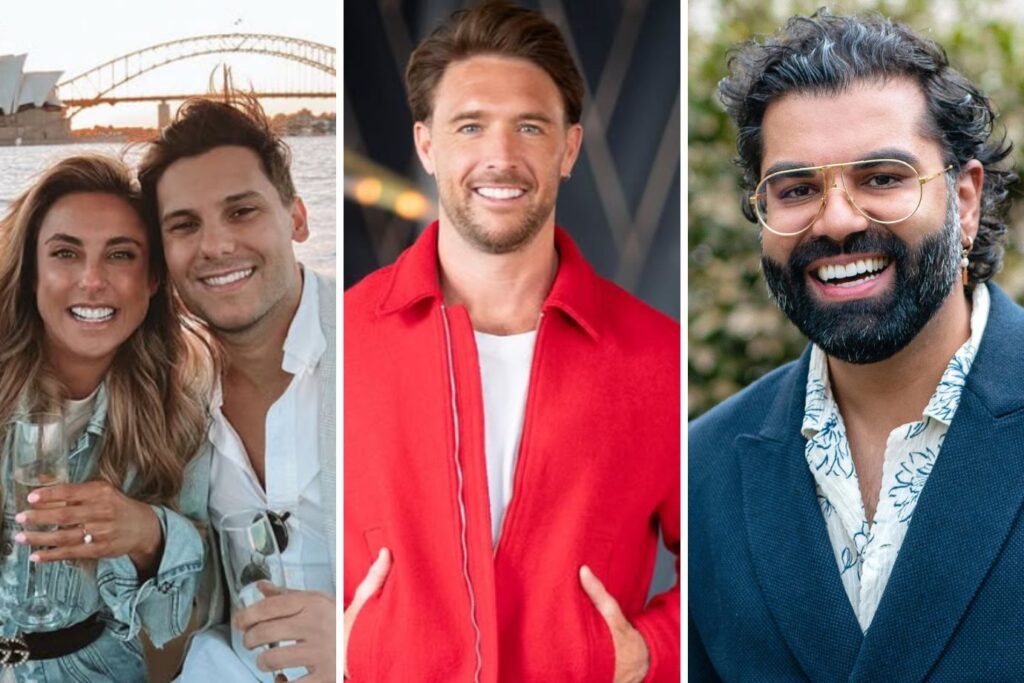
This season, participants like Grayson McIvor were actively pushing back.
For, in the mix of morally depraved individuals starred in every season, there are a smattering of seemingly good, smart, decent humans who genuinely hold hopes for finding love through the show.
As a longtime viewer (sue me!) I’ve been curious about what it’s like to be these people. Especially to be a man with progressive values thrust into an “experiment” with men like Tyson Gordon, Dean Wells, and Harrison Boon.
Are they really just sitting idly back and watching sexist, racist, homophobic grenades being thrown?
According to McIvor, that’s absolutely not the case. He shared with me that he came to blows with Tyson several times over his sexist views but the arguments were never aired.
“We had some huge blow-ups, none of it shown”, he explained.
It begs the question then, why does Nine want viewers to believe that good men are complicit and misogyny goes unchecked? Wouldn’t it be more powerful for impressionable young viewers to see a stereotypically masculine man like Grayson, hold Tyson accountable?
Instead, what audiences were left with was a steady stream of what he describes as “toxic behaviour.”
The silence that matters more than the drama
There’s a tendency to frame shows like MAFS as a clash between “good guys” and “bad guys”. But the more uncomfortable truth sits somewhere in between. The real failure isn’t just regressive men but the silence around them.
“How do you sit there and just not say anything?” McIvor queries.
Former participant Johnny Balbuziente experienced that same tension during his season, despite ultimately finding love with his now-wife Kerry.
“Every single day. Reality TV thrives on explosive, dramatic moments, but healthy relationships thrive on effective communication.”
For Balbuziente, the environment itself worked against emotional accountability.
“There was a massive tension between trying to practice emotional accountability in a situation where storyline thrived on the exact opposite”.
Toxic masculinity stems from fear
If there’s one idea that cuts through both men’s experiences, it’s a rejection of the outdated “manosphere” archetype that MAFS continues to amplify.
“Toxic masculinity, for me, is a weakness” says McIvor. “It’s a fear of being vulnerable, a fear of allowing yourself to be equal.”
Balbuziente echoes this, framing it not as a new model of masculinity, but a return to something more basic.
“It’s not introducing a new ‘model of masculinity’, it’s just being a decent human. Most people are exhausted by the ‘alpha’ image. It’s outdated, it’s one dimensional, and it’s dangerous”, he adds.
It doesn’t end when the cameras stop rolling
The behaviour amplified on MAFS doesn’t exist in a vacuum, and it doesn’t stay contained to the show.
Violence prevention advocate Tarang Chawla has experienced that firsthand, including being targeted repeatedly online by former MAFS villain, Dean Wells.
But as Chawla points out, focusing on individual insults misses the bigger picture.
“The issue is less about repeating every outrageous thing he has said and more about this pattern… provocation, casual misogyny and ego masquerading as insight.”
He places Wells within a broader ecosystem in which reality TV both feeds and draws from.
“He’s part of a broader culture who rely on being inflammatory to stay relevant and the algorithm keeps rewarding it.”
The platform problem
The question, then, isn’t just why these men exist but why they’re repeatedly platformed online, in podcasts and by Nine producers.
For Chawla, the answer is as simple as it is uncomfortable.
“They know that conflict sells. Commercial networks are selling ad space and for them this type of content reads as dollar signs.”
But the impact isn’t just drama, and in a world where vulnerable teen boys seeking self-help are being funnelled into the manosphere by algorithms in just 23 minutes, it’s a huge worry.
“It’s not just harmless drama, when they normalise ideas about relationships and power that show emotional immaturity, manipulation and entitlement as behaviours men should embody”, Chawla says.
“If a show repeatedly gives oxygen to men with regressive attitudes, it can’t pretend that it’s not part of the broader cultural impact.”
And the data backs that concern.
“31 per cent of Gen Z men globally think their wives should ‘obey’ their husbands”, says Chawla, referencing a recent Ipsos study of 23,000 people globally.
The missed opportunity
What makes this all the more frustrating is that the alternative already exists, it’s just not what gets airtime.
“There’s a platform there [through MAFS], and it’s really disappointing it’s not being used to support women”, notes McIvor.
Balbuziente adds that he holds “zero tolerance for men who treat women like they are a supporting act.”
“For our daughters, our partners, show up and speak up. Equality isn’t aspirational, it’s the baseline.”
What we’re really watching
There’s a convenient narrative that shows like MAFS are simply “reflecting society” but as Chawla puts it: “They don’t just mirror culture, they help shape it.”
And right now, what’s being shaped is a distorted version of masculinity where the loudest, most inflammatory voices dominate, while quieter, more constructive ones are sidelined.
Why does Nine keep spoon feeding us the worst of the worst when better exists?
Perhaps because they’re just not the ones driving ratings.
And until that changes, we’ll keep having the same conversation every year, asking why no one spoke up, when in reality, some of them already did.