
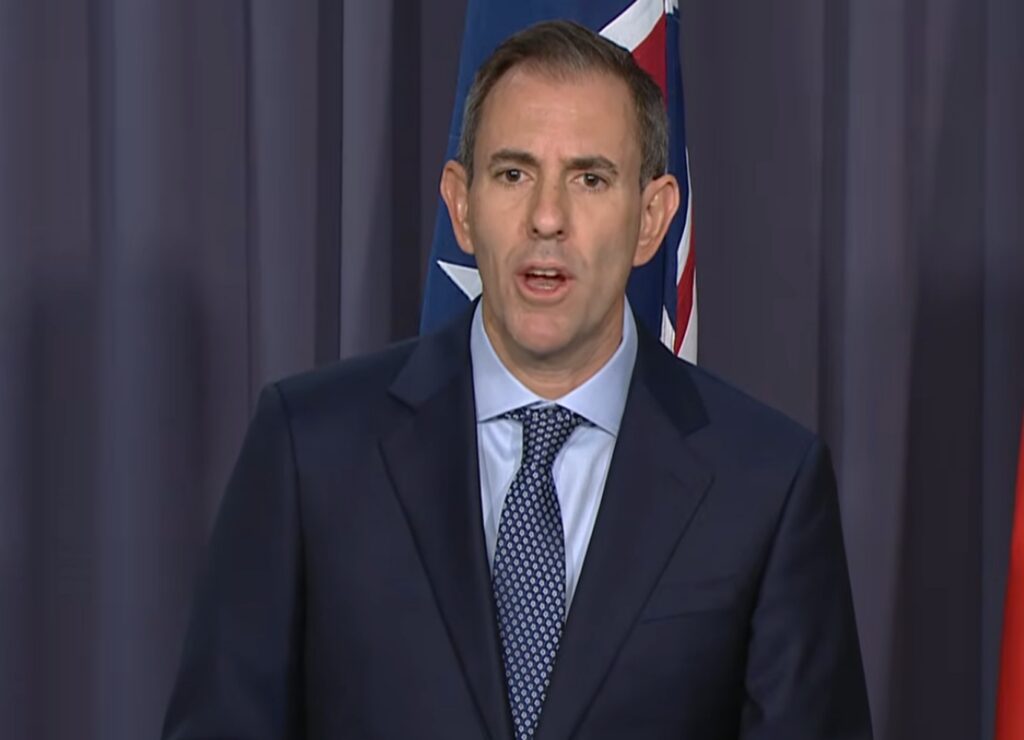
The federal budget will be handed down by Treasurer Jim Chalmers on Tuesday night, with the government expected to lock in changes to the capital gains tax discount, negative gearing and tax on trust funds.
While some of these measures will rein in provisions that favour older generations and property investors, the question remains how far the government will go to target intergenerational fairness, as it has said it wants to do.
Rising inflation and the Iran conflict has upended the energy market in recent months and may leave the Albanese government treading cautiously.
While Chalmers has said he believes this will be his most ambitious budget yet, the government has ruled out higher taxes on gas exports, a politically popular policy that has been championed by independent senator, David Pocock.
Pocock has been pushing for a 25 per cent tax on all gas exports as a way to raise around $17 billion per year in revenue.
A policy for higher taxes on gas exports is widely supported by the Australian population and has been supported by politicians from all sides of politics, including independents, the Greens, One Nation, and Labor backbencher Ed Husic.
As budget pressures force the government to make tough changes to services like the NDIS, many Australians are asking why higher taxes on gas exporters is not being considered. Especially with the Coalition as limp and toothless as its ever been and as Labor holds a huge parliamentary majority.
As Pocock has pointed out, Australians pay more tax on beer than international gas companies pay on the gas they export from Australia. Australia is one of the world’s largest gas exporters.
Below, we take a look at what we can expect from tomorrow’s budget.
Tax reform
The budget is set to feature changes to the capital gain tax discount. It is expected to be equal to the amount of inflation, or a flat discount change from the current 50 per cent to 25, 30 or 35 per cent.
Changes are also expected for negative gearing. The government may choose to abolish it for property investors entirely, or cap the number of properties that can be negatively geared.

It is also expected there will be changes to discretionary trusts, although details are not confirmed, some reports have suggested the government will bring in a 30 per cent minimum tax rate for income on discretionary trusts.
The electric vehicle fringe benefits tax concession will be scaled back from April 2027, the full discount will only apply to EVs costing $75,000 or less, saving the budget $1.7 billion over four years.
Tax deduction, receipt free
Approximately 6.2 million people will be able to claim an instant tax deduction of $1,000 for work-related expenses without needing receipts. This lifts from the current $300 threshold.
Fuel security
In response to skyrocketing fuel prices, the government is expected to deliver a $10 billion package to provide financial support for the supply of fuel and fertiliser and to fund an onshore field security reserve.
NDIS
As already announced, major structural reforms to the NDIS are planned, with the government introducing legislation aimed at reducing fraud, tightening eligibility, and improving oversight of providers and payments. You can read Women’s Agenda‘s previous reporting on the gendered impact of the NDIS changes here.
Aged Care
A $3 billion investment in aged care is expected, including funding for 5,000 additional residential aged care beds annually, with a focus on Australians with limited financial means. Advocates say a new aged care home needs to open every three days in Australia to meet the current demand.
The government has also committed to the delivery of 20 additional Specialist Dementia Care units.
Health
The government will reduce the private health insurance rebate for Australians over 65, framing the change as part of its tax reform agenda and to use it to pay for improvements to aged care.
Defence
The government announced defence spending will rise to three per cent of GDP by 2033, backed by a $53 billion boost over 10 years.
CSIRO
The Albanese government is expected to boost funding to the national science agency CSIRO by $387.4 million. It comes after hundreds of recent job cuts.
What about new policies for women?
There has been limited public discussion about any new funding or policies that will be delivered to support women’s economic security, gender equality or violence prevention in this budget. Instead, the government is expected to continue funding several policies it announced previously.
Pay increases for aged care workers and an increase in childcare award rates, sectors where the majority of the workforce are women, are flowing from commitments made in the 2025–26 budget.
Investments to support women’s safety and deliver the National Plan to End Violence Against Women and Children 2022–32 are expected to continue.
Funding has been committed this year for immediate, targeted measures to improve victim and survivor engagement with the justice system. The government also announced a substantial women’s health package in early 2025.
Advocacy organisation No to Violence has today called on the government to invest $1.01 billion over four years to lift the domestic, family and sexual violence frontline out of a state of crisis and increase investment in interventions for men using, and at risk of using, domestic and family violence, among other measures.