
Australia needs a new aged care home to open every three days. We’re not even close. And when the beds run out, daughters will.
This week, Health Minister Mark Butler stood at the National Press Club to announce a landmark NDIS reset. Tucked inside it, almost as an afterthought, was a $3 billion aged care investment and a pledge to support 5,000 extra beds a year. It sounds like action. Here’s the problem: we need 10,000. Every year. For the next twenty years.
We are not building our way out of this. And when the system buckles, as it already is, the weight will fall, as it always does, on women.
Wherever you are reading this – at your desk, in the school pickup line, on the couch after everyone’s finally asleep – stop. The system you are counting on to catch your family is full. And the one you are counting on to catch you won’t be there either, not at this rate.
Australia’s aged care system is already at capacity. Last year we needed roughly 10,000 net new beds to open. We got 800. Hospitals have people waiting up to 200 days for a residential bed that doesn’t exist. Occupancy across the sector has surged. And we have been talking about the baby boomers arriving as though they are still on their way. The first one turns 80 this year. They’re here.
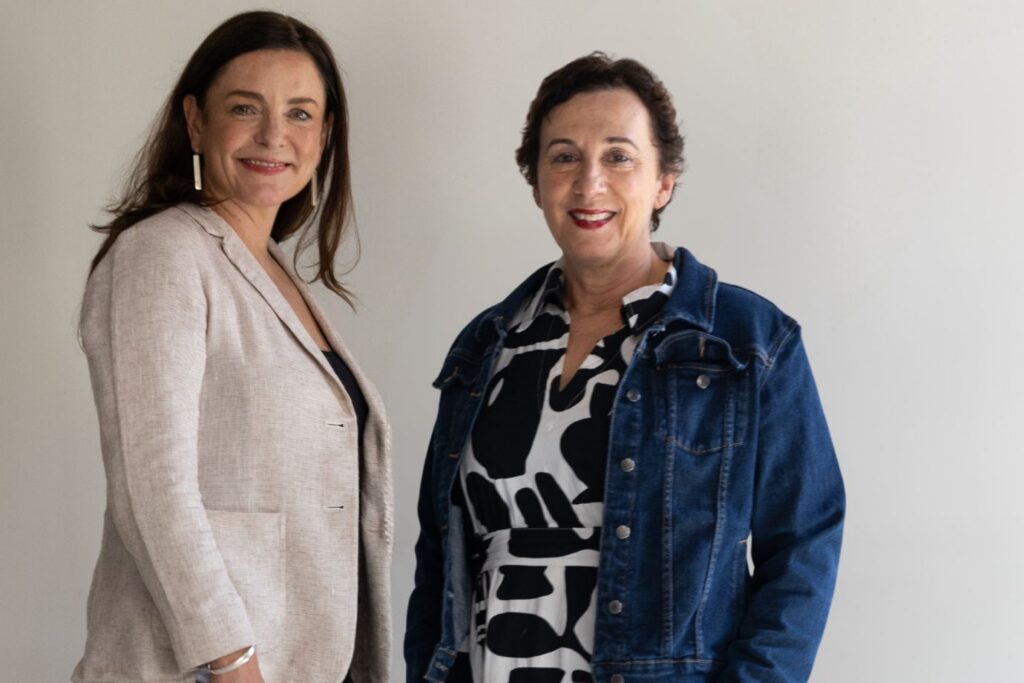
Linda Mellors, CEO of Regis Aged Care and Director of Ageing Australia, has spent her career inside the health and aged care system. She also has skin in the game beyond the professional: her own parents and in-laws are in their eighties, navigating the same system she runs. Speaking this week on Club Sandwich, the podcast for the sandwich generation, she laid it out plainly.
Who will absorb the shortfall when the beds run out? The same people who always do. Nobody planned it this way. Nobody needs to. The pattern is self-executing.
Most of the people living in aged care are women. Most of the workforce caring for them are women. And most of the family members holding everything together while the system strains around them, fielding the calls, managing the medications, doing the midnight Google, are women.
When there aren’t enough beds, those women don’t get a break. They become the system. Unpaid female labour, nationalised by default.
Look closely at this crisis and you will see one woman. The one managing it now, fielding the calls, doing the midnight Google, trying to find a bed that doesn’t exist. And the one who will need that bed in twenty years. She is not just navigating her mother’s future. She is looking at her own.
This is a gender equity failure and a generational equity failure. And the cruel elegance of it is that they are the same failure, wearing different faces at different decades of the same woman’s life. The infrastructure crisis is just where it shows up.
The problem doesn’t stay at the front door of the aged care home. It walks straight into the workplace. That is not a metaphor. It is a staffing forecast.

When there are no beds, families become the infrastructure. And families, in this context, means women. Women who are also, at 58, at the peak of their careers, managing teams, holding institutional knowledge, sitting one or two levels from the most senior roles they will ever hold.
The timing is not incidental. Age 58 is the peak age for unpaid caregiving in Australia. It is also the peak of most senior careers. When the collision hits, something has to give. It is rarely the job that absorbs the impact.
Sixty-six percent of working carers reduce their hours. Thirty-eight percent step out of paid work temporarily or permanently. Forty-five percent report missing promotions or career opportunities because of caring responsibilities. These numbers exist right now, before the bed shortage reaches crisis point. Before the baby boomers arrive in volume. Before the system runs out of room entirely.
Think about what those numbers become when the necessary 10,000 beds a year don’t materialise. When families who would have transitioned a parent into residential care instead keep absorbing the load at home. When the midnight phone vigil extends not for months but for years. The workforce cost doesn’t show up on a government balance sheet.It shows up quietly, in workplaces across the country, as absenteeism, presenteeism, and the slow disappearance of people who were, until recently, holding everything together. Not just at home. At work too.
These are not junior employees finding their feet. They are the people who know the most, lead the best, and have spent decades building the kind of capability that cannot be advertised for or onboarded in a quarter. They are leaving, or pulling back, or simply running out of capacity. At the exact moment the system is about to demand more of them, not less.
Sarah Macdonald, broadcaster and co-host, Club Sandwich says “My mum is 92. My mother-in-law is 94. I know this from the inside. The phone is always there, always beside the bed. You’re always half somewhere else. You never feel like you can relax. That’s the sandwich generation in a single image – someone wringing their hands and pretending they’re fine.”
So what can women, and the families navigating this, actually do?
Start before the crisis. My Aged Care is the Australian Government’s entry point for aged care services. It can be arduous but it’s where you begin the assessment process for your parent. Most people find it for the first time in a hospital corridor at 11pm. Don’t be that family. Tools like Vera (vera.guide) exist precisely to help families think this through before the emergency hits. Get your parent assessed now, receive the eligibility code, and put it in a drawer. You don’t have to act on it. But when the fall happens (and statistically, it will) you will not be starting from zero in the worst moment of your year.
Visit aged care homes before you need one. The bed shortage is real and it is getting worse. Families who know their local facilities, who have walked the gardens, sniffed the entrance, watched meal service, and dropped in unannounced, are the families with options when crisis hits. Linda Mellors has walked through more aged care homes than most of us have had hot dinners. In this week’s episode of Club Sandwich she shares her full checklist: gardens, cleanliness, greeting, smell. Go at busy time not nap time. Go more than once. The wine bar is not the point. Whether someone looks up and smiles when you walk in — that is the point.
Have the family conversation before it becomes a hospital corridor conversation. What does your parent actually want? What matters most to them? What are their fears? These questions almost never get asked until a crisis forces the issue — by which point the whole family is making irreversible decisions while running on adrenaline and no sleep. Family conflict at this stage is extraordinarily common and extraordinarily costly. Siblings resurface. Old dynamics take over. The parent’s voice, the one that matters most, gets lost entirely. Get everyone on the same page now. Then tackle the bureaucracy — the RAD, the DAP, the single assessment process — from a place of alignment rather than emergency. Get specialist aged care financial advice before you need it. It is worth every cent.
And get loud. The $3 billion announcement is a start and it is not enough. Ageing Australia’s, the sector’s peak body, called it a vital first step and immediately said much more is needed. Write to your MP. Ask your employer what their policy is for employees with caring responsibilities. Talk about this openly. The aged care crisis stays invisible for exactly as long as we let it.
Women’s Agenda readers don’t just want outrage. They want to know what to do with it.
Get informed. Get organised. And understand that this crisis has a very specific face. It is the face of every woman in midlife juggling a career, a family, and an ageing parent while a system runs out of room.
There won’t be a bed for your mother. Not if we don’t act. And if we don’t act now, there won’t be one for you either.
Episode 11 of Club Sandwich, Aged Care: The Sniff Test, is available now on Apple Podcasts, Spotifyor wherever you listen to podcasts.