
When Tasmanian Walking Company invited me to experience its Uluru-Kata Tjuṯa Signature Walk during the July school holidays, I hesitated. Not because I didn’t love the idea of switching off for a few days in a place I’d been dying to visit, but because as a solo mum to two young kids, tapping out for self-care isn’t something I do a lot of.
But when my generous parents insisted, and my older sister suggested she come too, it sounded too good to pass up.
I also told myself I deserved it. The past year has been challenging and it’s brought more change than I ever expected. I won’t go into details here, but let’s just say that when I’ve joked about my ‘Jerry Springer life’, to friends and family, it’s never been hyperbole.
But, like most women, when life becomes difficult, I kept going. Or rather, I motored.
There were kids to raise and keep happy in amid turmoil (and the guilt of feeling that in overdrive), a business to run, deadlines to meet, financial pressures, and a mental load burgeoning by the second. I don’t think I stopped long enough to ever truly check in with my mind and body long enough to consider whether I was coping properly.
It wasn’t until somewhere between the towering domes of Kata Tjuṯa and the long walk towards Uluru that I realised the way I’ve been living isn’t all that sustainable. I’d been functioning ok, but I hadn’t left myself room to (not so eloquently) sit in the shit and process anything.
I didn’t expect, though perhaps I should have, that walking through one of the oldest landscapes on Earth would give me the permission to finally slow down and reflect. I also lapsed into an old version of me. A less frazzled, more fun, younger me.
My sister, who has been a constant source of support over the past year, spurred this.
“Did you put your lunch in your backpack?”
“Have you got enough water?”
I’m 36. I run a company. And yet I found it strangely comforting being taken care of by someone who has known and loved me, forever.
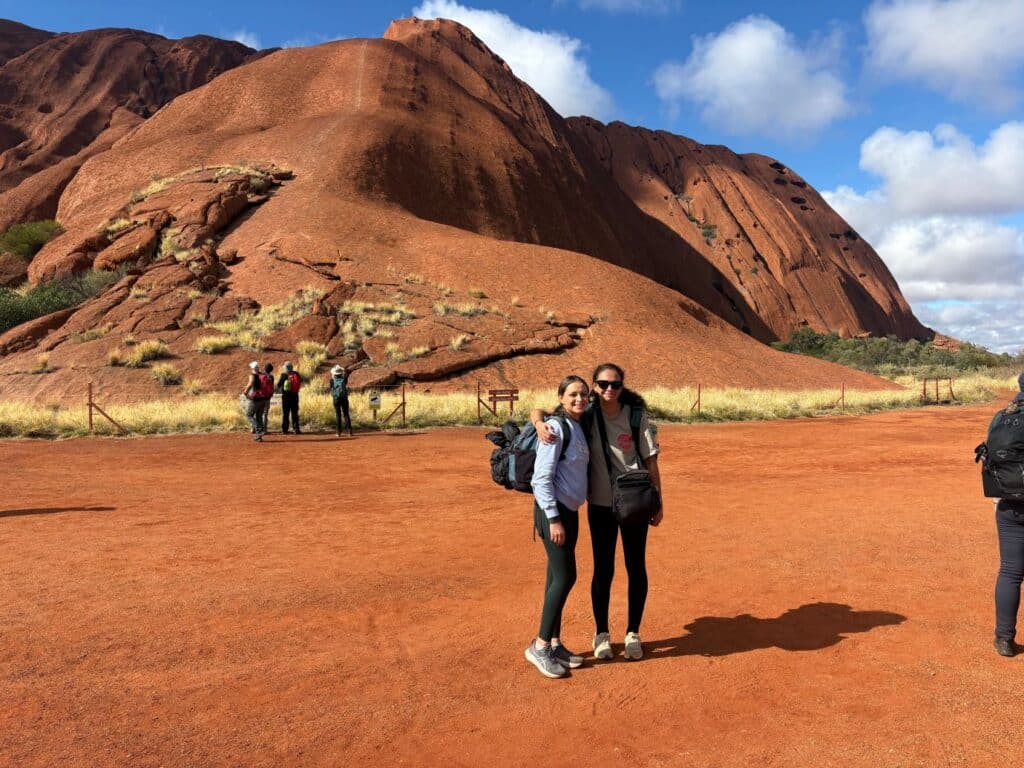
I can’t remember the last time we’d spent that much uninterrupted time together. We walked side by side for hours each day, shared a room and had conversations that rarely happen when you’re squeezing life into the gaps between work and family. I’d forgotten how restorative that kind of time can be.

The walk itself covers around 70 kilometres over four days, beginning among the extraordinary domes of Kata Tjuṯa before making your way towards Uluru and eventually walking around its base.
The landscape changes constantly. At times you’re walking through open desert with nothing but spinifex stretching towards the horizon. Next, you’re blanketed in a purple carpet of Mulla Mulla blooms, and then suddenly you’re winding through towering rock formations or stopping beside waterholes that have sustained life for millions of years.
Every day left me physically tired, but my mind quietened. I slept better than I have in years.
One of the unexpected joys of the experience was the rhythm of each day. After hours of walking, you arrive back at camp, red-sand dusty and ready to put your feet up. Tasmanian Walking Company’s camps strike a beautiful balance between feeling immersed in the landscape while still offering genuine comfort.
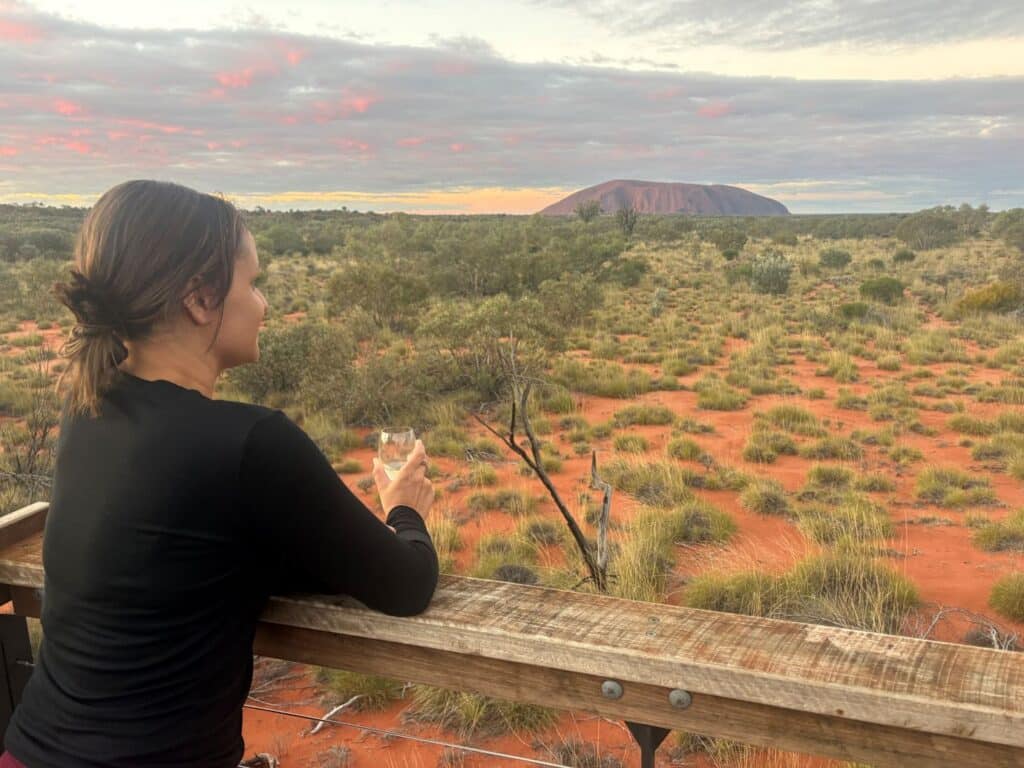
Sitting on the deck looking towards Kata Tjuṯa with a cup of tea, someone would inevitably appear with homemade cake, and later everyone gathered around a long table for dinner, sharing stories over wine and good food.
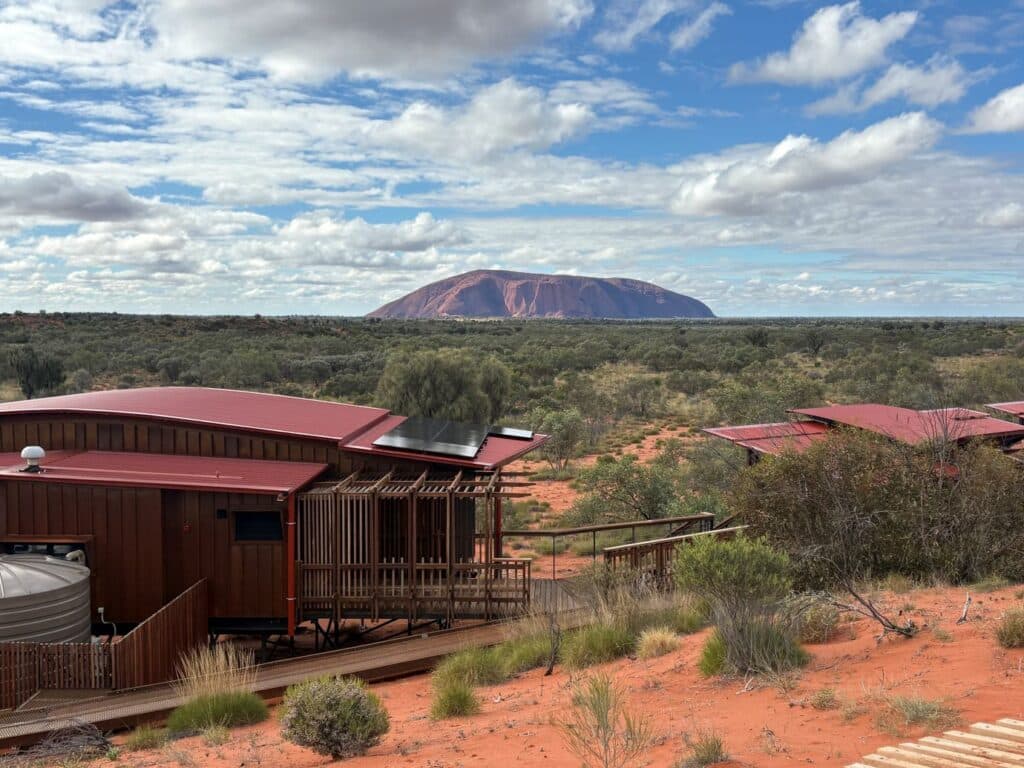
The last two nights are spent at Tasmanian Walking Co’s lodge overlooking Uluru. All the cozy pod rooms are well appointed with their own bathroom and a direct view. Waking each morning to see the first light hit the rock is something that will stay with me for many moons.
But while the landscape is extraordinary (and even more so than I’d expected), another unexpected joy were the friendships I forged with my fellow wanderers.
Sixteen of us started out on that walk together, and by the end of four days it felt like we’d known each other for years.
I can only attribute this to the fact that walking alongside people strips away the usual ways we define ourselves. In everyday life, we’re routinely introduced by our job titles, where we live or what school our children attend. On the walk, none of that really mattered.
Instead, I learnt about people’s lives gradually, over kilometres rather than minutes.
I learnt about their families, the things they’re proud of, the things they’ve lost, the reasons they booked the trip in the first place. I laughed a lot. And I shared my story, too.
Sometimes you walk in silence because that’s just as comfortable.
Weeks after returning home, our WhatsApp group is still going strong.
Someone shares a recipe. Someone else sends an update about getting back into the routine of work. There are terrible jokes, photos of sunsets and conversations that continue as though we never really left.
I’ve thought about that group quite a bit since coming home.
We’re constantly told we’re becoming more divided and more disconnected from each other. Our social circles are dwindling and algorithms feed us people who think like us. It’s easy to start believing we only really connect with people whose lives closely resemble our own.
And then you spend four days walking with fourteen strangers.
People from different generations, different careers and backgrounds. People you may never have met otherwise. Connection doesn’t need to be lost, we just need to keep giving ourselves time to be curious about one another.
Uluru itself has a way of putting everything else into perspective.
Our group developed an ongoing joke about trying to find the perfect word to describe it.
Majestic. Monolithic. Formidable. Sublime. Every suggestion felt inadequate.
Photographs don’t really prepare you for the experience of walking around its base; the caves, the textures worn into the rock over millions of years, the changing colours as the light shifts, the waterholes that continue to hold significance for the Anangu people.
It’s a rock, sure. But it’s alive.
One of the highlights of the trip was spending time with TJ, an Anangu man who joined us to share stories of Country and explain some of the cultural significance of Uluru. Listening to him, it struck me just how much Australia’s relationship with this place has changed in a relatively short period of time.
It’s difficult now to imagine people climbing Uluru, something that only officially ended a few years ago. TJ spoke with optimism about the future while acknowledging there is always more work to do.
Our guide, Alyssa, was 22 but possessed an extraordinary depth of knowledge about both the landscape and its cultural significance. One afternoon she encouraged us to leave a rest stop one minute apart so we each had time to walk alone in complete silence.
No conversations, just our own footsteps.
I’ve never been very good at mindfulness. I’ve tried. Usually, I spend the whole time thinking about what I need to buy from the supermarket.
But this felt different.
For twenty minutes I walked. I looked at the flowers, heard my feet scuffing the sand, breathed the air and felt so… indescribably peaceful.
I’m sure there’s value in all the meditation apps and wellness podcasts I hear about, but maybe we also need to remember some of the older, simpler ways of looking after ourselves.
Walking. Being outside. Sharing meals. Having long conversations.
I came home physically exhausted but emotionally lighter.
I’d been reminded that slowing down isn’t something to feel guilty about and that connection doesn’t always take years to build. Putting one foot in front of the other isn’t an idiom about coping for nothing.
Disclosure: Tasmanian Walking Company is a commercial partner of Women’s Agenda. Tarla Lambert-Patel travelled as a guest of Tasmanian Walking Company. This article reflects her own views and experience.