

There are an estimated 3 million unpaid carers in Australia – that’s more than one in ten people who are responsible for the care of a relative or friend.
Many of them are in the role unexpectedly and involuntarily.
Their contribution is estimated in the billions but far too often, the weight on them is invisible especially in the workplace.
The National Carer Strategy released in 2024 highlights that the cost to replace unpaid care with its paid equivalent would be somewhere near $80 billion with more than half of primary carers providing 20-plus hours of unpaid care each week.
Without these carers, employers miss out on great talent.
And hard-working professionals who happen to be carers miss out on the ability to build successful, long-term careers.
According to federal legislation, carers are people who provide unpaid care, support, and assistance for a person who may have a disability, medical condition, mental health or substance abuse issue, terminal illness or is frail aged.
Unfortunately, carers – who are overwhelmingly women – can suffer lifelong consequences for the responsibilities they take on for their loved ones in need.
They are at greater risk of financial instability, poor career progression and poverty.
Employers suffer costs too when their workplaces are not set up to properly support carers.
These may be loss of talent which leads to recruitment and retention issues, poor staff morale and impacts on productivity.
Given the invaluable contribution this cohort makes, Women’s Agenda has a long-standing partnership with Carers Australia to spotlight the opportunity employers have in addressing these issues.
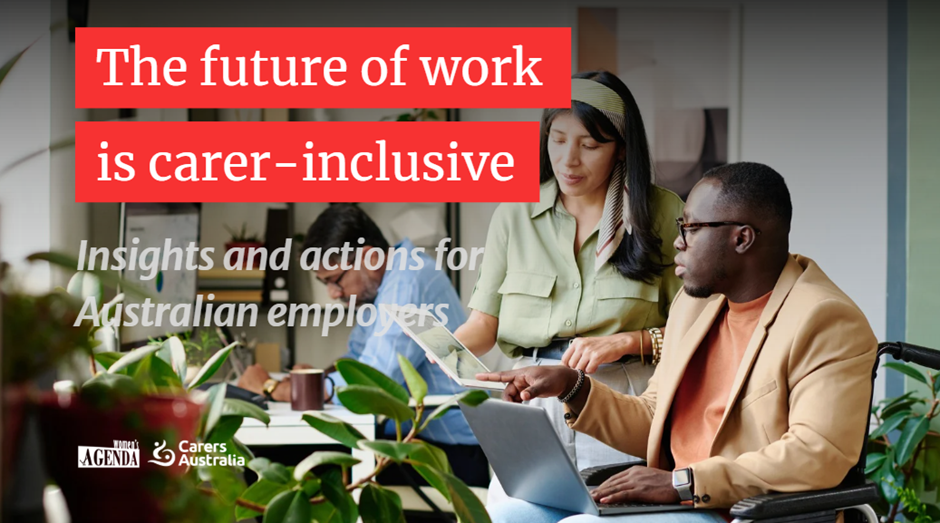
Read our latest report – The future of work is carer-inclusive: Insights and actions for Australian employers
At our recent panel exploring what it feels like to be an unpaid carer in Australian workplaces, we discussed three strong themes: visibility, consistency and capability.
Both this discussion and the findings from our recent survey reveal these are persistent issues carers face in work environments.
Visibility: many carers experience stigma and are fearful of telling employers about the unpaid responsibilities they’re juggling on top of their paid duties. This can put immense pressure on them to perform and it’s often unsustainable – this can force carers to change jobs, miss out on promotions and other opportunities.
Inconsistent management: a number of carers report inconsistency in the way flexible workplace policies and other mechanisms are implemented. When managers are not properly trained and lack understanding of the needs of carers, it can create an environment of uncertainty among workers who need support or adjustments to the way they work.
Lacking capability: more than 80 per cent of our survey respondents believe managers need better training to understand the realities of caring. Building up the capability of managers to better support and work with carers reaps many benefits. In some workplaces, proactive leadership and having senior managers with unpaid caring responsibilities on the team are helping to transform culture and inclusivity for carers.
When employers are proactive in building teams in which carers can thrive as professionals it produces a win-win for both sides.
This can happen with small changes that make a big difference, says Carers Australia CEO Annabel Reid.
“I really encourage employers, if they don’t know much about carers, to start familiarising themselves simply with the concept, what we’re talking about, who we’re talking about, and what it means,” she says.
“Because even just starting to acknowledge that role and have conversations might be enough to enable small changes that can make a huge difference in the lives of others. It can also ensure you get good retention and good engagement from your workforce.”
Small steps may be:
- Finding more ways to make flexibility work while putting in systems and processes that promote productivity and strong performance
- Using the Carer-Inclusive Workplace Initiative to become a recognised workplace that supports and empowers people no matter what kind of caring responsibilities they are juggling
- Contact organisations like Carers Australia to find innovative solutions that make your workplace more carer-inclusive
The benefits of becoming carer-inclusive
The benefits of being carer-inclusive have been documented for years with more and more employers realising that there are talented workers on their teams juggling unpaid obligations.
Infrastructure Victoria Director of Research and Policy Eloise Modun says it’s important to normalise caring.
“Name carers in onboarding, default to flexibility where possible and equip managers to respond to episodic and unpredictable caring needs,” she says.
“Crucially, recognise young carers – including those in part-time, casual and entry-level roles – and support their transition from education into work.
“Carer-inclusive workplaces retain talent, reduce burnout and build trust. Young carers in particular bring strong problem-solving skills, adaptability and emotional intelligence from managing complex situations early in life.
“When people don’t have to hide caring responsibilities, workplaces gain more resilient, creative and committed employees.”
Becoming carer-inclusive is not simply about goodwill.
It’s about building sustainable workforces that can grow in the long-term.
To achieve this, employers need to build up their understanding of what carers face and the workplace structures or processes that can impede on their ability to perform well.
“Ongoing upskilling and learning is critical if workplaces are serious about creating cultures where carers feel safe, supported and able to participate fully,” Modun says.
It’s something businesses of all sizes can achieve with an openness to creative solutions and by partnering with organisations like Carers Australia.
For more on how your workplace can become more carer-inclusive, read our latest report.
Eloise Modun took part in the event as a board member of Little Dreamers.