
Efforts to restrict women’s access to reproductive health in Australia have been in full swing in recent months, but Wednesday marked a day on which the trend was accelerated.
The efforts came via votes in the upper and lower houses of South Australia, as well as statements by One Nation Senator Pauline Hanson during her National Press Conference on Wednesday, when she was asked about the issue.
Hanson declared there are “too many abortions in this country” (almost in the same 10 minutes that she indicated she’s opposed to maternity leave — more on that in another story).
She also made the unsubstantiated suggestion that women are choosing to have abortions at 39 weeks.
“To abort a baby the day before birth is abhorrent and disgusting, and that’s what I oppose and what many common sense Australians believe.
“I’m not advocating a time at this stage. Even from 20 weeks, I think it’s too late to have an abortion. Definitely, 39 weeks to have an abortion, that is clearly not humane.”
Across the country, on the same afternoon, the SA parliamentarians were preparing to vote on a bill restricting abortion for women, introduced by Family First MP Sarah Game.
The bill passed the upper house before being defeated in the lower house with a conscience vote.
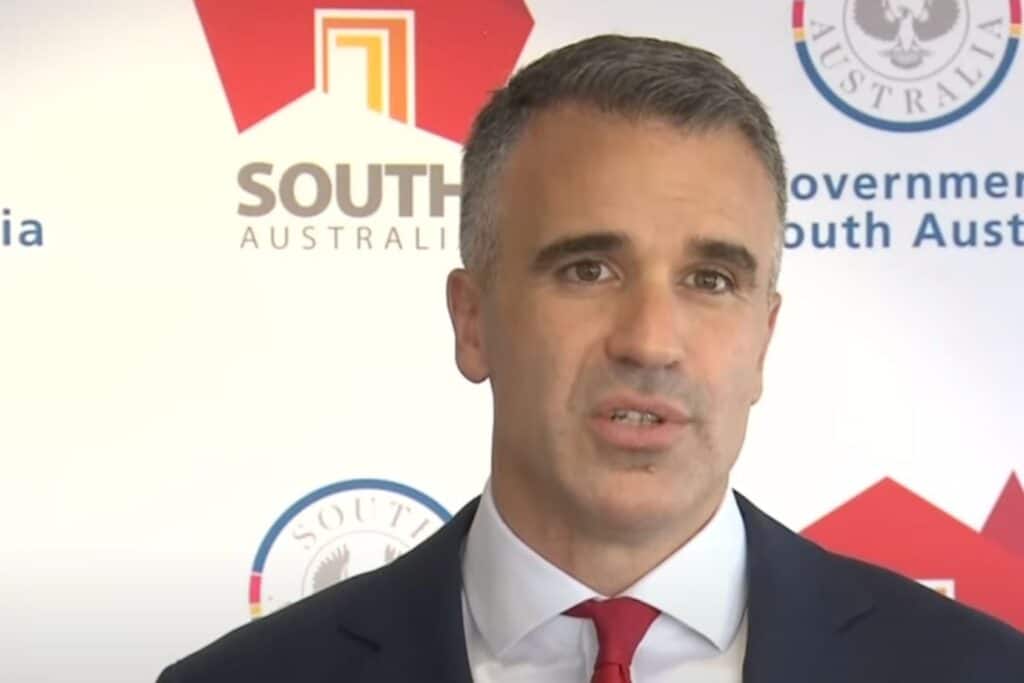
That conscious vote saw Labor Premier Peter Malinauskas (pictured above) supported the bill in the lower house, one of a group of nine to do so.
It was the third attempt by Game to pass abortion-related legislation since 2024. She has also changed parties a number of times, initially starting with One Nation before going independent and — just on Wednesday — joining Family First.
The Bill aimed to remove two existing lawful clinical grounds for a termination occurring after 24 weeks and six days — one being a serious risk to a woman’s physical or mental health and the other being a serious foetal anomaly. Instead, the bill would require a single test requiring termination to be “necessary to save the life of the pregnant person”.
The meddling from politicians for ideological reasons comes despite medical professionals highlighting the dangers of such bills.

The Royal Australian College of GPs has reissued its strong concern regarding the SA debate, with SA Deputy Chair Dr Clare Keogh saying that decisions about pregnancy must remain between a person and their healthcare team—not politicians.
“Abortion care is healthcare. These are deeply personal decisions that should be made by individuals in consultation with their GP and trusted health professionals,” she said.
“We are concerned about ongoing attempts to revisit and restrict reproductive healthcare through legislative change. This risks undermining evidence-based care and patient autonomy.”
The group is concerned about this latest bill reflecting a broader trend of efforts to limit access to reproductive healthcare across the country.
“We know that restricting access to abortion does not stop people from seeking care, it only makes it harder and less safe,” she said.
“Healthcare policy must be guided by clinical evidence and patient wellbeing, not ideology. Late-term abortion is already governed by robust laws that protect the decision between a patient and two skilled doctors.”
The SA chapter of the Australian Medical Association urged the members of the Legislative Council to keep clinical evidence in mind in the lead-up to debating the bill on pregnancy termination.
They noted evidence finding that just 48 terminations — the equivalent of one per cent — occurred after 22 weeks and 6 days, and almost all were performed to protect a woman’s health or because of a serious foetal anomaly.
“Late-pregnancy termination is rare, clinically complex and undertaken in circumstances no woman wants to face,” said AMA SA President A/Prof Peter Subramaniam
“Women who seek late terminations do so for difficult reasons. They face them, alongside their doctors, in catastrophic circumstances – serious or lethal foetal anomaly, deteriorating maternal health, or pregnancy from sexual violence.”
He also said that the current Termination of Pregnancy Act 2021 already contains robust safeguards, including that two medical practitioners must agree, that professional standards and clinical guidelines must be considered, and that every termination is independently audited and publicly reported by the SA Abortion Reporting Committee.
SA is currently the only state publishing this data, and A/Prof Subramaniam believes the data should guide any change to the law.
While the SA bill ultimately failed, and Hanson’s comments on abortion indicated she’s testing the waters on how hard to go on pitching the dismantling of reproductive health, the rhetoric from the past 24 hours has again contributed to a narrative that women are seeking later abortion for the fun of it (even after 39 weeks of pregnancy according to Hanson), rather than due to a serious and heartbreaking healthcare need.