
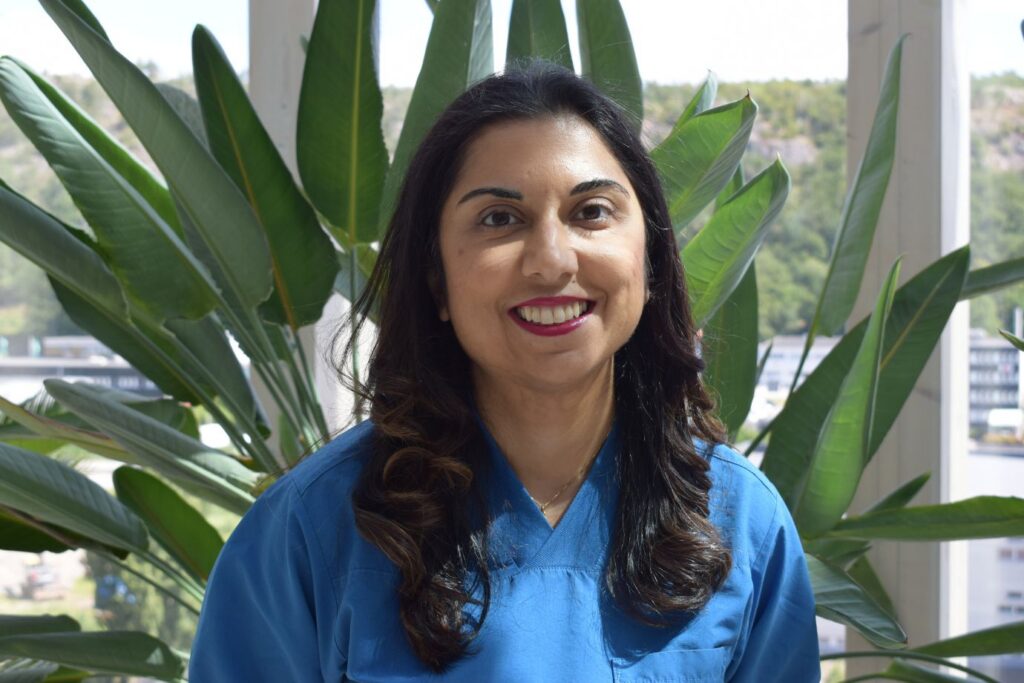
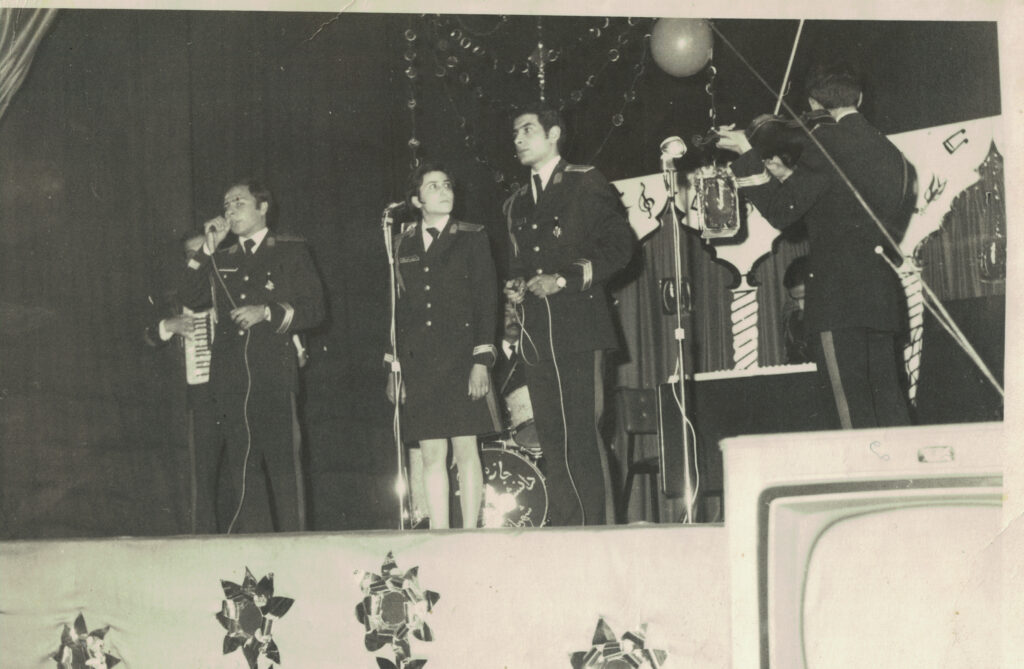
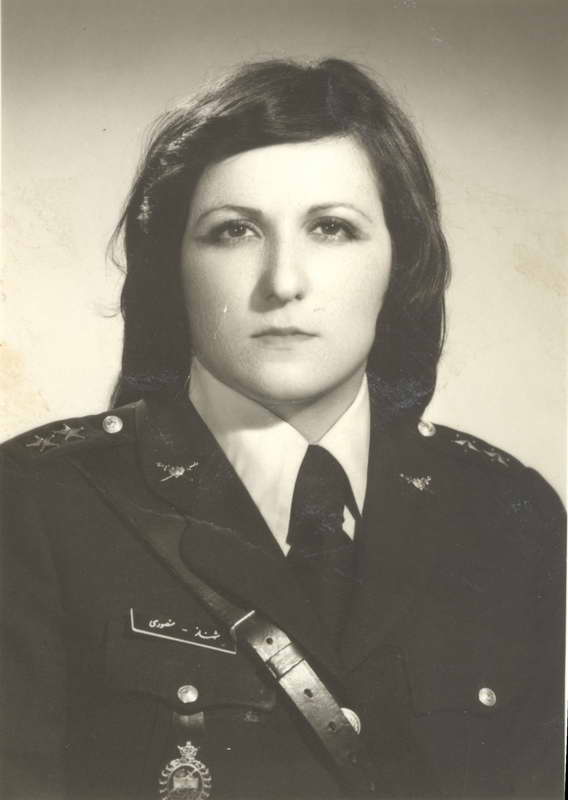
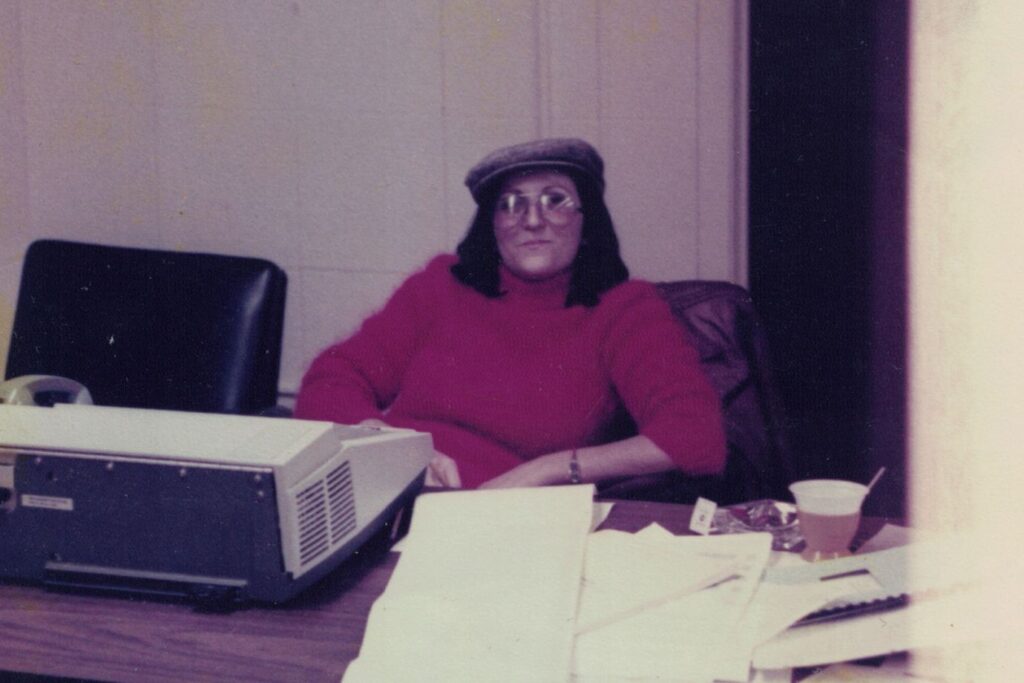
My mother was one of Iran’s first police officers. After rigorous training that was in every way equal to that of the men, she graduated from the Police Academy in Tehran in 1972 and was offered advanced training in her chosen field. She chose to study COBOL programming in Washington, DC, at a time when many societies still treated technology as a male domain. Her colleagues were all offered a similar choice of specialised training in an area of their choice.
After returning from the United States, my mother led the newly established computer department of the police, where early efforts to digitalise records began.
This was the emancipation of women in practical terms within a very short time frame: education, professional responsibility, public service, technical training, authority.
Yet pioneering women like my mother have become inconvenient in parts of today’s Iranian political debate. Their lives do not fit the approved narrative. If they remember pre-revolutionary Iran as a place where women’s opportunities were expanding, or if they support constitutional monarchy for Iran, they may find themselves dismissed as reactionary and even misogynistic.
This is a strange accusation. It is also a revealing one. For most of my life, I have understood feminism in its clearest sense: the belief that women and men deserve equal rights, equal opportunity, equal dignity, and equal protection under the law. Feminism is not the demand that all women think alike. It is the demand that women be free to think, speak, work, lead, dissent, and choose. In some Western circles, however, feminism has become less a principle and more a political identity. It has become a hollow narrative, not an actual progression towards equality. But a “feminism” that erases women because they reach the wrong political conclusions is not feminism. It is another form of control.
Whatever one thinks of monarchy as a political institution, it is historically dishonest to deny that Iranian women made major legal, educational, and professional gains during the Pahlavi era. Women gained the right to vote in 1963. Family law reforms in 1967 and 1975 expanded women’s rights in divorce, marriage, and family courts. Iranian women entered parliament, local councils, the judiciary, police, universities, medicine, technology, and public administration.
This history does not mean pre-revolutionary Iran was perfect. But my mother’s life and many of her peers’ is a living testimony that Iranian women were making progress, not in tiny steps but in giant strides. Needless to say, these advances were altogether rolled back and reversed after 1979.
My own life is also shaped by this inheritance. As a neurosurgeon, and as the first woman neurosurgeon with an immigrant background in Sweden, I know what it means for a woman, especially one with a different background, to enter spaces where she is not expected. I also know that even in Western professional life, women are often rewarded for making themselves less conspicuously feminine; less visible, less adorned, less themselves.
That is why feminism and liberation, to me, mean breaking that barrier as myself and not as a neutralised version of myself, even when I’m at times mistaken for being a secretary or a nurse. It means delivering a speech from the stage in a heavily male-dominated conference, in clothes I have chosen, even when your colleagues sitting next to you assumed minutes before that you were someone’s assistant or secretary. Feminism is about breaking barriers and those barriers are broken with different tools in different times, not with politically charged slogans. Misogyny is not disagreement with a particular political camp.
Misogyny is the belief that women are lesser, that their freedom should be controlled, or that their voices count only when they conform.
A future Iran worthy of its women must have room for women regardless of their political beliefs.
The test of democracy is not whether everyone agrees. The test is whether disagreement is possible without intimidation, slander, or erasure.
Feminism is not a uniform. It is not a faction or a password used to decide which women are allowed into the conversation and which to be excluded. Feminism is also not about gender. It is the insistence that women are full citizens and full human beings. And this should be regardless of their political beliefs.