

As a mother of three boys, I’m increasingly frustrated by the rhetoric of “lost boys”. My boys aren’t lost. But they, like all of us, are collateral in a war for attention. One being waged by strategic influencers, business titans, political strategists and world leaders to further build wealth and power.
That’s the conversation I want us to be having as conversations about the dangers of the manosphere ramp up. Not whether something is fundamentally broken in our boys, but about what is being done to them and by whom. And the consequence on them, and then all of us.
First, it’s important to know that algorithms do not wait for boys to go searching for misogynistic content.
Monash University researchers found that misogynist manosphere content was sent to users regardless of whether those accounts had actively searched for it, and this was especially the case for profiles set up as teenage boys seeking content typically associated with masculine gender norms. In other words, algorithms serve this content up. The boys don’t have to go looking.
The people at the coalface of this war for attention, from gaming companies to political strategists and Trump-appointed communication specialists, know the best tactics for leveraging our attention. They know how to capture us through humour, outrage, desire, tribalism, and the promise of self-optimisation (hence the strong fitness and gym links). They know the addictive pull of continuous scroll, suggested content, and the endless lure of screens that remove the friction and awkwardness of real life. They know the benefits of appealing to fear and distrust, and of circling within an ecosphere of similar viewpoints to create more legitimacy and permission for their content. They know the technology infrastructure that profits from continuous scroll and suggested content features will further elevate these views to the right mix of users.
Indeed, one reason conversations about the manosphere are ramping up right now is that a key player in the attention wars is Netflix, which commissioned Louis Theroux’s new documentary on the issue. I found it highly watchable, but learned nothing that I didn’t already know. But its entertaining pull has drawn more people to watch and discuss the dangers of these influencers. I’d argue that’s a good thing, regardless of the warranted arguments about the lack of women’s voices included and the fact that advocacy groups have been screaming about the manosphere for years.
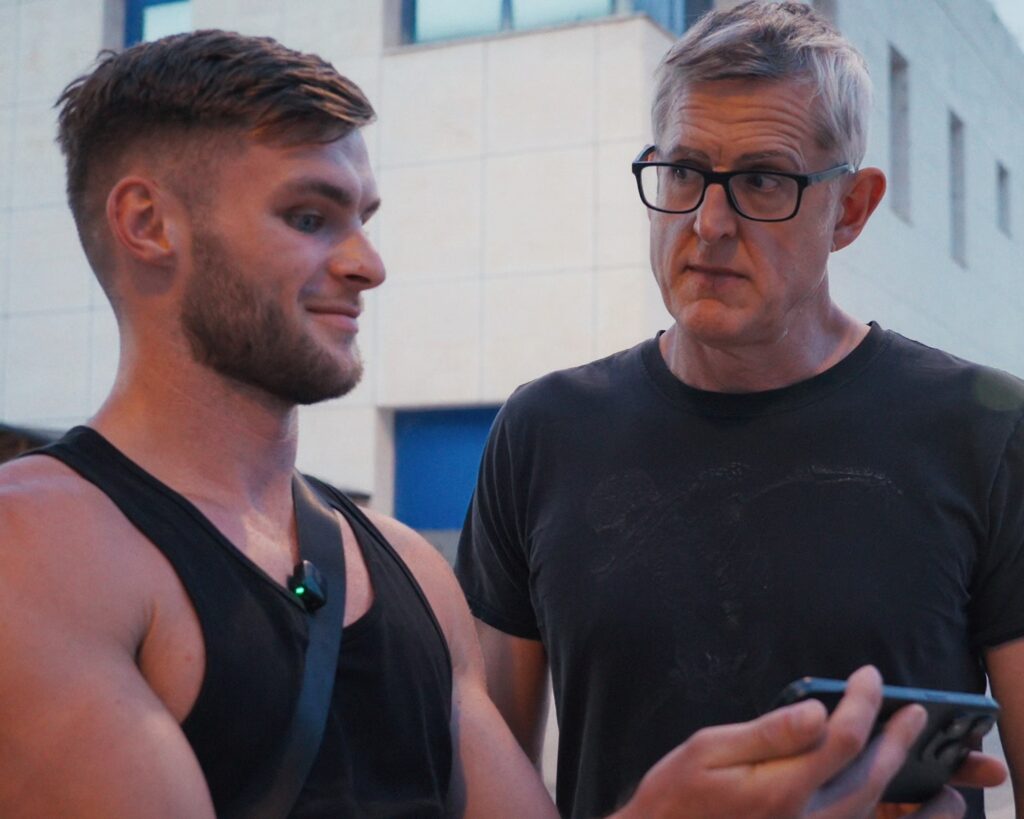
Young people, who are right at the point of getting to know themselves, are especially vulnerable to the main tools for harvesting attention. The manosphere engages teenage boys and young men at a point in development when they are likely to be particularly susceptible, perhaps when they are most vulnerable due to financial pressures and as they might be attempting to date for the first time.
Now, enter the super influencers, those protiteering and winning more power (and even elections) from the eyeballs. They’re not limited to niche corners of the internet, and they’re not all young and superficially rich and jacked like the stereotypical manosphere players.
Look at the most prominent figures commanding attention in the past couple of years. Mr Beast, whose content grows ever more elaborate and dangerous in its pursuit of spectacle. Far-right politicians running on industrial-scale outrage, including here in Australia. A US President whose social media posts are, by design, “unhinged” enough to generate daily news cycles that bounce from Venezuela to Iran to Cuba. Look at the world’s richest man, who bought his own social media platform to ensure his bullying keeps getting shared and celebrated by his army of followers..
The White House now operates a meme strategy. The Wall Street Journal has analysed hundreds of videos shared by the White House across TikTok and X, finding they leverage gaming aesthetics, memes, and clips from films like Braveheart and Breaking Bad, even SpongeBob SquarePants, to position the President as the main character, the hero, and to sell military action as an “over there” spectacle. It’s content created to sell a war, aimed at being entertaining and sticky and able to tap the algorithm so you ultimately get sent down similar spaces and to accounts the White House doesn’t manage.
Boys are watching this, often hooked in by an element of humour, entertainment and a sense of victory for their team. What they’re also being shown, again and again, is that successful leadership in 2026 means holding people’s attention by punching down, staging constant public spectacle, and making mockery a strategy.
Great men and great mentors exist. But by nature of being decent, they won’t stoop to what the attention economy requires for acquiring and holding attention in a sea of entertainment, outrage and humour. Just how do they break through the slush pile of content mixing rage, memes, bullying and made-up facts that provides a much faster and more addictive avenue for capturing attention?

So what do we do about it?
Australia’s world-first social media ban for under-16s was a meaningful act of political will, but let’s be honest about what’s been achieved, 100 days in. The research shows that teenagers are still using social media and finding workarounds to platforms many of them could likely not even name.
The ban doesn’t address gaming, one of the aspects of screens on kids that I hear parents find the most challenging to control, especially as games get ever more addictive and more luring.
It doesn’t address the vast flow of short-form video content available without logging in. It doesn’t address the addictive design baked into these platforms: the continuous scroll, the dopamine hit of suggested content, the architecture of compulsion.
The social media ban has raised awareness and generated important conversations. But the focus has been on stemming the flow of messaging, rather than addressing the content itself, or the addictive properties of the products competing for our children’s attention.
The more effective path is to hold technology companies accountable for the design of their platforms and the content moderation systems that allow harmful content to thrive.
We can’t wait for governments to catch up, hoping that tech companies will be held accountable in meaningful ways. And we can’t expect boys to stay offline. More of us need to take responsibility for what’s happening to our boys, our girls, and to all of us.
And what can we personally do?
We need algorithmic literacy. Kids, teens, and adults all need a greater understanding of how algorithms work, and how the resource that is our attention generates profits. We need to understand that the content that comes to us isn’t random, nor is it a representation of general opinions; it’s tailored to us, oftentimes to appeal to our greatest needs.
We need to get talking. Researcher Debbie Ging, who was one of the first to study how boys end up in the “manosphere”, emphasises having non-judgemental conversations with boys about what they’re viewing online — creating the conditions for them to explore what they’re seeing and why it interests them, without shame or reprimand. That’s not a soft ask. That’s a skill that requires strong communication and relationships.
We need to get connecting. From the current loneliness epidemic being experienced across Australia to our retreat to certain “sides”, I keep coming back to the irreplaceable value of in-person community, especially the social connections that are built at a hyperlocal level. It’s tempting to solely rely on sport to fill this void. It can play a great role, especially for boys and young men. But it can’t be the only in-person platform for such connections, or it will leave people out. Sport can also often now focus too much on performance, elimination, and on kids specialising to become “elite” at one thing (and I wonder how online content has contributed to parents pushing such performance ambitions), which can lose kids the moment they’re considered average or, God forbid, below average. I like to imagine something more akin to a weekly congregation of people, that’s local, low-cost, inclusive, low-pressure and frequent.
But we also need to be honest about the costs of creating the above options and other great ideas currently circulating in the fast-evolving tech-connected world in which kids are coming of age. The work of facilitating community, managing screen time, and having the hard conversations about what boys are watching falls disproportionately on mothers, who are now in the paid workforce in greater numbers than ever, carrying additional loads at home and additional anxiety about what their sons are consuming online.
And this is about more than the parents of boys.
I’d encourage more people to take on the hard work of engaging with boys, even those you’re not directly related to, and even those you may initially struggle to talk to. Show up for them, teach them, and support them in evolving and learning rather than being dismissed for their first mistake.
Boys are being farmed for attention in ways that harm all of us. I too often see people wanting to dismiss and express outrage at what boys have become without giving them the opportunity to be something else. Or I see fatalistic predictions of what every boy will become — often from people I don’t believe ever actually engage with boys. Quit making assumptions about “naughty boys” and “hyperactive boys” and “bad boys” just like we push to end comments about “bossy girls”.
And never lose sight of who’s really lost here and needs to be held to account: those profiting from harvested attention. The influencers pushing misogynistic outrage to lure in more eyeballs, and the tech platforms that enable them.