
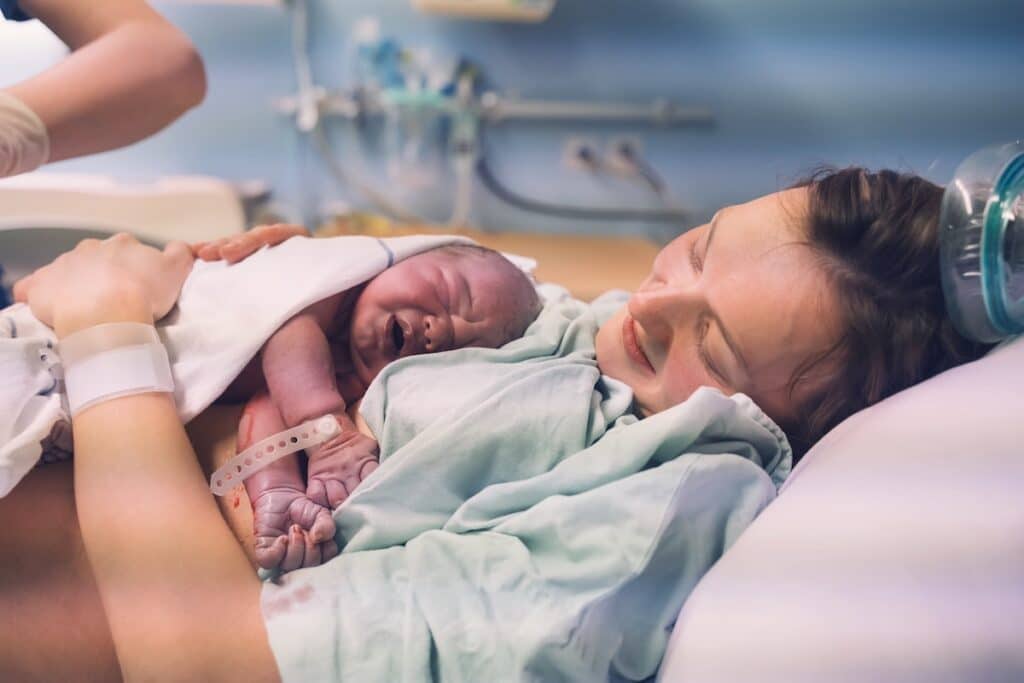
My first childbirth was so fast there was no time to discuss pain relief or to understand or even care about the long-term consequences of a forceps delivery and episiotomy.
The baby was in distress. Decisions were made in seconds, and the once-calm delivery suite was suddenly a hive of activity.
Thankfully, the baby was born healthy, the postpartum haemorrhage I experienced was treated, and I’m forever grateful for the immediate care I received in hospital, knowing all too well the stats on maternal death and intrapartum stillbirth in other parts of the world.
With everyone safe, attention turned to breastfeeding and those early weeks and months of learning how to take care of a newborn – and believing the ongoing pain was part of the tax of becoming a new mother.
Months later, still feeling an ongoing heaviness when I walked, the idea of returning to running and exercise seemed impossible. I took my concerns to a local GP and felt ridiculous as I cried at the privileged problem of “not being able to run”. She suggested an expensive, specialised form of Pilates – which I tried to attend around caring for a newborn. The Pilates instructor then suggested I see a pelvic floor physio, something I’d never heard of but ultimately became the lifeline to slowly returning to active health. She assessed me, taught me how to perform basic exercises properly, and later fitted me with a pessary. She, too, was a runner and understood my frustration at not being able to return as fast as I’d hoped or as the common “get your body back” literature leads you to believe.
I share the story in line with Birth Trauma Awareness Week, knowing it’s far from unique and that one in three mothers report some form of childbirth-related trauma.
I also share it knowing that I’m one of the lucky few. I had the means and knowledge to visit a pelvic floor physio for a greater understanding of what was going on. And I had the means and ability to keep seeing such a physio through subsequent pregnancies, childbirth, and beyond, and later to get the support of a good trainer who could help me learn safe strength training.
I know this isn’t the case for many Australian women, and I wonder if I would ever have been able to return to running, the gym, and the active lifestyle I enjoy without access to the support I could afford, as well as the information that such support was actually available.
While pelvic floor dysfunction isn’t the only outcome of birth trauma, it is one of the most common and yet still least recognised consequences of giving birth. It remains largely invisible within national data and funding structures.
Birth injuries and ongoing conditions are estimated to cost Australia $17.5 billion annually, according to a new report from Birth Trauma Australia, which calculates the costs across the health system, lost labour market productivity, reduced wellbeing and burden of disease and additional household financial costs.
This week RANZCOG, the peak body for obstetricians and gynaecologists, has issued a warning that action on birth-related trauma can not wait any longer. They describe it as an escalating public health issue in Australia – where national policy has failed to keep pace.
It’s an under-acknowledged crisis impacting an already strained maternity care system — one that spans social and economic costs and ultimately leaves women facing psychological, physical and social consequences.

RANZCOG recently convened a national roundtable supported by Birth Trauma Australia featuring clinicians, policymakers, sector leaders and women with lived experience to confront the fact that birth trauma is not merely a series of isolated incidents, but rather a broader, systemic-level failure. Women discussed physical injury, chronic pain, incontinence, prolapse and sexual dysfunction that extend beyond the postnatal period. Women reported delayed diagnosis, inconsistent advice and a lack of coordinated postnatal care.
RANZCOG President Dr Nisha Khot says that strategic, collaborative efforts are required to address the issue — one that unites policy professionals, researchers, clinicians, and women with lived experience, to understand the true impact and cost of birth-related trauma and take the first step in enacting urgently needed, meaningful system change. RANZCOG has issued a series of recommendations, including modernising postnatal care settings, conducting comprehensive assessments, and ensuring timely follow-ups throughout the first year. They also want to see greater public awareness and improved affordability and access to and early intervention services — including expanded access to antenatal education and early intervention services.
There is so much more to be done on the education front, including supporting all women (pregnant or not) in understanding the importance of pelvic floor health and how to achieve it. The physios who specialise in this space deserve far more attention, and the women who can benefit from their work – to the extent that they can stay physically active as they get older – need far more support to access them and understand just what they can do.
Indeed, in France, all new mothers are prescribed ten sessions of pelvic floor therapy, automatically. They don’t need to see a GP, they don’t need to hopefully hear about one from a pilates instructor, and they don’t even need to pay for it themselves. It’s routinely provided regardless of symptoms and has been covered by a French program since 1985. Imagine the possibilities of such a program in Australia.
Thirteen years after that first traumatic childbirth experience — and having had two further childbirths that were incredibly positive and beautiful experiences — I continue to experience pelvic symptoms that are painful, frustrating and limiting. But I’m in a far better position thanks to the knowledge I could access, the time I could put in and the support I could afford. The grief over what I can no longer do has given way to a sense of pride in what I’m doing now.
I’ve also seen how more women are stepping in to fill the void in accessible information and services, often women who’ve experienced pelvic dysfunction themselves, including Jen Dugard, who created the MumSafe certification for personal trainers, and pelvic health physiotherapist Michelle Kenway, who offers a series of free resources for learning strengthening exercises. But we’re also living through the age of misinformation, and vulnerable women are easy targets for being bombarded with expensive solutions and products that will claim to “fix” them. It’s another reason why collaborative efforts that bring in a range of experience are necessary, as is funding support that enables women to access certified treatment providers.
This Birth Trauma Awareness Week, support is available: the Australasian Birth Trauma Association (birthtrauma.org.au) for information and peer support, PANDA’s National Helpline (1300 726 306) for perinatal mental health, and the Continence Foundation’s National Continence Helpline (1800 33 00 66) or an APA-registered pelvic floor physio for physical recovery.