
New Zealand Prime Minister Jacinda Ardern’s hold on political power won’t end with an election loss. It won’t end with a scandal. It won’t end with age or retirement. It won’t end with war. And it won’t end with unshakable levels of unpopularity.
Rather, it will end on February 7 after Ardern made her decision to give up such power herself, because she knew she didn’t have enough “in the tank” to do the prime minister’s role justice.
It’s hard to imagine many times when this has happened throughout history, especially for somebody still so young, with popularity levels that despite falling could still win an election, and seemingly so much more to offer.
In deciding to let go of power in this way, Ardern has made one of the most powerful statements of her time in office, and a legacy even more influential than what she has demonstrated on the potential for empathy and kindness in leadership.
Will she inspire other world leaders?
And what if such lessons had been heard throughout history?
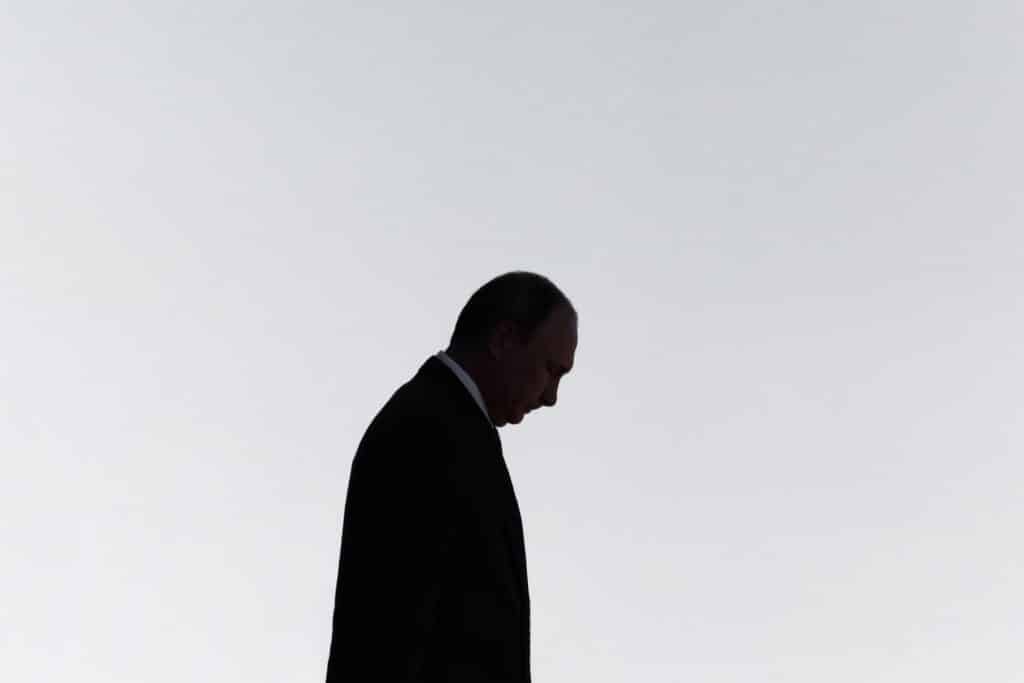
We could look to the worst examples of those who fail in having the courage to let go. Imagine if Vladimir Putin had given up his power as head of Russia in say, 2005, instead of serving continuously as prime minister or president since 1999, and changing a few laws along the way to make his never-ending tenure possible?
Imagine if Ali Khamenei had stepped down in the mid-1990s, instead of continuing his autocratic rule and oppressive regime since 1989?
Imagine if Donald Trump had accepted his election defeat, instead of claiming it had been “stolen” and inspiring the insurrection of January 6, and then committing to run again in 2024?
Imagine if Chinese President Xi Jinping had stepped down, instead of using the Communist Party Congress in October to dismantle the rules that had previously placed limits on time in office for Chinese leaders?
Imagine the past year generally without the despots and authoritarians who have fought tirelessly to hold onto power. Instead, 2022 marked a year in which, for the first time since 2004, there were more autocratically governed states than there were democracies, according to a survey of 137 countries.
And here in Australia, the Liberal party must surely wonder what could have been if former prime minister Scott Morrison let go of his own hold on power earlier than he did.

This week, the problem continues in the Liberal party, with those who’ve scrambled for power in the past – and those who’ve even held it for a period – still seemingly scrambling to try and take it back, regardless of what it does to their future or their party. Following Senator Jim Molan’s death this week, which has opened up a new Senate spot, there has been talk of former prime minister Tony Abbott filling the seat, while Katherine Deves has also reportedly expressed interest – despite her disastrous campaign for the seat of Warringah.
On Ardern’s comments about not having the energy to continue in the role, I’ve seen some sharing concerns about her resignation highlighting how women can’t last in such positions. The BBC even attempted a “can women really have it all?” headline in response to the move.
There may be some elements of truth in such comments, but only because women have to deal with so much more. In Ardern’s case (like Australia’s first prime minister Julia Gillard) the sexism and misogyny she faced have been relentless. Worse, were the threats to her life that have emerged, over and over again. In the first half of 2022, New Zealand police released stats showing they had dealt with 50 threats against Ardern, and in 2021 a man was charged with threatening to kill her. Further, she has also faced countless sexist questions from reporters who should know better, along with the endless stream of misogyny and sexism that follows all prominent female leaders on social media. The sad reality is that women in politics not only take on the job, but also the vitriol and stupidity of those who still can’t accept a woman can ever have such power.
Still, don’t read into Ardern’s comments as symbolizing that women don’t have the energy to outlast men in high positions of power. Rather, see it as Ardern having the courage to quit. The courage to let go. To give up the power. To hand over the reins, and to take a chance on whatever comes next for her life and career.
Ardern told reporters today she hopes to be remembered as a leader who pursued kindness.
Kindness requires empathy – which we’ve long seen Ardern demonstrate. It requires a strong sense and desire to care for others, which we know all too well from the past three years, can lead to burnout. But kindness also requires considerable courage, to know you’re leading for reasons other than your own personal desire to hold power.