

There was a moment at a women’s leadership conference this week, somewhere between conversations about growth, AI and performance, where the discussion shifted to something much more fundamental: wellbeing.
We were asked to reflect on different pillars of wellbeing including mindfulness, nutrition, relationships, exercise and sleep. At my table, sleep was the thing every woman admitted she was struggling with most.
What struck me was how often women think about sleep purely through the lens of productivity. We talk about it as something that helps us perform better at work, rather than something that helps us feel better, function better and live better overall.
Because the truth is simple: you cannot out-strategise exhaustion.
And yet for many women, particularly those balancing careers, caregiving and the invisible load that sits around both, sleep is often the first thing sacrificed and the last thing prioritised.
We’re running on less than we realise
The data is fairly sobering.
In Australia, around 27 per cent of adults report getting less than the recommended seven hours of sleep, while more than half experience multiple nights of inadequate sleep each week.
On average, adults sleep about seven-and-a-half hours a night, but those numbers tend to drop sharply once parenting enters the equation. Anyone raising young kids could have told you that without needing a study.
And the impacts go well beyond simply feeling tired. Poor sleep has been linked to increased stress, impaired decision-making, reduced concentration and lower productivity. All things that compound quickly when you are trying to lead teams, run businesses or simply keep a household moving.
Sleep isn’t a luxury
We tend to treat sleep like something we will catch up on later. But sleep underpins almost everything else.
Research consistently shows quality sleep supports:
- cognitive performance and decision-making
- emotional regulation
- immune health
- long-term physical wellbeing
At the conference, Ruth Limkin from The Banyans spoke about the tendency for women to try and “win back” time late at night, something that felt painfully familiar.
After spending the day working, parenting, managing households and responding to everyone else’s needs, many women stay up scrolling, bingeing Netflix or simply sitting in silence because it is the only time that feels like theirs.
The problem is that the “me time” we claw back often comes directly at the expense of the thing we need most.
There was also a broader conversation throughout the conference about sustainable leadership and the idea that leadership is not about constantly doing more. It is about having the energy and capacity to do what matters well.
Sleep is central to that.
The ripple effect of children’s sleep
For many women, sleep is not just personal. It affects the entire household.
Nearly half of Australian school-aged children experience some form of sleep difficulty, whether that is trouble falling asleep, disrupted sleep or frequent waking. Children who regularly miss recommended sleep guidelines are also more likely to struggle with behaviour, attention and emotional regulation.
Which means when children sleep better, family life tends to function better too.
I have felt that firsthand recently. After putting it off for years, I finally replaced both my own mattress and my son’s. The difference has been immediate.
For me, it has meant deeper, more consistent sleep. For my son, it has meant far fewer middle-of-the-night wake-ups, which any parent knows can be the difference between coping and completely running on empty.
Your sleep environment genuinely matters
Sleep is not only about how many hours you spend in bed. It is also about the quality of those hours.
Light, temperature, noise and comfort all play a role, as does your mattress. The goal is not just more time in bed, but more time actually asleep.
Australian brand Ecosa has built its range around exactly that idea: better sleep starts with better foundations.
Their mattresses are designed to support alignment, reduce movement disruption and regulate temperature. Small things that can make a surprisingly big difference over time.
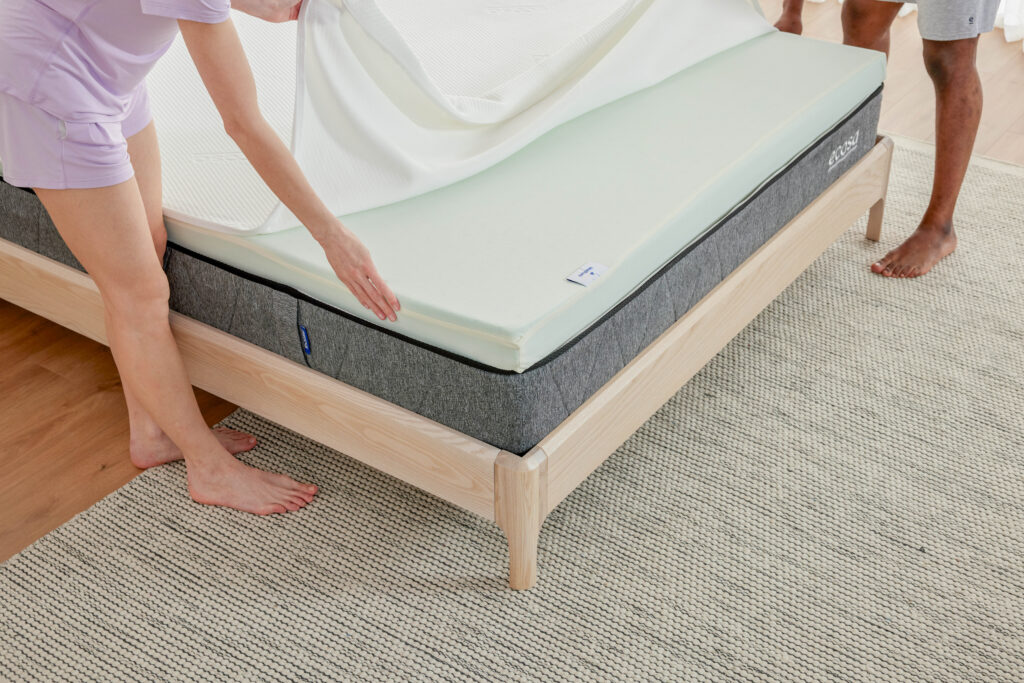
And honestly, it is often the basics like comfort, support and consistency that matter most.
So what actually helps?
If sleep is foundational, the question becomes: how do we protect it in real life?
A few small, evidence-backed shifts can genuinely help.
Consistency over perfection
Going to bed and waking up around the same time each day helps regulate your body clock, even if every night is not perfect.
Reduce mental load before bed
A lot of adults struggle with “bedtime rumination” and mentally running through lists, worries and unfinished tasks. Creating even a short buffer between work and sleep can help calm that cycle.
Reconsider screen time
Phones and screens are strongly associated with poorer sleep quality. Even something as simple as keeping your phone off the bed can make a difference.
Make your room sleep-friendly
Cool, dark and quiet spaces support better quality sleep.
Move during the day
Regular movement has been shown to improve sleep quality and reduce fatigue levels overall.
The bigger picture
What stayed with me after the conference was not just how many women were exhausted, but how normalised that exhaustion has become.
But there does seem to be a growing shift happening. More women are recognising that wellbeing is not separate from performance. It is what enables it. And when we’re rested, we’re also more patient, more focused, more resilient, more creative and more present in the parts of life that actually matter. And honestly, we are happier too. That should count for something.