
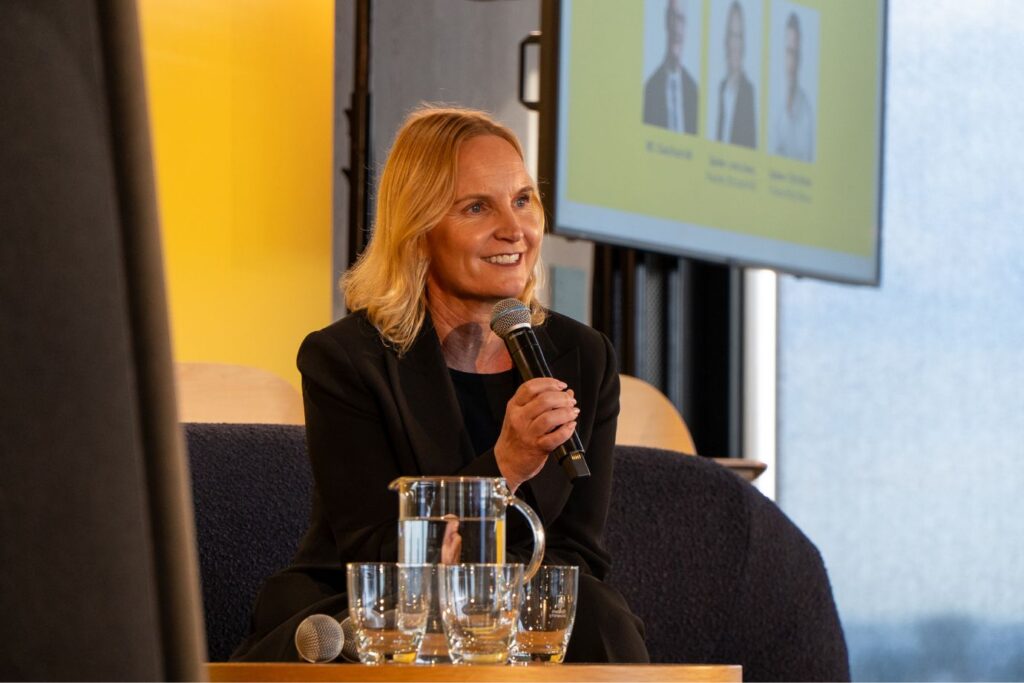
There’s no question AI is quickly reshaping organisations across Australia, and it’s leaving many leaders scrambling to keep up with the rapid pace of change.
For President of Microsoft ANZ Jane Livesey, the real question facing leaders is whether there is enough investment in organisational readiness and workforce capability to manage the massive technological shift.
She says a key focus is helping leaders understand that AI is no longer a future concept; it’s here now, and the pace of change is unprecedented.
“The challenge … is how organisations prepare themselves and their people to adopt it effectively. Leaders need to think about readiness, workforce capability, governance, trust, and how AI can be translated from experimentation into genuine business value,” she says.
Livesey adds that leaders also need a deeper understanding of how to use AI responsibly and effectively.
She believes one of the most important skills of the future will be knowing how to interrogate AI outputs, validate sources and understand how decisions are being made.
Following Livesey’s involvement in the Flinders University Business School AI Business Summit, we asked Livesey about leadership, AI and the skills needed for the future.
What do you think many leaders are getting wrong about AI transformation?
Many organisations are focusing too much on technology and not enough on people.
The potential of AI is incredible, but the real challenge is organisational readiness and helping teams adapt. Some businesses are also trying to do everything at once. Successful transformation comes from identifying specific use cases that create measurable value, building capability, and scaling deliberately rather than pursuing broad experimentation without a clear objective
In one recent interview, you noted that leaders need to educate tomorrow’s citizens on how to apply strong decision-making. How can leaders do that?
Leaders need to invest in skills, critical thinking and judgment. AI can provide information and recommendations, but people still need to interrogate outputs, understand where information comes from, challenge assumptions and make informed decisions.
That’s why building capability is so important, and why we’re investing in it at scale across Australia and New Zealand. Microsoft has committed to skill more than three million people in Australia and New Zealand by 2028, alongside a $25 billion investment in AI infrastructure, security and capability in Australia.
Building workforce capability, encouraging curiosity, and helping people understand how to work alongside AI responsibly will be essential. The greatest investment organisations can make is in skilling their people.
What are your most pressing concerns about AI?
The key concerns are ensuring AI is deployed safely, responsibly and in a way that benefits everyone. We need to address issues such as privacy, copyright, security, trust and equitable access to the benefits of AI.
There’s also a risk that only a small group benefits from the technology while others are left behind. Balancing innovation with appropriate safeguards will be critical.
What are you most excited about regarding AI’s potential to shape the future of innovation?
AI has the potential to create entirely new business models, industries and experiences. It can improve accessibility, deliver better services, unlock productivity and help people focus on higher-value work.
Rather than simply replacing existing processes, AI creates opportunities to rethink what customers and communities need and to build new, sustainable businesses around those needs. Throughout history, technological shifts have created new opportunities, and AI has the potential to be one of the most significant.