
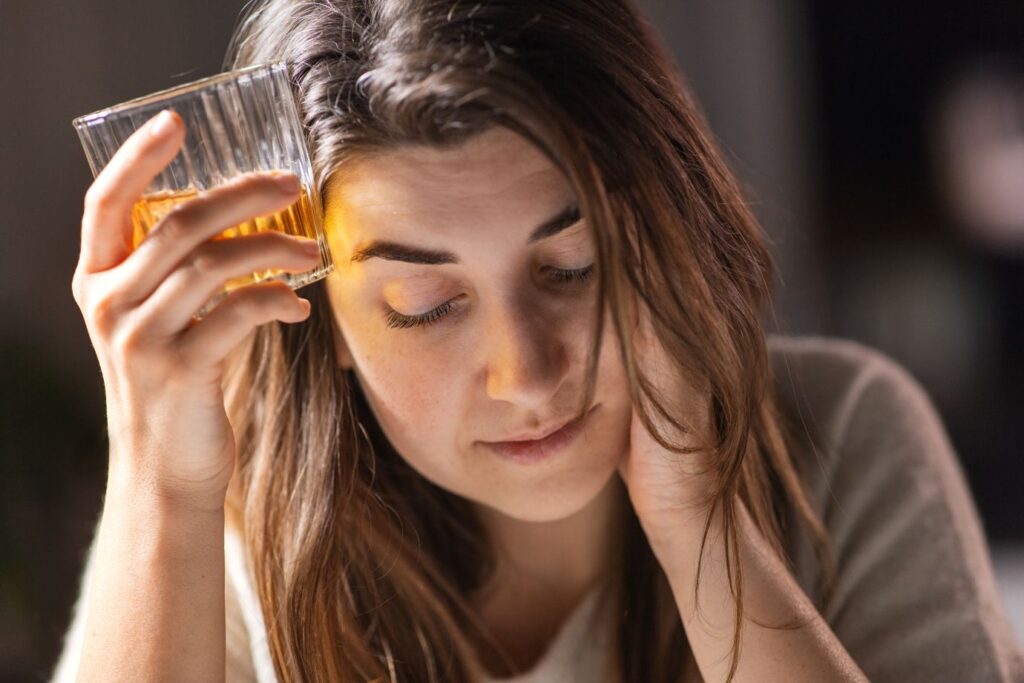
Across alcohol reduction campaigns, responsibility for reducing harm is consistently placed on women to drink responsibly… drink in moderation…drink less.
Given the real health risks of alcohol, including that one in ten breast cancer cases in Australia are linked to drinking, advice from health authorities to reduce alcohol consumption seems sensible. But statistics suggest the approach might be missing the mark.
Latest national survey data shows Australian women during midlife (aged 45-64) consume more alcohol than previous generations of midlife women and more than younger women now. Our studies show risk messages are not simply being ignored. Our interviews with more than 75 Australian women show that cutting back on alcohol is often more complicated than risk messages imply, and can leave some women feeling judged when change is difficult.
So what needs to change in women’s lives to increase their hopes for a future where even contemplating alcohol reduction seems possible?
The answer to this question is the subject of our new study.
We’re looking for women willing to share their stories and help us understand how the realities of women’s lives, including work, caregiving, menopause, financial pressures and the mental load, can shape their drinking. We’re particularly interested in how women’s busy working and caring lives influence alcohol use, and connects with their health and wellbeing and all other parts of their lives (not only drinking), so future approaches can focus on changing the conditions women navigate, that make alcohol feel necessary, rewarding or difficult to reduce – not asking women to change themselves.
Research shows women increasingly occupy managerial and high prestige roles, and that they must navigate a glass ceiling resulting from “invisible” challenges when trying to advance in their career. Though this phrase was coined in the 70’s, it remains relevant today as women who work, balance unpaid care work for family members and their own health with additional demands like overtime, frequent and last-minute travel, navigating flexible working hours alongside high expectations for near constant availability.
An expectation to keep up with work demand is often centred on an ideal worker, who is “implicitly male” with no outside obligations to his employer. There are clearly unique pressures, and colliding demands that must be met and managed by women, producing conditions where alcohol consumption is normalised or even expected.
Research out of the US suggests that when working in high-status occupations women are more exposed to drinking cultures that normalise heavy drinking, and our own studies with Australian women highlighted that alcohol provides respite from work stress among women, and is an integral part of winding down within post work rituals.
One woman interviewed described managing stress with alcohol and difficulty reducing it because it helps her with the combined challenges of working full time and mothering adult children, while experiencing physiological changes linked to menopause:
‘I’m finding it a bit more difficult at the moment to restrain [from drinking] and to be moderate so, yeah, I’m certainly seeking more help than I would’ve in the past. In the past I would’ve just by sheer willpower, said no but at the moment I’m finding that a bit more difficult with, you know, hysterectomy and kids and stress and age and other stuff happening; it’s just a bit more difficult.’
If you are a woman aged between 45-64, living in Australia, and want to have a say about women’s experiences with alcohol, please head here to read more about what’s involved. We would love to hear from women who work in senior management and executive level positions.
https://think.au1.qualtrics.com/jfe/form/SV_agHeyIj7jA9Gxh4
Our latest study is anonymous, and we would be asking you to share some photos or screenshots of social media that reflect women’s lives and experiences.