
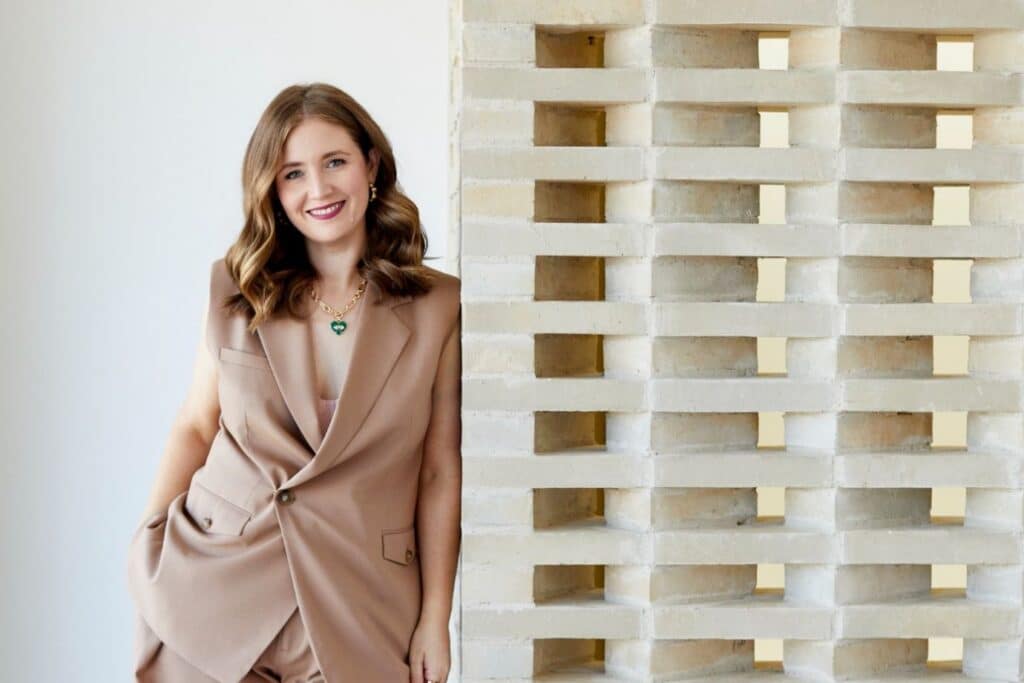
My business sells aspiration to women for a living, shaping narratives around independence, balance and success, and building campaigns that promise a version of life where it is all possible.
Yet behind the work, we continue to operate workplaces that quietly contradict everything we put into the market, particularly for the women responsible for creating that work.
This tension is not new, but it is becoming harder to ignore. Women make up the majority of the media and advertising industry at entry and mid-level yet hold less than 30 per cent of senior roles according to data from the Workplace Gender Equality Agency. By the time they reach their 30s and 40s, many begin to leave. McKinsey & Co research has found that for every woman promoted to director level, two exit the industry entirely, which signals less of an ambition gap and more of a structural failure that has gone largely unchallenged.
That failure carries a high commercial cost. Replacing an experienced employee can cost between 50 and 200 per cent of their salary, and that figure does not account for the client relationships, institutional knowledge and internal capability that leave with them. Across teams and departments, this becomes a quiet but substantial erosion of value, one that most agencies accept as inevitable rather than address directly.
I spent almost fifteen years working inside that system and saw the same pattern repeat itself.
Women would return from maternity leave to roles that had shifted, opportunities that had narrowed, and an unspoken expectation that their ambition should now be recalibrated. Flexibility was often positioned as a benefit, but in practice it meant reduced pay, fewer opportunities and, in many cases, the same workload compressed into fewer days. The opportunities available to me before becoming a mother were materially different to those I was offered afterwards, not because my capability had changed, but because assumptions about my commitment had.
One moment, in particular, made the underlying logic impossible to ignore. A senior colleague went on maternity leave and her role was not replaced, with the workload instead distributed across the team without additional resourcing or meaningful discussion. It was treated as a normal operational decision, but it raised a more fundamental question about how both people and work were being valued. A senior role had effectively been deemed non-essential, a team was expected to absorb an additional 10 or more hours each week, and clients continued to pay for a level of service that no longer had the same support behind it. No one challenged it, not because it went unnoticed, but because it was understood to be a deliberate choice.
Building Equality Media
My experiences with the above shaped my decision to build something different.
When I started Equality Media in 2018, the intention was to test whether a business could be designed around the reality of people’s lives, rather than requiring those lives to be managed around work. We introduced a four-day workweek at full pay, known internally as Equality Time, with the expectation that output would remain consistent while time would be used more deliberately. The immediate impact was a 68 per cent reduction in internal meetings, alongside a noticeable shift in how teams prioritised work, collaborated and structured their days, with greater focus placed on activity that genuinely moved outcomes for clients.
A range of 19 leave entitlements
We also expanded our approach to leave, developing nineteen entitlements in consultation with our team that reflect the complexity of people’s lives, including miscarriage, menopause, gender affirmation and cultural leave.

Through Equality Care, we recognised that care responsibilities extend beyond children to include pets, ageing parents and fertility journeys, and that physical health experiences such as endometriosis or perimenopause should not quietly erode someone’s ability to participate fully at work. The principle underpinning these decisions is straightforward: when people feel supported, they are more likely to contribute meaningfully and sustainably.
The commercial outcomes have also been clear. The business has grown from zero to more than $17 million in revenue over eight years, with growth exceeding 50 per cent in the past year alone, while maintaining staff retention at 97 per cent and a leadership team comprised of 80 per cent women. These results are not driven by a single initiative, but by a consistent approach to designing work differently, one that prioritises effectiveness over visibility and outcomes over time spent in an office.
Despite this, much of the current conversation continues to frame flexibility as something that can be misused, particularly in discussions around working from home. In practice, what is often reinforced is a preference for visibility, with time in the office still used as a proxy for commitment and performance. When flexibility is reduced or subtly penalised, the impact is predictable: women adjust their participation, step back, or leave altogether, while the underlying structural issues remain unchanged.
While policy changes and regulatory frameworks, such as the new WGEA requirements, represent progress, they do not in themselves address the fundamental design of how work is structured. Without that shift, targets risk becoming another layer of reporting rather than a driver of meaningful change. We are a relatively small business of 30 people based in Melbourne, and while we are not without our own challenges, our experience demonstrates that an alternative model is both viable and commercially effective. The broader question facing the industry is no longer whether flexibility, equity and culture-led design can deliver growth, but whether there is a genuine willingness to move beyond discussion and implement the structural changes required to achieve it.