
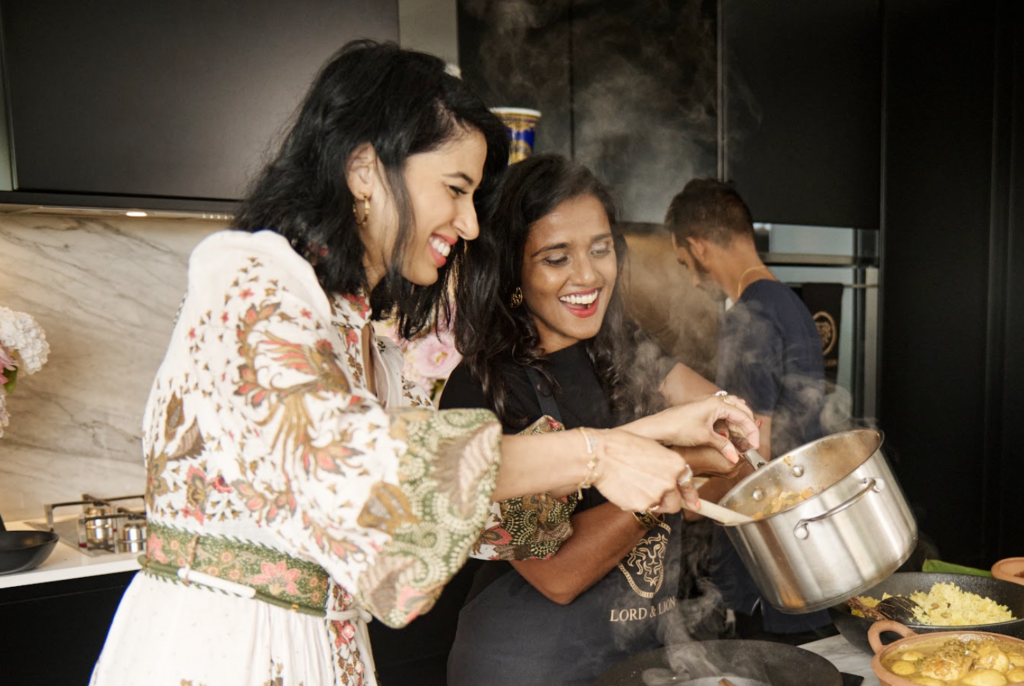
For Eresha De Zoysa, Lord & Lion didn’t begin as a business plan, it started with reflection and a reset.
During COVID, like many of us, Eresha found herself reflecting on what she wanted her life to look like, and more precisely, what she wanted it to stand for. Turning 40 became a natural moment to take stock. She had built a successful career as a corporate and commercial lawyer, but there was a growing pull to do something different, with more purpose.
“I felt I had achieved what I set out to in my previous career,” she says. “But there was a strong pull to do something that felt more tangible, and more connected to the kind of legacy I want to leave for my children.”
Out of that period came the beginnings of Lord & Lion, a business grounded in food, but also in culture, connection and community. Today, it’s importantly a vehicle for something much bigger: supporting families in Sri Lanka, including funding homes for those facing significant hardship.
Food, Eresha says, was always going to be at the centre of her business vision. Cooking, sharing meals, bringing people together, was, and always had been, a core part of her life. But the deeper purpose behind the business was shaped by something that started much earlier.
Giving back had been a lesson long held. Her mother, grandmother and aunts were constantly involved in supporting others, cooking for those in need, helping women with children, and working with orphanages, particularly during and after the civil war in Sri Lanka. Eresha was intent on Lord & Lion becoming a continuation of that work.
“That work didn’t start with Lord & Lion,” she says. “It’s something my family has always done. What this business has allowed me to do is continue it, but through something we’re building ourselves”, she shares.
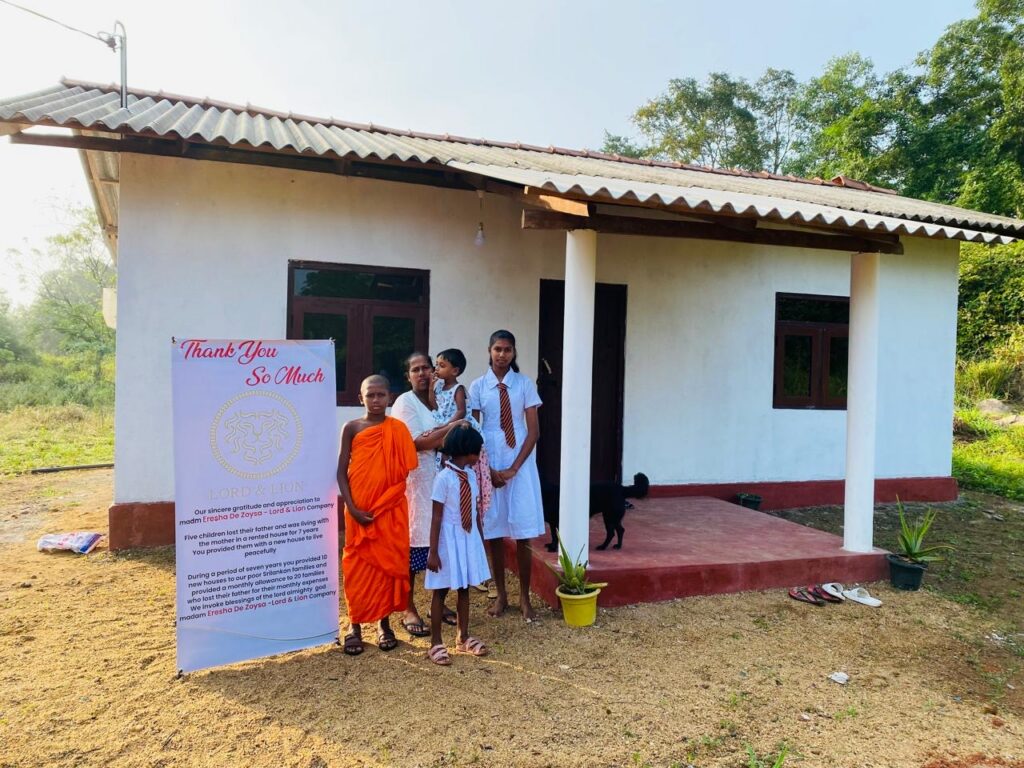
Every home funded through the business is a deeply personal milestone, but some moments stay with her more than others. She recalls one family in particular, a single mother of five who had lost her husband and had no stable way to support her children. One of her sons had been sent to a Buddhist monastery at just five years old, simply so he could be fed and cared for. Her youngest child had special needs.
They had been supporting the family for some time, covering medical expenses, education and basic living costs, but what they truly needed was a permanent home.
The day she moved in, De Zoysa says the mother was shaking with disbelief. The relief was immediate and overwhelming. “To be able to support another mother in that way stays with you,” she says.
Having spent part of her childhood in Sri Lanka, including time on the plantations, where her family knew the workers and their families by name, Eresha’s connection to the country is what drives her vision and the responsibility she feels to honour the people behind the products.
Building something from the ground up hasn’t been easy. After two decades in law, stepping into an entirely different world has come with its challenges. But what keeps her going is the impact she’s achieving and how far that might stretch. She’s also quick to point to the role of her team, who help keep that focus sharp when things inevitably get tough.

The journey has also reshaped how she thinks about success. While financial performance matters, it’s only part of the picture. Likewise, having the freedom to spend time doing work that feels worthwhile is liberating. She’s working harder than ever, she says, but enjoying it more too.
In a business landscape where “purpose-driven” has become something of a buzzword, Eresha has a clear view on what that actually means. For her, it has to be embedded from the beginning. It’s not something that can be layered on later. It needs to shape decisions at every level and become part of the fabric of the business rather than a line in a report.
Looking ahead, her focus is on continuing to build something that feels both meaningful and sustainable.
And if that journey also shows other women that it’s possible to build something commercially successful while staying deeply connected to purpose, then that’s a legacy in itself.