
There is a particular kind of exhaustion familiar to many women. It’s the exhaustion of feeling something is wrong, finally making the appointment, carefully explaining the symptoms, and leaving with the sense that you’ve been labelled anxious, stressed, hormonal or simply too sensitive.
Harvard Health describes medical gaslighting as when:
“health care professionals seem to invalidate or ignore your concerns. It can be linked to missed diagnoses, delayed treatment, and poor health outcomes. It might damage your trust in the health care system and make you less likely to seek care.”
Medical gaslighting is not simply an issue of poor bedside manner, although empathy matters enormously. It’s often the human consequence of a health system that has not invested enough in researching women’s bodies, understanding how disease presents in women, and building diagnostic tools designed around women’s health.
This is not just a women’s problem; it could also be a diagnostic failure.
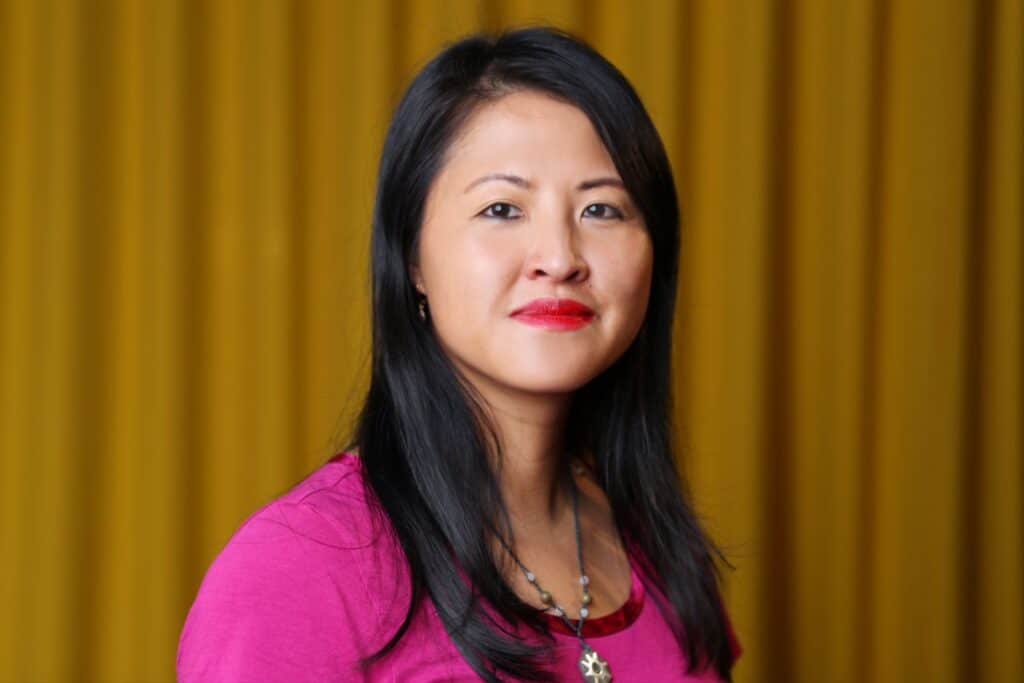
I interviewed Associate Professor Michelle Hill, a biochemist, translational cancer researcher, and founder of the women’s health diagnostics company ProSeek Bio, for my Emerging Tech Unpacked podcast on ovarian cancer. Ovarian cancer is a disease often described as a “silent killer” because its symptoms can look alarmingly like ordinary life. Bloating, discomfort, fatigue, back or pelvic pain, changes in appetite and a general feeling that something is off.
Many women experience some version of them regularly, which makes it difficult to know when to worry and difficult for clinicians to identify the women who need urgent investigation. That uncertainty comes at a devastating cost. Ovarian cancer is often diagnosed at a later stage, when outcomes are far worse, while early diagnosis is associated with significantly better survival. When an ovarian mass is suspicious, a definitive diagnosis may require surgery and pathology testing. In some cases, women undergo major surgery and may lose an ovary before they know whether the mass was cancerous or benign.
This is not an argument against clinicians; it’s an argument for better tools. As Professor Hill put it, “clinicians cannot diagnose what they cannot reliably test for.” When the system offers vague symptoms, imperfect markers and inadequate diagnostic pathways, even well-intentioned doctors are left trying to make decisions with incomplete information. Women are still the ones left living with the consequences.
We know that women’s health has long been treated as an add-on rather than a central field of medical inquiry. In the United States, the 1993 NIH Revitalization Act formally required the inclusion of women and minority groups in NIH-funded clinical research – a reminder of how recently women’s inclusion in research became a legal expectation rather than an optional consideration.
Research shapes everything downstream. What conditions are recognised, whose symptoms are taught in medical education, which diagnostic tests are developed, how medicines are dosed, what gets funded and which experiences are dismissed as “normal”. If the evidence base is incomplete, women do not receive neutral care. They receive care built around gaps.
The consequences extend beyond health. They also shape women’s working lives. A woman living with unexplained pain, heavy bleeding, debilitating fatigue, hormonal symptoms or a delayed diagnosis is also trying to build a career, lead a team, meet deadlines, care for family members and maintain financial independence. She may use annual leave for appointments, reduce her hours, turn down opportunities or doubt her own capability because she has been repeatedly told nothing is wrong. The personal cost is profound. The economic cost is also enormous, even if it is rarely calculated with the same urgency as other workforce challenges.
We should be wary, too, of placing the entire responsibility on women to become flawless advocates for their own health. Yes, knowing your normal, keeping a record of symptoms and seeking another opinion when something does not feel right can be valuable. But self-advocacy should not be the price of receiving competent care.

It is also worth asking who we expect women to advocate against.
Women working inside medicine, including doctors, researchers, nurses and other health professionals, continue to navigate gendered hierarchies and unequal representation in senior leadership. In Australia, research shows that women have reached parity in medical-school participation for decades yet remain under-represented in senior medical leadership and report ongoing workplace gender, pregnancy and carer-related discrimination. If professionals with clinical training and institutional access can encounter these barriers, it is unrealistic to make persistence, confidence and the ability to challenge authority prerequisites for a patient to receive appropriate care.
Not every woman has the time, money, confidence, medical literacy or workplace flexibility to visit multiple practitioners. Not every woman feels safe challenging a clinician, and not every woman will be believed even when she does.
The answer is not to ask women to shout louder. The answer is to build systems that listen better. Funding research into underdiagnosed and under-researched conditions, designing clinical trials and health data around sex-specific differences, and treating women as women rather than “small men”.
Capital investment has a huge impact. Women’s health innovation needs investment, clinical partnerships, regulatory support and manufacturing capability. Procurement pathways that enable useful technologies to reach the women who need them must align with awareness campaigns and goodwill.
That is what progress will look like. Not telling women to worry less, not asking them to be less emotional, less inconvenient or more patient. Giving clinicians better evidence, women better answers and building a health system in which “it’s all in your head” is replaced by “let’s work out what is happening.”
Until then, the cost of dismissing women’s symptoms will remain much greater than a loss of trust in the health system. It can mean years without answers, unnecessary procedures, lost income and career opportunities, compromised fertility, preventable harm and, in some cases, lives cut short. Importantly, women should not need extraordinary persistence to receive ordinary medical care.