
Are we overlooking the answer to where Australia’s next 40 years of economic growth will come from?
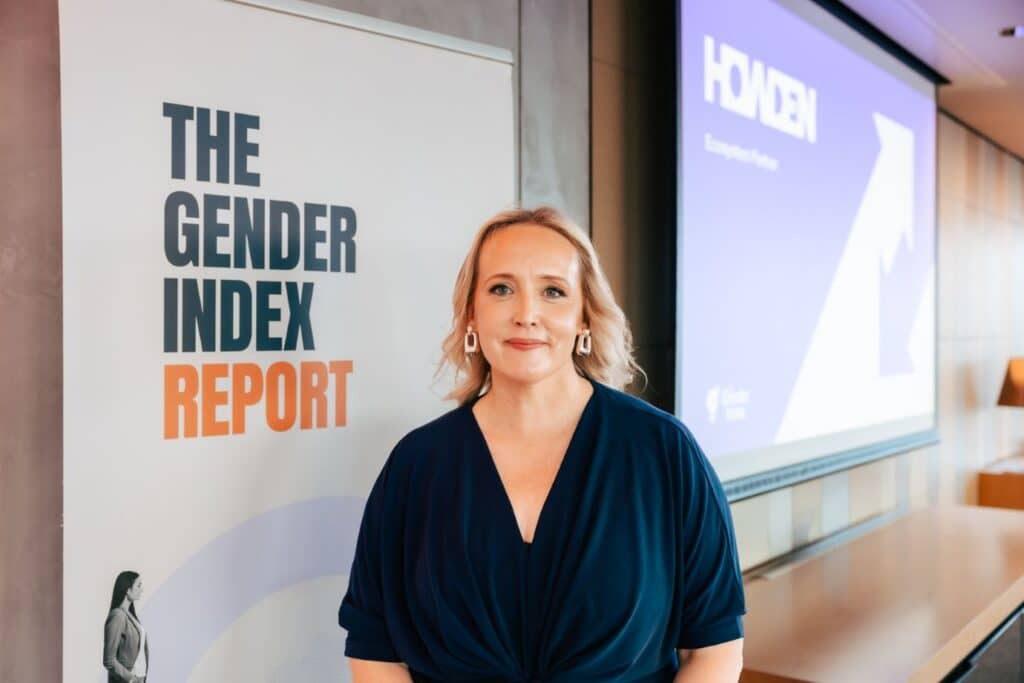
New data from The Gender Index Australia points to an economic opportunity hiding in plain sight: helping more women-led businesses to scale. Jo Tarnawsky who supported the launch of the report, shares more on the findings.
The Australian Treasurer released a report last month contemplating how Australia will remain prosperous over the next 40 years.
The 2026 Intergenerational Report found that Australia’s future to 2066 projects an economy that will continue to expand, but slowly. An ageing population and slower population growth will weigh on economic performance, making productivity, investment and more dynamic and competitive businesses increasingly important to our future prosperity.
As Australia looks for opportunities and ways to address the challenges posed by this trajectory, part of the answer is hiding in plain sight: women-led businesses.
The Gender Index Australia
Australia now has new data to help us understand this opportunity. The inaugural Gender Index Australia report released in early September 2026 measured Australia’s women-led economy at scale for the first time.
For me, the data arrived at an interesting point in my own working life. A year ago, I didn’t know many female founders. Now, I happily spend my days among them. For most of my career, I worked within a formal employment structure. That changed last October, when I started my own business.
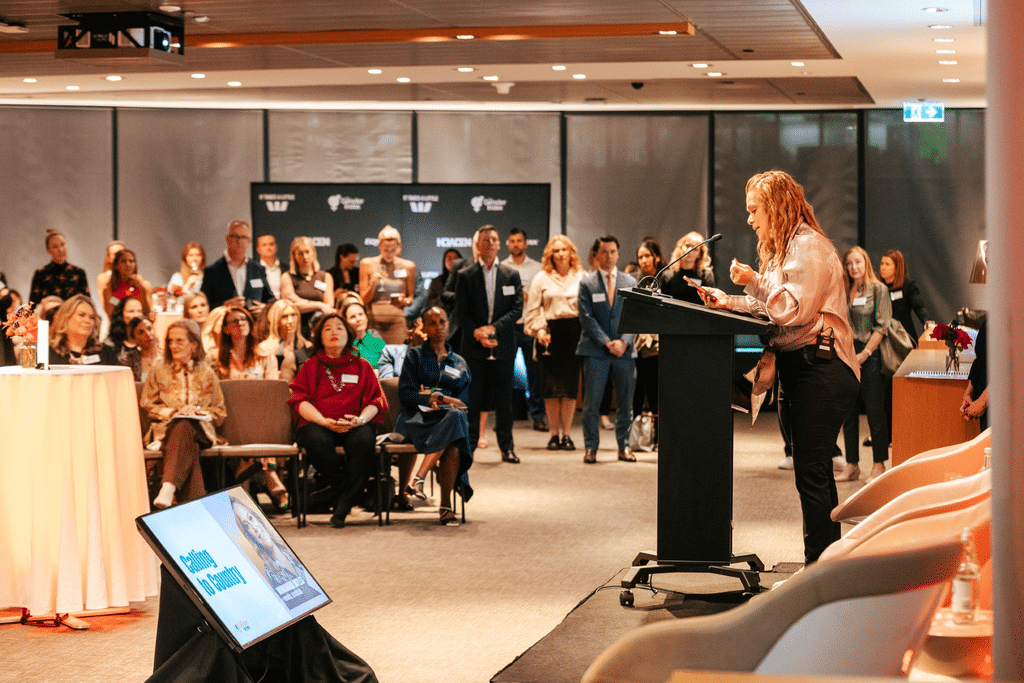
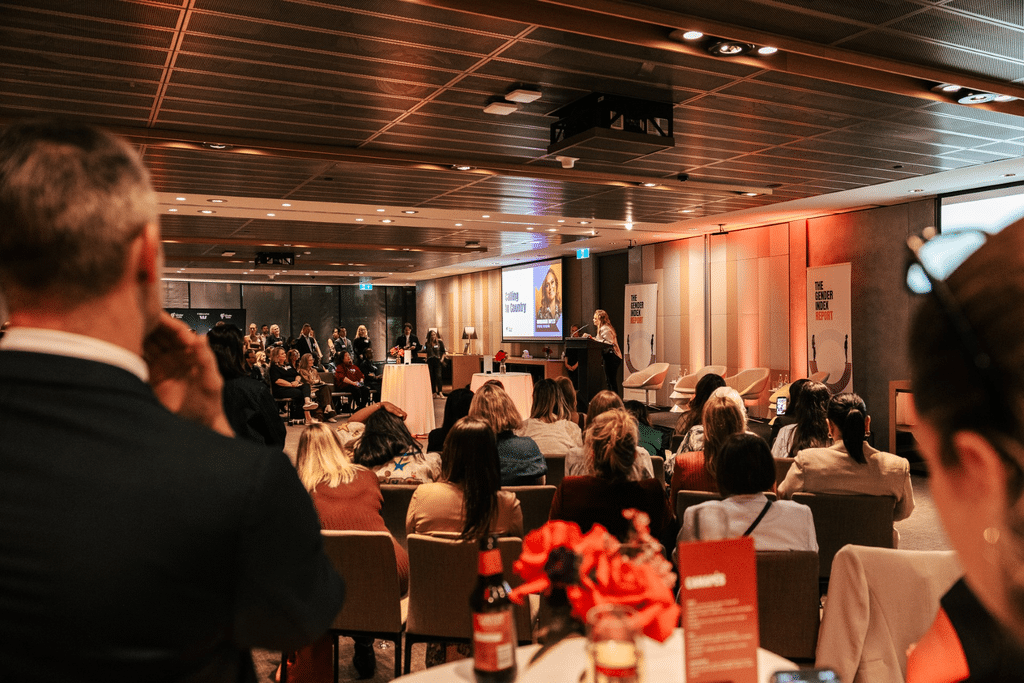
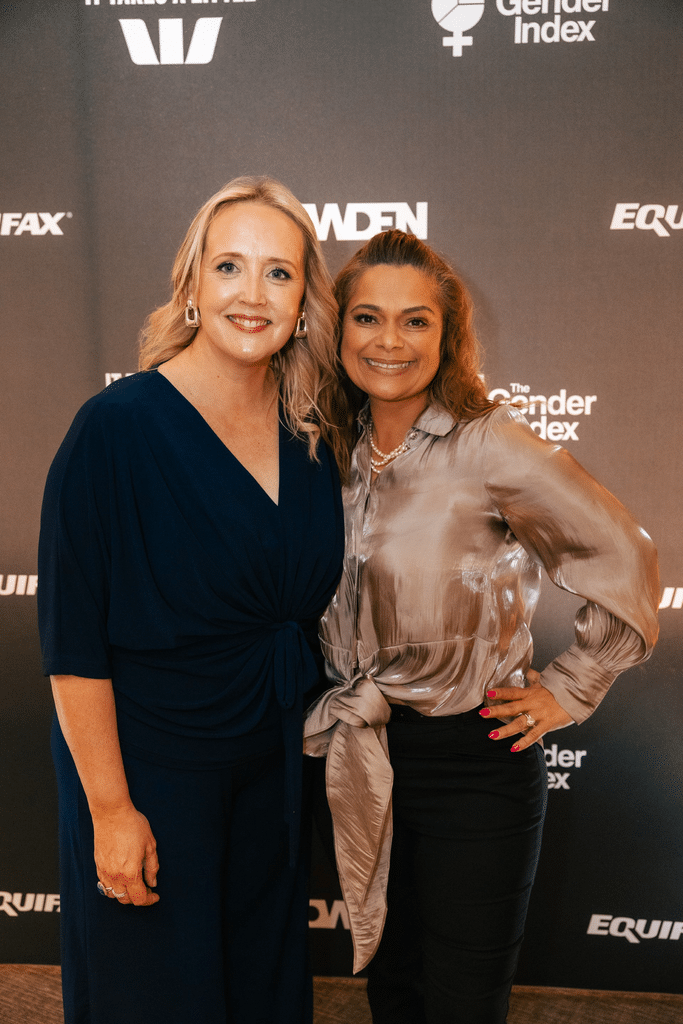
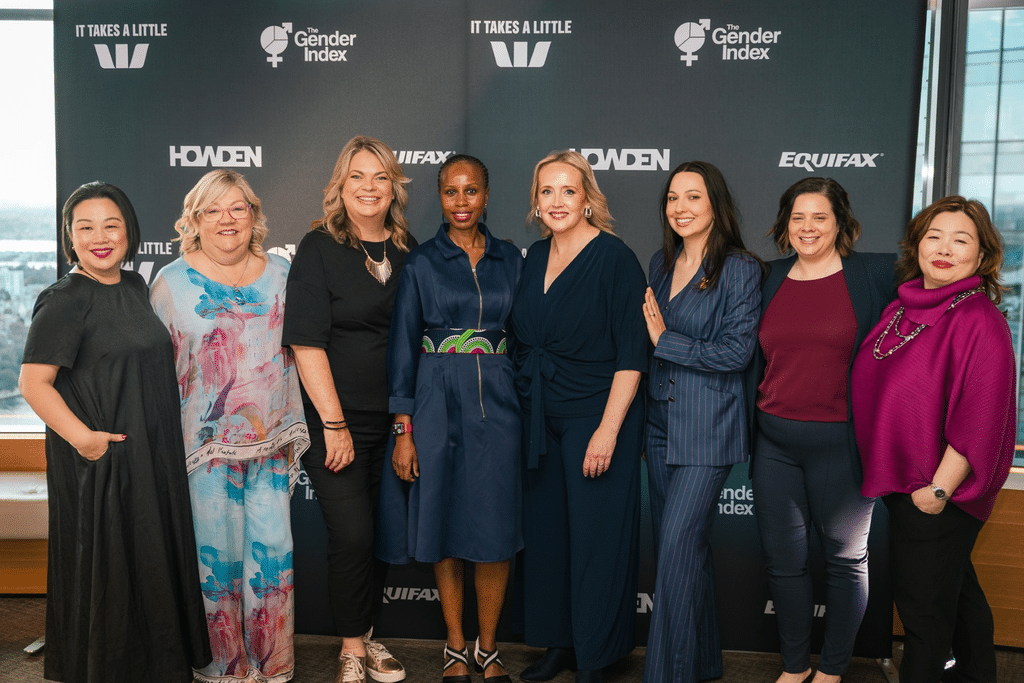
So when I stood among more than a hundred other female founders at the national launch of The Gender Index Australia, I understood the buzz because I felt it too. In the weeks leading up to the launch, word spread, and female founders asked how they could get involved. The venue filled quickly and hit a waiting list. The mix of women who ultimately attended told part of the story: from a sole trader just four months into her first business to founders of multi-million-dollar brands that had been operating for decades. Between us, we spanned finance, technology, beauty, food, fashion, media and marketing, property, logistics, health, social enterprise, education and consulting.
Women like us didn’t need another conversation about whether we belonged in business; we were already there. The more interesting question was what came next.
The report showed us what happens after women enter business and how our representation changes as our businesses progress. Perhaps that’s why the data resonated so strongly.
Collectively, many of us had experienced the gaps the data was measuring, either in our own businesses or across our networks. Now, for the first time, we had a national picture capable of showing where women sat within Australia’s business economy, what happened as we moved through it, and where policy and investment could make the greatest difference.
From participation to progression
Drawing on millions of Australian business records, from sole traders to registered companies across every state and territory, the report put female entrepreneurship into a context of productivity, jobs, wages and economic growth.

One of the report’s most striking findings is the distinction between participation and progression, identifying a clear ‘scaling cliff’. Courtney Bowie has written that female founders can do some practical things to prepare their businesses for the next stage, but whether those businesses are able to scale does not depend on female founders alone. It also depends on who gets access to capital, finance, contracts, procurement opportunities, and customers. And that’s where I think the story becomes particularly interesting.
Based on the report’s data, the challenge for female-led businesses occurs at the transition points – scaling, capital, procurement, and industry access. Women lead 42.2 per cent of sole traders but only 15.2 per cent of incorporated companies. Significantly, 86.3 per cent of the estimated scaling opportunity occurs at the transition from micro to small.
To me, that statistic alone is fascinating, because we’re not primarily talking about getting women from a $10 million company to a $100 million company. Much of the missing opportunity occurs much earlier than that. It happens when someone needs their first significant contract, their first employee, growth finance, procurement access, and a customer prepared to take a chance on a new or small supplier.
In the startup ecosystem, female-only founding teams received just 2% of reported Australian startup capital in 2025 despite accounting for 8 per cent of deals. That should obviously concern us from an equality perspective, but it should also make investors curious. Who and what are they missing? And what commercial opportunities are they leaving on the table as a result?
This is not a question of charity; it is an investment question. And it is exactly the type of data that should make governments, investors and businesses stop and think about where economic opportunity is being missed.
Modelling commissioned by The Gender Index estimates that if female-led businesses progressed at the same rates as male-led businesses, Australia could have almost 28,000 additional growth businesses, around 745,000 jobs, and more than $100 billion annually in combined wages and government tax revenue.
The Gender Index Australia’s findings also appeared at an interesting time in the broader conversation about women’s economic power. Just two weeks after The Gender Index Australia report was launched, the World Economic Forum’s Global Gender Gap Report ranked Australia 8th out of 145 economies for overall gender parity – our first appearance in the global top 10. As Angela Priestley wrote at the time, that’s a significant achievement, but no reason for complacency. The WEF report argues that the next frontier will increasingly be shaped by who advances into leadership, participates in high-value industries, directs capital, and holds decision-making power.
In other words, participation matters, but economic power lies in what happens next.
Not all participation looks the same
Reading the numbers also made me reflect on the different circumstances that bring women to entrepreneurship.
Some women come with capital, networks and a clear commercial opportunity. Others start with little more than an idea and their own savings.
The room for the national launch of The Gender Index Australia also reflected those mixed pathways. Some women started their first businesses in their twenties, while others did so much later in life. Some were already full-time founders, while others were building businesses alongside paid employment, hoping their side hustle might become something more.
This is precisely why participation alone is such an inadequate measure of economic potential and power. A woman registering an ABN tells us she’s in business, but it doesn’t tell us why she entered, what she earns, whether she can access finance, afford to employ someone, win a major contract, or grow. Participation itself can therefore disguise vastly different levels of opportunity.
Mundanara Bayles, CEO of BlackCard, added another important dimension to the national launch. She spoke about the long history of Aboriginal women as gatherers, traders and entrepreneurs. She then explained how, for some First Nations women today, going into business can be about survival rather than an exciting commercial opportunity. First Nations women also face additional barriers in accessing capital, including lending structures, bias, lack of collateral and financing models that do not fit their circumstances. When traditional finance is unavailable, she said, women may instead turn to credit cards or borrow from friends to get themselves started.
That complicates the neat narratives we often tell ourselves about entrepreneurship. Some women start businesses because they see a commercial opportunity. For others, entrepreneurship may come from necessity, exclusion from traditional workplaces, or a determination to make a better future for themselves.
Counting women in business is therefore only the beginning. The more important question is what opportunity they have to progress and grow once they are there. Camaraderie between women on its own cannot close the scaling gap. At some point, an introduction needs to become a customer, visibility needs to become procurement, and encouragement needs to become investment. This requires people who already hold economic power to use it differently.
From data to decisions
Ultimately, investors decide where capital flows, governments make procurement and policy decisions, banks decide who gets finance and on what terms, and corporations choose suppliers. The same question should confront them all: What are they missing?
If the data shows that women participate in business in significant numbers, but their representation falls sharply as businesses progress toward scale, this isn’t simply a question of fairness. It is a question about whether decision-makers are identifying the full range of commercially viable businesses in front of them and what investment, jobs and economic growth Australia may be missing as a result.
In this way, The Gender Index Australia report isn’t data for data’s sake. It gives governments, investors, financial institutions and businesses evidence they can use to decide where intervention and investment can make the most difference.
Another form of investment also matters: backing the data itself. A baseline only becomes truly powerful if we keep measuring. One report gives us visibility, but repeated measurement creates accountability.
The Gender Index first launched in the UK in 2022, where successive annual data releases now allow changes in female-led business formation, turnover, investment, growth and regional performance to be tracked over time. Australia now has its baseline. But maintaining it will require leaders and organisations willing to support the ongoing work of The Gender Index Australia and the data infrastructure needed to return to these questions year after year.
The long-term value of The Gender Index Australia will lie in its ability to show us where progress is being made, where gaps persist, and whether decisions made by governments, investors, financial institutions and business leaders are changing the trajectory.
Women are starting businesses, building products, employing people, innovating and taking risks. The question is whether enough of those businesses are getting the capital, contracts, customers and opportunities they need to become something bigger.
At a time when Australia is searching for new sources of productivity and prosperity, we cannot afford to leave commercially viable businesses, jobs and economic potential on the table.
Ultimately, this is about what becomes possible, for women and for Australia, when we stop treating female entrepreneurship simply as a diversity issue and start recognising its true economic power and potential.