
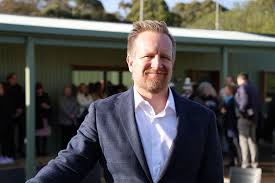
This week, the Victorian Allan Labor government made history when it became the first jurisdiction in Australia to have a Minister for Men and Boys. Frankston MP Paul Edbrooke was sworn in as Australia’s first Minister for Men and Boys, a portfolio tasked with tackling the manosphere, examining the influence of right-wing online influencers on young men, and addressing what Edbrooke calls the shift in “how young boys become healthier men.”
Premier Allan said we “can’t deny that there has been societal change with the way we support young boys, to become good strong men.”
She is right. But societal change does not happen in a gender vacuum, and the architecture of this portfolio risks treating the symptom while leaving the disease unnamed.
The problems this portfolio is designed to address are real. Men die by suicide at three times the rate of women and in 2024, more than three quarters of Australia’s 3,307 suicide deaths were male. Victoria Police responded to 94,170 family violence incidents in 2023, one every six minutes, a 38 per cent increase over the past decade. Research consistently shows that men who endorse rigid, dominant forms of masculinity are more than eight times more likely to perpetrate sexual violence against an intimate partner. The manosphere is not a culture war abstraction, it is a radicalisation pipeline with real-world consequences for women’s safety. Disrupting it is feminist work, even when it doesn’t announce itself as such.
But creating a portfolio centred on men without an explicit gender equality mandate, risks implying a false equivalence between male disadvantage and the structural disadvantage women continue to face. One in five Victorian women will experience family violence over their lifetime. It is the leading contributor to preventable death, disability and illness in Victorian women aged 15 to 44, and the single largest driver of homelessness for women and children. In 2024, 105 women and 21 children were killed in family violence-related homicides across Australia. These numbers exist in a budget where, in the same period this portfolio was created, family violence service delivery funding was cut by $24.2 million and primary prevention funding fell by $8.3 million.
Aboriginal and Torres Strait Islander and migrant women experience family violence at disproportionately higher rates, compounded by colonisation, intergenerational trauma and systemic racism intersecting with gendered drivers of violence. A portfolio framed around boys and men, without intersectional accountability built into its mandate, risks further marginalising those whose experiences are already least visible. The manosphere is a real and growing threat, but it is not the primary threat facing a First Nations woman in regional Victoria, or a woman from a migrant background with no access to specialist services.
The evidence on what actually prevents family violence is not ambiguous. Gender inequality is the primary driver. More than 40 per cent of Victorian men don’t fully support the idea that women and men should have equal power and say in their relationships — things like equal decision-making, shared financial control, and mutual respect rather than one partner dominating the other. Nearly one in four Australians still believe domestic violence is a normal reaction to day-to-day stress. You cannot fix this with a minister for men operating in isolation from a gender equality framework. The two must work in together and right now, only one of them exists.
This is why the more ambitious and genuinely progressive policy position would be a ‘Minister for Gender Equality and the Prevention of Family Violence’ a portfolio with an explicit mandate to address the drivers of violence at both ends. Transforming the conditions that produce violent men, and dismantling the inequality that makes women and children vulnerable to them, are not separate problems. They are two expressions of the same patriarchal logic. Andrew Tate does not have tens of millions of followers in a society that has achieved gender equality. Boys are not being radicalised into misogyny in communities where women hold equal economic, social and political power.
Done well with a genuine focus on healthy masculinity, suicide prevention, and the explicit upstream link between boys’ socialisation and adult perpetration of violence, this portfolio could be a meaningful contribution. But it must not substitute with a reckoning with gender inequality, and it must not allow the optics of balancing men’s and women’s interests to mask the very real asymmetry in who is being killed, made homeless and impoverished by intimate partner violence.
A Minister for Men and Boys is an acknowledgment. A Minister for Gender Equality and the Prevention of Family Violence would be a commitment. We need both to achieve real structural change.
If you are experiencing family violence, call 1800RESPECT (1800 737 732) or Safe Steps on 1800 015 188. If you need mental health support, call Lifeline on 13 11 14. In immediate danger, call 000.