
International Women’s Day 2026 will be focused on advancing justice, through the official UN International Women’s Day Theme for 2026 ‘Balance the Scales’. The national conversation, as it often does, will be fixated on “seats at the table”, proposing broad-brush solutions for all women.
But as many have warned over time for multicultural women, the table isn’t just crowded – it’s structurally impossible to access. This is not a marginal issue. It is a structural feature of how our systems exclude from equitable access, treatment and outcomes from our justice systems to how our domestic labour market recognises or often fails to recognise global talent.
As we continue to talk this week, a significant inefficiency continues to stall our economy: Female migrants with a postgraduate degree have the worst wage outcomes, earning 31 per cent less than Australian-born women with similar education levels, as found by the Committee for Economic Development Australia. In an economy increasingly shaped by skills shortages and ageing workforce pressures, this represents a structural inefficiency Australia can no longer afford to ignore.
What we call the “Qualification Paradox” represents perhaps the most massive waste of human capital and symptom of the larger gender equality issue we must tackle: that multicultural women continue to be left behind. From employment opportunities, leadership pathways, access to professional networks, and boards across this country, multicultural women remain underrepresented, to no fault of their own.
Recent data from the Australian Multicultural Women’s Alliance (AMWA), confirms that while we tackle a productivity crisis, we are simultaneously systematically de-skilling our most educated arrivals – many of whom are women. As a national alliance working across community, research and policy ecosystems, AMWA is increasingly seeing these patterns repeated across sectors, visa pathways and geographies. Census data has confirmed, time and time again, that migrants are often more highly qualified than Australian-born citizens across major occupational categories. Recent data from the Australian Institute of Family Studies confirms this paradox finding that 67 per cent of women humanitarian entrants, previously employed in managerial and professional roles prior to settlement in Australia, were not in paid work after 10 years in Australia.
This International Women’s Day, we must tackle this not as a “diversity” problem; but as a critical market failure – where fragmented systems, bureaucratic credentialing processes, and unexamined bias prevent capable workers from being efficiently matched to roles that reflect their skills.
The Multicultural Weight on the Scale of Women in Australia
Robust research tells us that the weights holding migrant women back largely result from structural frictions. These barriers rarely occur in isolation. Instead, they compound across settlement, employment, safety, caregiving responsibilities and access to professional networks.
It is also critical to acknowledge that migrant and refugee women are not a homogenous cohort. Their labour market outcomes are shaped by intersecting factors including visa status, race, religion, disability, caregiving responsibilities, English proficiency, trauma exposure, and experiences of gender-based violence. Intersectionality is not rhetorical flourish – it is a policy necessity.
- The Secondary Visa Trap: Many highly skilled women arrive as “secondary” applicants on their partner’s visa. Despite their expertise, they are frequently excluded from professional networks and settlement support, and lack the local connections to break through the labour market. With limited recognition of their overseas qualifications and experience, they often opt for “survival jobs” in retail or the care economy rather than their areas of expertise. This is not a question of willingness to participate. It is a question of structural access to opportunity.
- The discrimination barrier: For many multicultural women including those born in Australia, the barrier is simply looking or sounding “too diverse”. As reported by Women of Colour Australia in 2024, 2 in 3 multicultural women reported workplace discrimination to a 10% increase since 2021.
- Inaccessible leadership: Respondents to the most recent AMWA National Leadership Survey described their career trajectories as stagnant at ‘middle-management’ levels, attributed to a variety of structural factors including limited access to sponsors and advocates, a lack of representation of culturally diverse women in executive leadership and a scarcity of inherited or local networks.
The Ambition Paradox
Perhaps most frustrating, is that multicultural women express record-high ambition to contribute to labour market, find employment opportunities, and secure senior leadership positions. A report by the Diversity Council of Australia found that 88 per cent of culturally diverse women are actively (unsuccessfully) seeking senior leadership roles, yet only 15 per cent feel their organisations actually leverage their diversity. The issue is not pipeline. It is conversion of talent into leadership.
Multicultural women are often multilingual, globally-minded cross-cultural brokers. SSI and Deloitte Access Economics already highlighted the cost we pay for this error in the Billion Dollar Benefit Study. If permanent migrants were simply supported to work at their qualified skill level, Australia’s GDP could grow by an average of $9 billion annually over the next decade.
Yet we are hiring these very high-qualified women to work as disability support workers instead of as doctors, to be baristas instead of managers, and housekeepers instead of engineers. And while these paradoxes unfold, we are wondering why national productivity has stalled. Across sectors, this mismatch is playing out in real time.
At a time when Australia is competing globally for skilled migrants, underutilisation of existing talent undermines both productivity and national competitiveness. Australia does not have a shortage of skilled migrant women. It has a shortage of systems designed to recognise and deploy their capability.

A Model of Advancing Migrant Women
Balancing the scales for multicultural women will take more than the average approach for all women. It will require we move toward a model of economic reciprocity – one where we give visibility to these barriers and listen to what multicultural women need to unlock their economic potential. National consultations consistently show multicultural women are clear about what works – sponsorship, recognition of global experience, and real access to decision-making pathways.
These levers for change are clear and actionable for any C-suite leader.
- Sponsorship over Mentorship: Multicultural women need sponsors – leaders who will use their own social capital to open the “hidden” job market, connections and networks that remains out of reach for those without inherited local networks.
- Reimagined Credential Recognition: Wherever possible, dismantle the bias that discounts international experience and create simple pathways to overcome global to local experience gaps. A postgraduate degree or experience from a non-OECD country should be perceived as an asset, not a threat.
- Meaningful leadership pathways for multicultural women: This requires moving beyond “culture fit” to “culture add,” implementing safe reporting mechanisms for discrimination, and ensuring boardroom representation moves beyond the current, stagnant 2% for women from multicultural backgrounds as found in the most recent Australian Institute of Company Directors Board Diversity Index.
As an example, the Australian Multicultural Foundation’s national scholarship program for young multicultural women – an initiative dedicated to the legacy of the late Carla Zampatti AC -sees firsthand that sponsorship, recognition and leadership pathways drive economic mobility through tapping into the underutlised skills and potential of young migrant and refugee women.
The Bottom Line
Realising the full economic empowerment of multicultural women is an imperative for our country. By removing the specific systemic weights that these women carry, we will win decades of growth that benefit every Australian. This is not simply a diversity objective. It is core economic infrastructure for Australia’s future workforce.
It is time to for the Australian economy to “weigh in” this International Women’s Day, one workplace at a time.
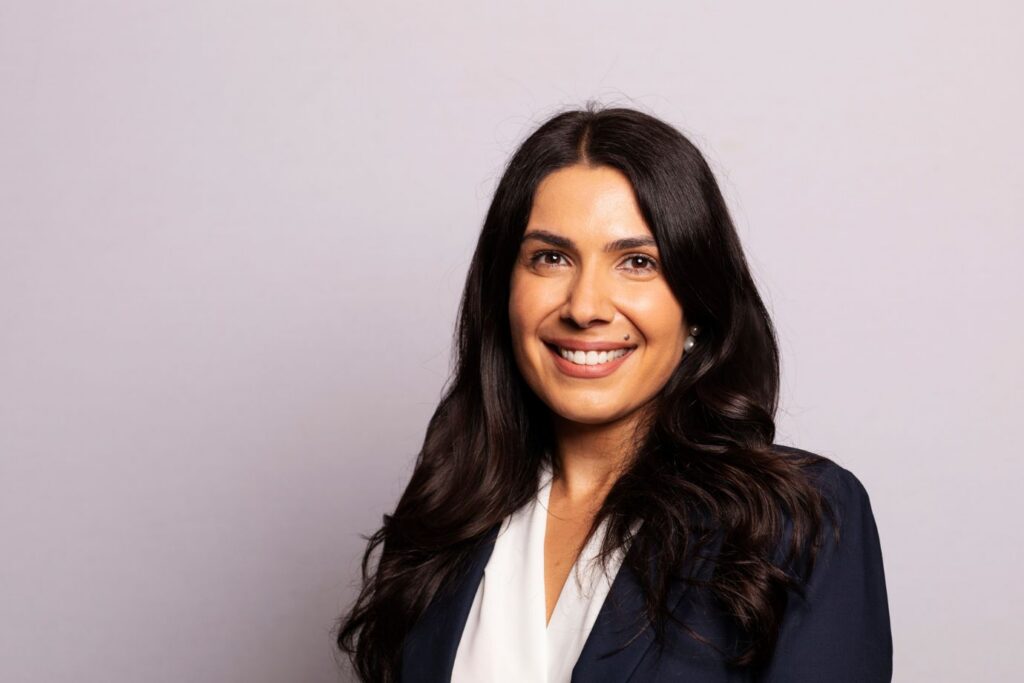
Feature image: Lead Author, Dr Rhonda Itaoui.