
I don’t watch a great deal of TV or movies, but my husband does. Often, they are shows involving espionage, the FBI, the CIA, Interpol, kidnappings, and the world being saved from destruction at the last possible moment. Some storylines seem so over the top and absurd that I’ll glance over skeptically. But sometimes my husband turns to me and asks, “Do you think this never happens?” And I’m starting to see his point.
It is not even the middle of January 2026, and it feels like we are living inside some kind of movie plot. Except the plot gets more absurd with each passing day, and there’s no scriptwriter ensuring a tidy resolution.
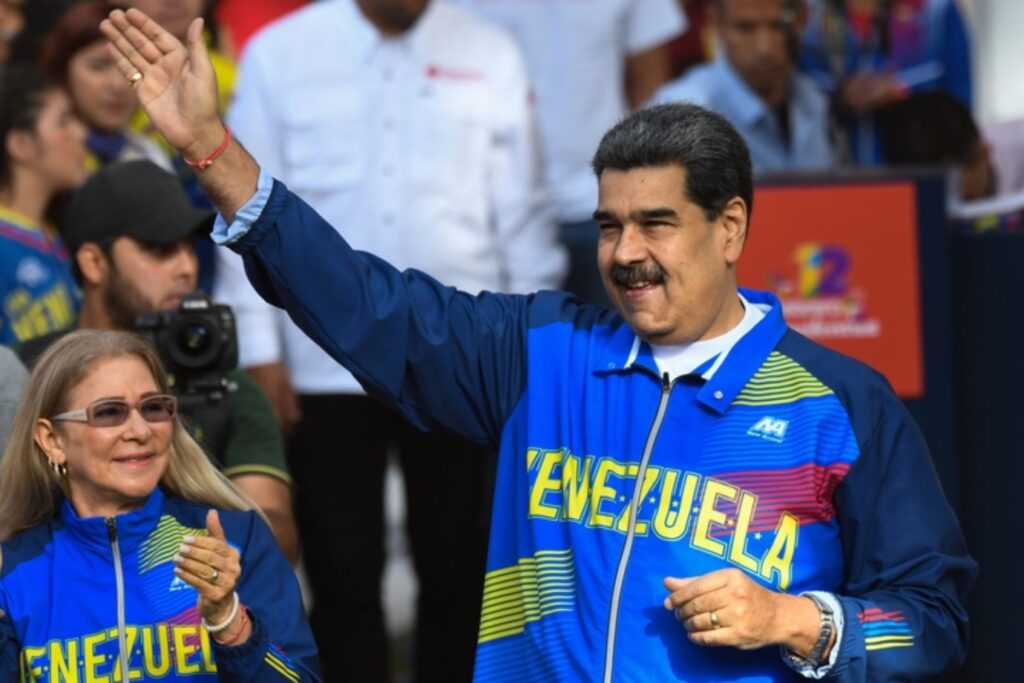
On 3 January, America entered a sovereign country and arrested, kidnapped, removed—I’m not quite sure what the right word is—the president of Venezuela. Nicolás Maduro and his wife were seized during overnight strikes and flown to New York to face narcoterrorism and drug charges stemming from indictments first filed in 2020. If you’re on social media or consuming any kind of media for that matter, there are so many differing viewpoints it’s dizzying. Some are applauding the move, noting that Maduro is widely considered a dictator who has presided over economic collapse and suppressed his own people. Others, including many Venezuelans, are demanding the return of their president, regardless of how contested his legitimacy may be.
Then Trump held press conferences announcing America would now “run” Venezuela during a transition period and that 30 to 50 million barrels of Venezuela’s oil reserves would be sent immediately to the U.S. It feels less like foreign policy and more like we’re playing Monopoly—let’s roll the dice and see which piece of property we land on to take.
And now Trump has ramped up his rhetoric about taking over Greenland, putting European leaders on edge and threatening the very foundations of NATO. Denmark and Greenland have pushed back forcefully, but the drumbeat continues, with hints that “options” including force remain on the table.
At what point do we talk about the obvious bypassing of international law?
Yes, international law can be frustratingly passive and not always effective. But there has never been such a blatant breach of it by a major power declaring it will simply “run” another country and commandeer its resources. UN Secretary-General António Guterres called it a “dangerous precedent” at the Security Council’s emergency meeting. Multiple governments stressed that sovereignty is not optional or conditional. And yet, where is the meaningful response? One must question the UN’s effectiveness when the guardrails built from the last century’s worst horrors are being dismantled in real time.
Here’s what troubles me most: Maduro being a dictator should not condone the actions of one country entering a sovereign nation and forcibly removing its head of state. If we turn a blind eye to this, when does it stop? Where is the line that can’t be crossed?
If this is genuinely about removing dictators and liberating people, there are numerous countries that immediately spring to mind. Why Venezuela, and why now? It cannot be about stopping the drug trade into America because, hypocritically, Trump just pardoned Honduras’s former president Juan Orlando Hernández, who was convicted in U.S. courts of helping traffic more than 400 tons of cocaine into the United States. So, is the drug fight a principle or simply a convenient lever?
What’s stopping any other country from entering a nation of their choosing and “taking over”? We can sit here comfortably and say it will never happen, that this situation is different, exceptional even. But who would have thought this is where we would be in 2026?
The people applauding America’s actions are also applauding the precedent this now sets for the rest of the world. And that should terrify us all.
Don’t get me wrong, Venezuelans absolutely deserve a good life with opportunity, decent living standards, and free and fair elections. But foreign invasion does not always lead to freedom. We’ve watched this movie many times already. Ask the Syrians, the Libyans, the Iraqis, and the Afghans—especially the women of Afghanistan—how foreign invasion and promises of freedom have worked out for them. Those aren’t abstract lessons; they’re lived realities written in disrupted lives, economic devastation, and systematic rollbacks of women’s rights.

Now Trump feels empowered and has sent a warning to the world: disagree with me, and we’ll take over. Greenland, you’re next. What’s even more concerning is that this action has led to social media posts tagging Trump and the White House, begging them to come and forcibly take over their countries—Western democratic countries, mind you—simply because they don’t like their democratically elected leader. Let that sink in.
Regardless of which side of politics you sit on, this is not who we are as a world. Or at least, it’s not who we should be. International law exists not because it’s perfect, but because without it, we descend into a reality where might makes right, where the biggest military decides whose sovereignty matters, and where we normalise permanent emergency as the new global order.
The question my husband asks about those absurd TV plots—”Do you think this never happens?”—has been answered. It’s happening right now. The real question is whether we’re willing to say not like this, not without accountability, and not in our name. Because if we don’t draw that line now, we’ll wake up one day and realise there are no lines left at all.