
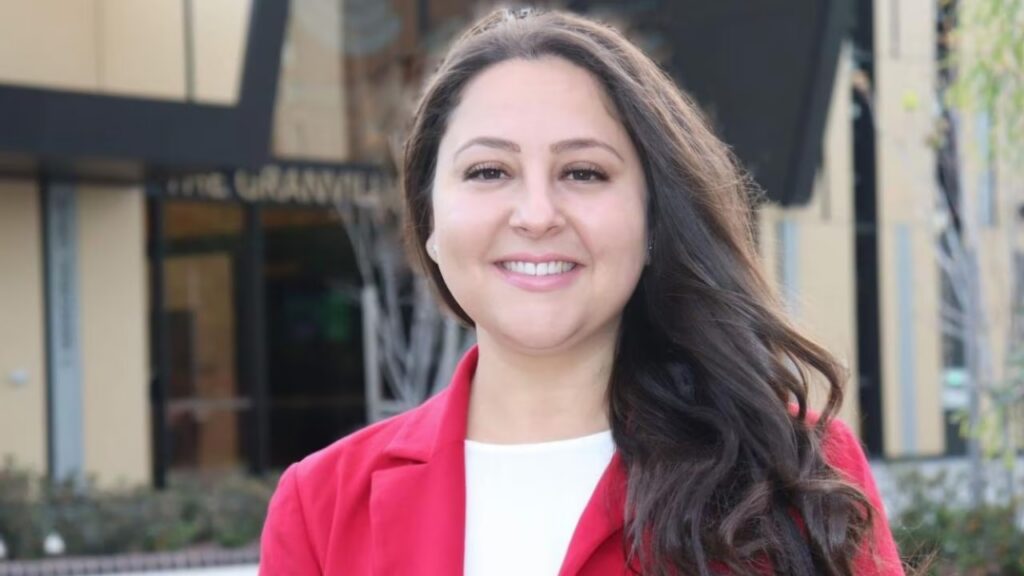
In April, the family car of Cumberland Mayor Ola Hamed was firebombed outside her family home, with the attack referred to the NSW Police counter-terrorism squad.
The firebombing was a stark reminder that for some councillors, public office now carries genuine physical risk. And it raises an urgent question about the conditions under which women are expected to participate in public life.
Why are local council candidates still required to publicly disclose their home address on campaign material?
NSW electoral law requires every local government candidate to publish their residential address on election material. In today’s political climate, a rule designed to ensure transparency has become a mechanism of exposure.
These requirements reflect assumptions from an earlier era — one shaped by lower levels of political hostility, limited digital exposure, and institutions still overwhelmingly dominated by men. That context has changed.
Today, electoral communication circulates through highly networked digital environments where harassment, doxxing, disinformation and coordinated abuse are increasingly common. Mandating the publication of a residential address does not simply facilitate accountability. It collapses the boundary between public office and private life.
The effect is particularly acute in local government. Councillors are the most accessible level of political representation, yet they receive none of the systematic security protections available to state and federal representatives. NSW Police and security agencies have already identified a heightened threat environment for public officials and community leaders, driven by a surge in threatening online behaviour and politically motivated incidents.
These risks are not evenly distributed. Women, culturally diverse representatives, and those already subject to targeted hostility bear a disproportionate burden. Research across Australian and international contexts shows that harassment and intimidation shape not only how women participate, but whether they remain in politics at all. The rise of online misogyny and hostile digital communities has further amplified abuse directed at women in public life, often targeting not simply their political views but their legitimacy to participate at all.
The consequences are already visible — and escalating.
At the recent Australian Local Government Women’s Association conference in Blacktown, women councillors raised concerns about the requirement to publish their residential address on electoral material. The discussion quickly drew broader attention to the treatment of women in local government and the risks they face.
Shortly afterwards, those concerns were given concrete expression. A Sydney mayor publicly disclosed the home addresses of serving and former women councillors as part of a highly personalised social media campaign connected to a by-election — demonstrating how easily such information can be weaponised once in the public domain, and how digital platforms can amplify hostility and facilitate the targeting of women.
Then came the firebombing.

As Mayor Hamed reflected: “In today’s political climate, publishing a candidate’s home address has become a direct line between public duty and private vulnerability, especially for women.”
These are not isolated incidents. They reflect a clear and escalating pattern of risk. When electoral rules require candidates to publish their home address, they do not simply enable transparency — they create conditions that amplify that risk, particularly for women.
Electoral frameworks do not operate in isolation from broader political and social conditions. When institutions continue to expose women to unequal risk, participation may remain formally open while becoming substantially harder in practice. Democratic representation depends not only on who is legally permitted to participate, but on whether people can do so safely and sustainably.
At present, NSW’s address publication requirements are failing that test.
The solution is not complicated. Other jurisdictions already allow candidates to use a suburb, electorate or official contact address on electoral material — preserving transparency without the exposure. NSW should do the same.
As Mayor Hamed put it: “It’s time we rethink our expectations so that serving the community doesn’t come at the cost of personal safety.”