
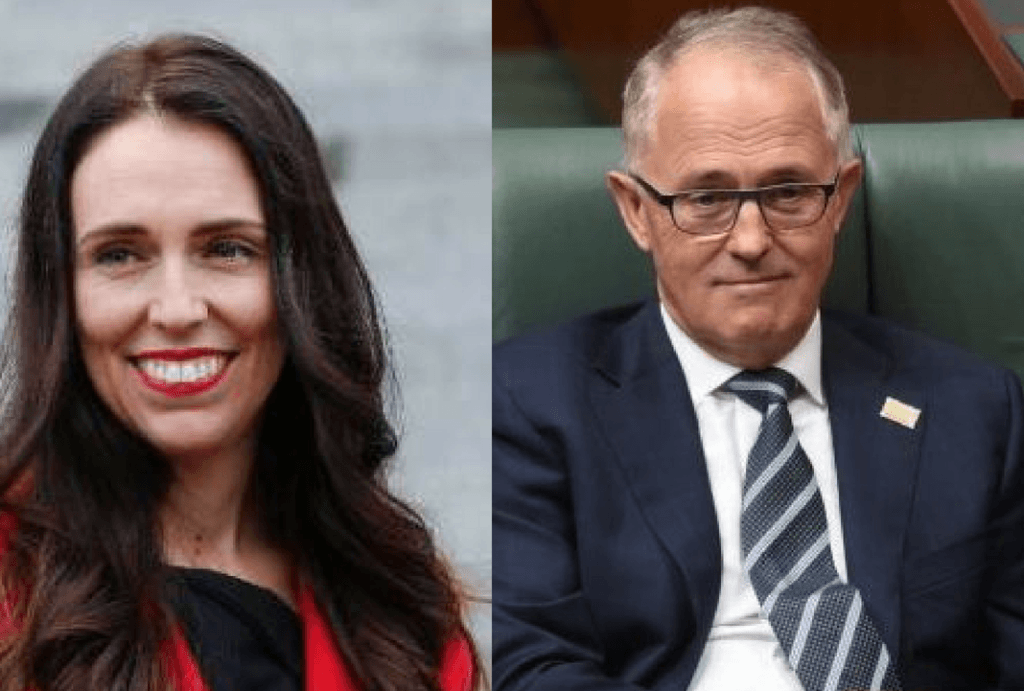
The latter was made particularly evident last week, when Prime Minister Jacinda Ardern and Finance Minister, Grant Robertson released their first national budget which saw huge funding boosts to a number of key social areas like health, education and housing.
The latest budget– the first from a Labour-led government in a decade – refused to bend to polls and partisan pressure. A $NZ3.2 billion ($A2.93bn) boost was awarded to health operating funding over four years, $NZ1.6 billion was allocated to schools and $NZ1 billion went to building 6400 state houses over four years among other housing initiatives.
“I want my child to look back on the history books and judge me and this government favourably,” Ardern, who is now eight months pregnant, told parliament on Thursday.
“If we’re not here for kids or the future of the country they live in, why are we here? If our budget isn’t about people, what is it for? On both accounts, this government is happy to be judged.”
Such conviction from a leader is refreshing. It’s also far from commonplace in politics, and arguably lacking altogether within Australia’s Government.
By contrast, Malcolm Turnbull is not “happy to be judged”. His desperate efforts to pander to every poll, every perceived electoral grievance has stifled him. He and his government have forgotten that Australia elected them to lead; to make bold decisions even at the risk of being unpopular.
But Turnbull defined his entire leadership by this arbitrary measure of merit from the outset. When he toppled Abbott in 2015, it was because the government had “lost 30 Newspolls in a row.” How could he possibly benchmark himself against a different standard now?
Polls dictate Australian politics, but for Turnbull it’s inescapable. In an op-ed last month, Fairfax’s Peter Hartcher surmised that while nothing would happen on the 30-poll-loss anniversary for any other leader, it would “signal open season on Turnbull”. “Quietly, the Liberals’ expectation now is that Turnbull will not be leading them to the next election”, he wrote.
Unlike Ardern’s 2018 budget, the Turnbull government’s lacked any true purpose. It fuelled fear mongering by pledging close to $300 million to boost border protection at airports, and cutting funding and resources to immigration. Keeping on theme, it pledged a further $62 million to reinforce Operation Sovereign Borders, to make sure every last menacing boat was turned back.
In an Oprah-esque moment, Treasurer, Scott Morrison also extended meaningless tax breaks to a huge chunk of the electorate who can easily afford them. The tactic, (akin to bribing a five year old with lollies), was transparent and not particularly well-received. The Twitterverse blew up, with many using the #keepmytendollars hashtag to identify ways their money could be better spent.
#keepmytendollars and raise the minimum wage
— Sally McManus (@sallymcmanus) May 8, 2018
#keepmytendollars and put it towards Newstart. It’s unacceptable that people are so low on $$ they are forced to choose between food and tampons.
— Jill Moran (@Jill_Canberra) May 8, 2018
Australians are not innately self-centred. They understand that their lives and the lives of others are improved when money is spent. They are happy to contribute so long as they are able, and so long as such a contribution is clearly explained by those in charge.
It’s an ugly, tangled paradox Turnbull is caught in. His leadership is defined by polls, but each time he clearly bends to voter sentiment, he becomes even more unpalatable. Because, what Australia ultimately craves is a Prime Minister unafraid to take risks. One that is decisive; a leader who, much like Ardern, is happy to be judged.