
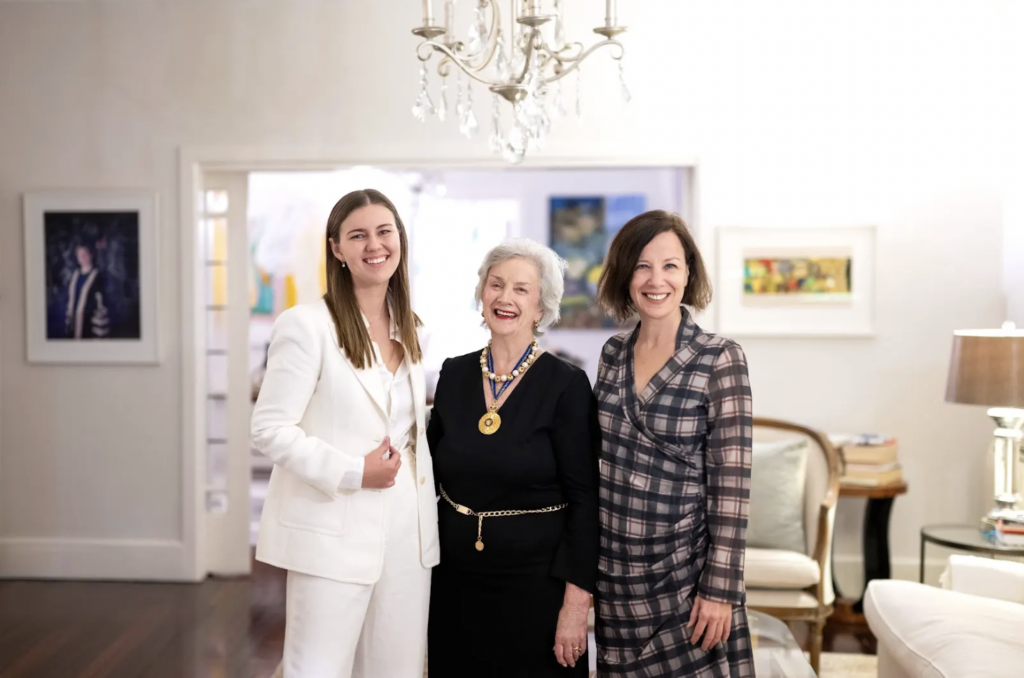
Brittany Higgins has been appointed Executive Director of Vida Fund, taking on a leadership role at the advocacy organisation as it embarks on a new strategy focused on gender equity, political participation and responding to the growing influence of misogynistic and far-right movements in Australia.
The appointment comes following Vida Fund’s recent relaunch and the unveiling of a three-year impact agenda designed to build momentum ahead of the 2028 federal election, as well as upcoming state election campaigns.
Higgins will lead the organisation’s next phase of work, which includes supporting independent female candidates, commissioning new research and campaigning on issues affecting women’s safety, representation and equality.
“Vida Fund was created to ensure gender equity remains a defining political issue in Australia, not just a one-off moment,” Higgins said in a statement announcing her appointment.
“We are entering a period where misogyny and extremism are becoming increasingly organised and visible. Vida intends to meet that moment with evidence-based advocacy, strategic campaigning and community-backed action.”
Vida Fund was established to support gender equity initiatives and increase women’s representation and influence in Australian public life. Under its new strategy, the organisation plans to focus on both electoral engagement and broader advocacy efforts aimed at ensuring gender equality remains a central political issue.
Among its priorities is backing values-aligned independent female candidates ahead of future elections, while also holding political leaders and parties accountable on policies that affect women and girls.
The organisation will additionally undertake research examining the role gender plays in the rise of far-right political movements in Australia, including how gender-based messaging may be influencing voting behaviour and political engagement. The findings are expected to inform future advocacy campaigns and public education initiatives.
The appointment is a notable one given the role Higgins has played in reshaping the national conversation around women’s safety, workplace culture and political accountability in Australia.
Higgins first came to national prominence in 2021 after alleging she was raped inside Parliament House while working as a political staffer. Her decision to speak publicly sparked a national reckoning over the treatment of women in politics and workplaces, helping drive major reviews and reforms across parliamentary workplaces and beyond.
Since then, Higgins has become one of the country’s most recognisable advocates for gender equality and women’s safety, regularly speaking about the barriers women face in positions of power and influence. Her move into a leadership role focused on advocacy, political participation and gender equity, a natural extension of that work.
Her appointment also comes at a time when concerns are growing about the experiences of women in politics and the impact this has on representation.

While women’s representation in Australian parliaments has improved significantly over the past decade, substantial barriers remain. The federal parliament’s landmark Set the Standard report, released in 2021, found widespread experiences of bullying, sexual harassment and discrimination within parliamentary workplaces.
Research has also consistently shown that concerns about abuse, harassment and public scrutiny deter many women from considering political careers. Studies from the Australian National University have found women are less likely than men to put themselves forward for elected office despite reporting similar levels of political interest and capability.
Online abuse has become a growing concern. Female politicians are disproportionately targeted by gendered attacks on social media, with younger women and women from diverse backgrounds often experiencing the highest levels of harassment.
For organisations like Vida Fund, increasing women’s representation is not simply about achieving gender balance in parliament but creating political systems and cultures where women can participate safely and effectively without facing disproportionate levels of hostility, abuse or intimidation.
“This is about building sustained pressure across the political system to pursue more ambitious gender equity reforms,” Higgins said.
“Stopping gendered violence, ensuring safety of girls and women online, and lifting women’s representation in our democratic institutions must be treated as political priorities.”
The organisation’s work will focus not only on election campaigns but also on shaping broader national conversations around safety, fairness and democratic participation.
Vida Fund Advisory Council Chair Wendy McCarthy AC said the organisation’s work was particularly important at a time when gains made on gender equality could not be assumed to be permanent.
“Brittany Higgins’ appointment to Vida Fund comes at a critical moment for women in Australia,” McCarthy said.
“The gains won over decades, often through relentless struggle by women who refused to accept inequality as inevitable, cannot be taken for granted.
“Around the world, we are seeing a resurgence of far-right movements determined to wind back women’s autonomy, representation and safety. We need courageous leadership, and Brittany understands both the personal cost and the national importance of this work.”
Vida Fund board director Jo Dyer said Higgins’ appointment reflected the organisation’s commitment to combining research, advocacy and electoral engagement to achieve long-term change.
“Vida Fund’s next chapter is about building a durable movement that supports leaders committed to safety, fairness and a greater diversity of options for Australians at the ballot box,” Dyer said.
For Higgins, the role marks a new chapter in a public career that has already had a significant impact on Australia’s political landscape. As debates about gender equality, online misogyny and women’s political participation continue to intensify, she will now be tasked with helping shape both the advocacy response and the broader movement seeking to address them.