
When I sat on a panel discussion at Women Deliver in Kigali back in 2023, I had one question that has stayed with me ever since: how do you advance gender equality in the absence of government funding?
That question feels more urgent now than ever. At Women Deliver 2026, sessions on philanthropy, funding, and sustainability drew packed rooms and uncomfortable conversations. We are living through deliberate retrenchment, a global winding back of diversity, equity and inclusion policies, a relentless emphasis on “merit” as a substitute for equity, and a political environment in which gender equality budgets are among the first cut.
Waiting for the government to lead is not a strategy. It is a luxury we can no longer afford.
The good news is that some of the most transformative levers for change do not require a budget line at all. They require intent.
Victoria’s Our Equal State: Gender Equality Strategy and Action Plan 2023–2027 demonstrates this. Among its 110 actions are commitments that cost relatively little but signal everything — such as that 70 per cent of new streets should be named after notable women, or that CEO roles across Victorian public-sector portfolios should reach gender parity within five years. These are not expensive interventions, but they are choices about whose contributions we value, whose names we enshrine in the public landscape and whose leadership we normalise. They are about moving, deliberately and sometimes uncomfortably, away from what has always been done.
That same spirit of intentional action is at the heart of a Western Australian organisation that deserves far wider attention.
CEOs for Gender Equity (CGE) was launched at Government House in Perth in 2014 by 18 of the state’s most influential business leaders. It has since grown into a movement representing more than 90 CEOs from across the corporate, not-for-profit and government sectors in WA, organisations that together employ over 1.8 million globally.
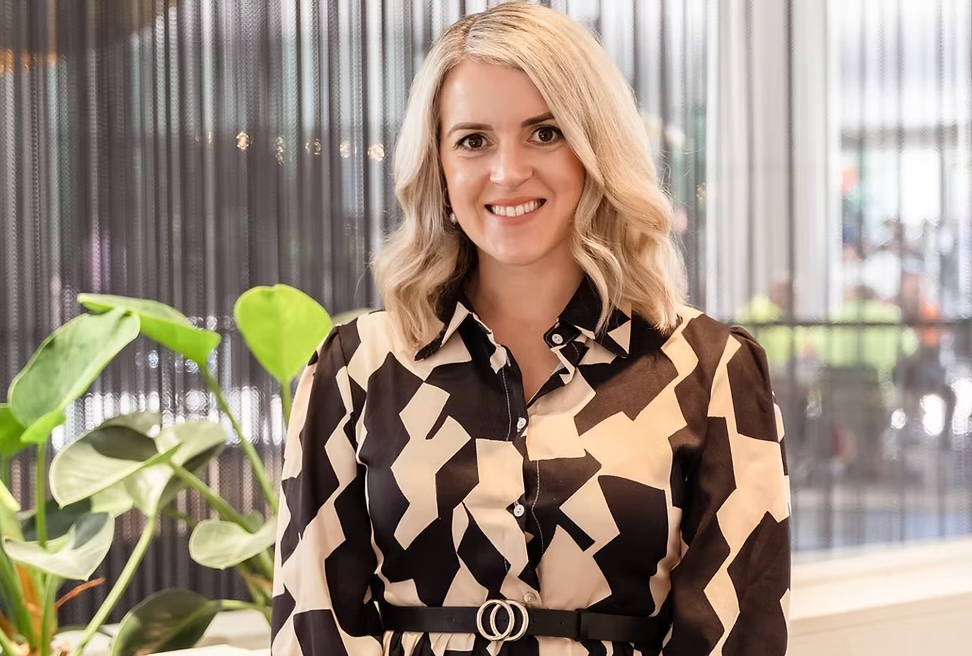
Led by Dr Ashley McGrath (pictured above), whose PhD focused on accelerating gender equity in the Western Australian mining industry, CGE has built something quietly radical, a peer-to-peer space where CEOs can share what is working, what is not, and how to turn good intentions into structural change to progress gender equity in their workplaces.
What makes this model striking is that around 70 per cent of its members are male. As Dr McGrath has said, “Gender equity is everyone’s business. There are burdens and barriers that prevent all genders from thriving. If we want more women in leadership, we need workplaces that not only support but also expect men to do more unpaid domestic work, parenting and caring responsibilities. It’s all connected.” Gender equity requires the people with the most power, who are, in most Australian organisations, still men, to be active, informed advocates and to lead by example loudly and proudly.
The numbers make that accountability urgent. According to the 2025 Chief Executive Women Senior Executive Census, women hold just 10 per cent of CEO positions across the ASX 300, with progress crawling at approximately 1 per cent per year. In 2024, the number of female CEOs fell from 26 to 25, and just one in eight new appointments went to a woman, down from one in four the year before.
Against this backdrop, CGE combines academic research with a practical gender equity toolbox that provides concrete tools for addressing unconscious bias in recruitment, family violence leave, and gender impact assessments. CEOs have also contributed over 150 internal policies, plans and frameworks to a member policy library, disregarding any intellectual property concerns for the cause. This matters because many organisations genuinely want to progress, but the people tasked with implementation often lack the knowledge and confidence to move forward.
As Dr McGrath notes, her focus is not on naming and shaming: “I’m about bringing these important metrics to the attention of CEOs, Executives and Boards, because everyone is set to gain when we improve gender equity.” It situates equity not as an ideological imposition but as a practical enabler of stronger, safer, thriving organisations, inviting all genders to listen, learn and act.

So how can we replicate such a model everywhere, across states and different sectors, where there are CEOs who genuinely care about gender equity but feel isolated in their commitment to the cause?
A member of CGE, Simon Garlick, who is the CEO of Fremantle Football Club, said on his reason for joining such a network that it is about “like-minded people who are so readily available and are enthusiastic to assist on what is a really important journey”.
It is also vital that the model has an intersectional approach, one that recognises how gender inequality is further compounded for people with intersecting identities. It is critical to ensure these spaces serve all people, not just the most privileged,” he said.
Governments need to continue funding gender equality, but leaders need to stop asking for permission to play their part in making in happen. The workplaces we are already in, the leaders already around the table, the peer relationships already within reach, these are the infrastructure of change. They do not require a budget allocation to activate. They require, as they always have, the will to lead.