
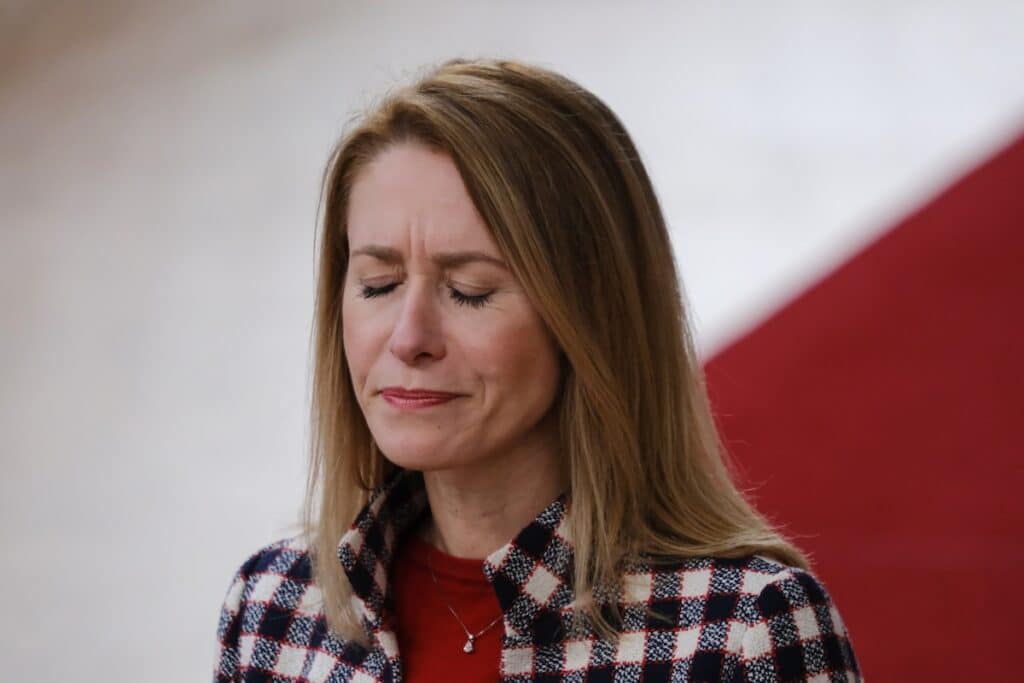
I won’t suggest taking up drinking. But two weeks into 2026, I can relate to EU foreign policy chief Kaja Kallas, who reportedly said now might be a “good moment” to start drinking, given the state of the world.
Kallas made the suggestion privately with lawmakers in the European Parliament. While she’s not much of a drinker, she’s thinking of getting more involved.
Her comments came as Greenland and Denmark’s foreign ministers were meeting with US VP JD Vance regarding US President Donald Trump’s threats to invade the Arctic island.
It was a joke, meant to lighten the mood as various parts of the globe are in deep strife, including a brutal and horrific crackdown on mass protests in Iran, Russia’s ongoing invasion of Ukraine, continued crisis in Sudan, the United States’ unprecedented operation in Venezuela and the ongoing horror of Gaza.
In 2026, the chaos of 2025 continues to build, the climate crisis accelerates, and democracy seems more at risk than ever.
But disengagement and a retreat to the bottle is not the answer.
Rather, a far better opportunity would be to push to get more women into leadership roles, especially in policymaking and negotiations.
Currently, just 29 countries globally have a woman serving as head of state or government, accounting for around 10 per cent of nations. Just a handful of countries have gender parity in cabinet.
There are and have been, plenty of populist women leaders and “bad eggs” among the ranks of women who’ve led nations.
But overwhelmingly, the evidence shows that when women hold power, policy priorities shift in ways that are measurably stabilising. Populations receive greater investments in health, education and social infrastructures. There are more durable peace agreements, with greater attention paid to addressing long-term risks rather than short-term populist sugar hits. Countries with higher women’s political representation tend to pass more climate-forward policies and fund care systems that actually keep societies functioning under pressure.
A major analysis of more than 500 studies found that having more women in political office contributes to greater equality, less corruption, and stronger representation of constituents’ needs. The review found that women politicians are more likely to prioritise social issues, and are associated with more responsive governance.
Meanwhile, women’s participation in policymaking, peace negotiations and leadership roles is associated with more durable peace outcomes.
Indeed, much of the chaos defining 2026 is being amplified by performative masculinity, including leaders being rewarded for dominance displays and their desire to capture attention rather than achieve competence-based outcomes.
So is now really the time to drink? Or to doomscroll, or to turn away and pretend it’s not happening? No.
Rather, we could see this time for what it is: a failure of a strongman-style of leadership that’s placing ego, wealth, and power ahead of long-term, sustainable progress that can support everyone.
And by admitting we have a problem, we can commit to doing as much as possible in the spheres of influence we have to address it: staying informed, engaging in democracy, and supporting more women to run for office at all levels.
Pictured above: European Commission Vice President Kaja Kallas. Photo take in 2023, when she was the prime minister of Estonia.