
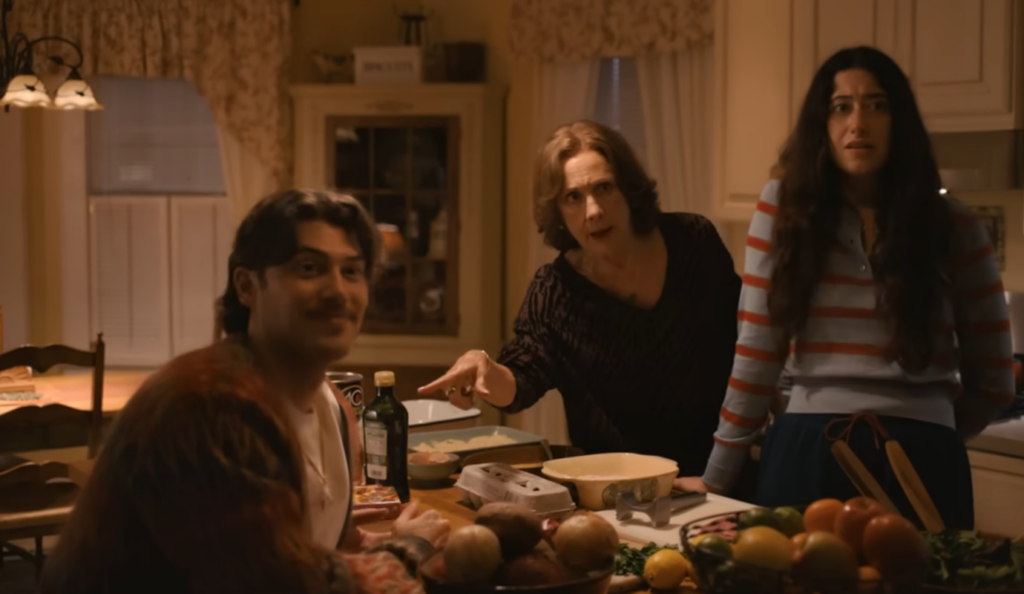
There is a monologue from Big Mistakes on Netflix circulating on social media that has Gen X women practically weeping with recognition.
In it, Laurie Metcalf’s character turns to her daughter and delivers the kind of line that stops a room:
“How can your generation be offended by anything when you are offended by everything? There was no such thing as self-care — a strong woman was every woman who got the job done, and still had a minute to spare at the end of the day for a glass of wine.”
The comment sections beneath every repost are full of Gen X women nodding furiously, applauding themselves and each other for being the generation of stronger women. Stronger, they are quick to point out, than the generations after them.
As a Gen X woman, I recognise every word of the monologue. And I am still not sure we should be proud of it.
Let us be honest about what we are actually celebrating here.
We are applauding a generation of women who stayed in marriages long past their expiry date. Women who worked double and triple shifts, paid and unpaid. Women who raised children largely alone while pretending everything was fine, and who self medicated a bottle of Shiraz and a stiff upper lip. We are calling this strength. We are wearing it as a badge.
Here is what the monologue conveniently omits.
Gen X women were the first generation sold the fantasy that we could “have it all” — career, family, fulfilment — with absolutely none of the structural supports required to make that anything other than a punchline. There was no paid parental leave worth speaking of. Childcare was chronically underfunded. Superannuation was accumulated in fragments between career interruptions nobody accounted for.
We did not “get on with it” because we were made of tougher stuff. We got on with it because the system gave us no other option and then congratulated itself for our resilience.
The numbers today tell the story our wine glasses cannot. Women over 50 are now the fastest-growing cohort of people experiencing homelessness in Australia, driven by decades of interrupted employment, relationship breakdowns, and retirement savings that never recovered.
“Grey divorce” is rising sharply, with women initiating the majority of splits. Many of these women have spent a life ‘getting on with it’.
And the mental health toll? The Australian Bureau of Statistics consistently shows elevated rates of psychological distress in middle-aged women, a demographic that spent its prime years being told asking for help was weakness.
We are also the generation sandwiched between the demands of teenagers and aging parents simultaneously — the so-called “sandwich generation”. Seventy percent of unpaid caregivers in Australia are women.
And now, in the comment sections beneath this viral monologue, Gen X women are sneering at younger generations for being triggered. For going to therapy, for naming their boundaries and refusing to dissolve into the shape the world demands of them.
I remember the racist slurs nobody called out. I remember turning a blind eye to injustice because that was simply how things were. I remember parents who did not know how to have a real conversation with their children because nobody had ever taught them how.
And we are now mocking the generation that decided that was not good enough?
I am raising three children, including a young woman. I am glad she is offended by things. I am glad she has language for her feelings and access to therapy and the audacity to expect workplaces, relationships, and institutions to treat her with basic dignity. That is not entitlement. That is progress. The whole point of progress is that the next generation does not have to endure what the last one did.
This monologue could just as easily have been delivered by a Baby Boomer woman looking down at us. And we would have bristled. We would have pointed out everything that generation got wrong, every structural advantage they had, every way they pulled the ladder up behind them. We would have been right to do so. The same logic applies now, and we are old enough to know better.
The buried trauma of Gen X women is real. The homelessness is real. The grey divorces are real. The discovery, at 55, of who you actually are after decades of being whoever everyone else needed you to be, is real. It is not a triumph. It is a reckoning.
We should be making the world better for the women who come after us, not handing them a glass of wine and telling them to toughen up.
Yes, we got on with it. Many of us are still paying the price for that. Maybe that is not something to applaud. It’s something to fix.
Image: Laurie Metcalf in Netflix’s Big Mistakes.