
Each year, the same explanation resurfaces. Young men are becoming more conservative about gender because of the internet, red-pill forums and influencers like Andrew Tate reciting a language of dominance into the algorithmic void. All of this is true of course, but it is also incomplete.
New survey data released ahead of International Women’s Day suggests something deeper is happening. According to a global IPSOS study of 23,000 people across 29 countries, 31 per cent of Gen Z men agree that a wife should always obey her husband, while 33 per cent believe the husband should have the final say on important decisions. The same research suggests young men are also more likely to believe women should prioritise being desirable to men and that men should be the ones initiating intimacy.
The headline is easy to write: misogyny is back.
But why do these ideas feel increasingly familiar rather than shocking? The cultural scripts underpinning them have not simply emerged from fringe corners of the internet. They are circulating through the mainstream infrastructure of modern dating itself.
For the past decade, much attention has focused on the digital ecosystems that shape how young people meet: dating apps, social media, and algorithmic culture. My research suggests these platforms do more than connect people. They quietly reinforce a very old hierarchy through new technological forms. Dating apps are not neutral environments. They were largely built by what Silicon Valley proudly once called “brogrammers” – overwhelmingly male teams designing platforms that translate attraction into quantifiable metrics.
This architecture produces a specific kind of intimacy: aesthetic judgement first, relational depth later, if it arrives at all. The swipe encourages rapid evaluation based on appearance. The match produces a dopamine spike, and the endless queue of potential partners quietly suggests that commitment is optional when replacement is always available. As my research participants would relay to me, “the grass could always be greener”, next swipe. In this system, disposability and ghosting become normalised and emotional accountability becomes increasingly rare.
There is another cultural effect that receives far less attention. These platforms also reinforce what sociologists call hegemonic masculinity: a dominant model of masculinity built on control, status, sexual access and emotional detachment. The “alpha” archetype thrives in an environment where desirability is competitive and visibility is rewarded.
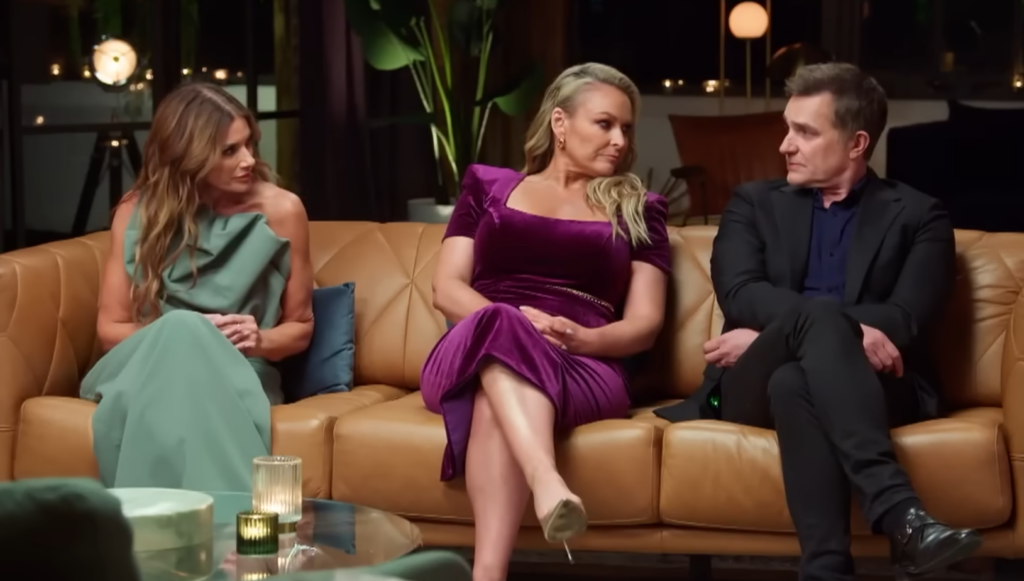
While this dynamic has often been diagnosed as pertaining to the wild world of the Internet, dating apps and social media … now it has migrated into something far more influential mainstream entertainment – think Married At First Sight, or MAFS.
For the few who might be unaware of the program’s formula, the premise appears sociological. Strangers matched by experts marry at first sight and attempt to build a relationship. However, the show’s cultural logic increasingly mirrors the dating app marketplace. Participants are judged on attractiveness, status, loyalty and dominance. Dinner parties become arenas of reputational warfare, where relationships are assessed, ranked and dissected in real time.
This season alone has featured male contestants openly describing their desire for a “submissive” partner, someone who will “follow their lead” or fit a traditional model of male authority. These declarations are rarely isolated incidents. They are embedded in storylines carefully constructed around the drama of power, jealousy and competition.
Defenders of reality television will point to the obvious: it is entertainment. Producers chase ratings, not social transformation. But even dramatised portrayals have cultural consequences. For millions of viewers, particularly younger ones, encountering these dynamics before forming their own relational scripts, these programs can begin to resemble real life. A condensed theatre of modern romance where the loudest personalities and most extreme gender performances dominate the narrative.
The result is not simply the normalisation of problematic behaviour, but the narrowing of possibilities.

Women are frequently framed through familiar storylines: emotional, competitive, locked in conflict with one another over male approval. Entire episodes can revolve around which woman behaved badly, who is “crazy,” and who is losing control of her relationship. Men, meanwhile, are often rewarded for performing the archetypal bloke: stoic, dominant, unwilling to be dragged into the “drama” but rarely vulnerable. Both portrayals are deeply limiting.
For women, the narrative reinforces the idea that romantic success requires navigating male authority while competing with other women. For men, it reinforces the belief that masculinity must be performed through dominance and emotional restraint. Neither script leaves much room for alternative ways of being.
This is where the Ipsos findings begin to make more sense. The attitudes expressed by some Gen Z men are not emerging in isolation. They are reinforced by a broader cultural environment in which dominance is rewarded, submission is romanticised, and relationships are framed as power struggles rather than partnerships.
The irony is that these scripts constrain men as much as women. Hegemonic masculinity demands constant performance: control, leadership, and emotional detachment. It leaves little space for uncertainty, care, or mutual vulnerability – the very qualities most people and relationships require to survive.
In other words, the problem is not simply that young men are absorbing outdated gender roles. It is that contemporary culture keeps reproducing them, packaging them in new forms that appear modern while quietly recycling the same hierarchies.
The internet may have accelerated the spread of these ideas. But reality television, dating apps, and the broader attention economy have helped normalise them. If we want to understand why some young men believe obedience belongs in modern relationships, we need to look beyond the usual villains of the manosphere. The story is bigger than Andrew Tate.
It is written into the architecture of the platforms we date on, the entertainment we consume, and the cultural scripts we continue to reward. Even if no one is particularly happy with the result.