

Abortion is legal in every Australian state and territory, after decades of campaigning. But it wasn’t long ago that I was a doctor living in Albury NSW (where abortion was still in the Crimes Act), and therefore worked across the river in Wodonga Victoria to provide abortion that was both legal and government-funded.
In 2019, abortion was finally, finally decriminalised in NSW.
Many of us who campaigned for that legalisation might have felt like we’d achieved our goal– that the work was done. But Trump’s US is showing us how quickly those hard-fought rights can be lost, and the threat is closer to home than you might think.
Right now, organised anti-abortion activists are working to wind back access to abortion access across Australia.
In Queensland, a bill proposing to restrict access to medical abortion tablets that have been prescribed safely in Australia for years is being reviewed, while in South Australia a bill proposing severe restrictions on abortion after 25 weeks is also.
In NSW, there is a bill currently before the upper house of the Parliament supposedly banning abortion for the purposes of sex selection. Its proponents argue that women – certain women in certain communities – are ‘murdering’ their baby girls in favour of boys.
There’s no compelling evidence that sex selective abortions are happening under current frameworks for legal abortion, for a start. NSW Health’s own review found that terminations of pregnancy are rarely performed for the purpose of sex selection. The suggestion that it is being sought by women from particular ethnic and cultural backgrounds is fed by racist and anti-immigration rhetoric.
There is evidence, though, that criminalising sex-selective abortions harms women. It restricts access to healthcare, subjecting women to racial and cultural profiling and turns doctors into police.
This was shown in a landmark study in the USA that looked at two states with long-standing bans on sex-selective abortions, Illinois and Pennsylvania. The researchers found no change in birth sex ratios in those states. Instead, the laws placed doctors under legal pressure to interrogate and profile patients, with women of Asian backgrounds disproportionately subjected to suspicion.
Even worse – what’s proposed for NSW would create so much risk and uncertainty around criminal penalties for health professionals, that many wouldn’t take the risk of providing abortion care altogether. And that’s the real goal of this bill.
This is a thinly veiled attempt to incrementally re-criminalise abortion in Australia, and to reposition anti-abortion activists as being on the side of women and girls.
The bill is opposed by key medical and women’s rights bodies including Family Planning Australia, a not-for-profit that supports and delivers sexual health services, the Australian Medical Association, the Royal Australian and New Zealand College of Obstetricians and Gynaecologists, Women’s Health NSW, the peak body for non-government community-based women’s health centres, the Women’s Electoral Lobby and Fair Agenda.

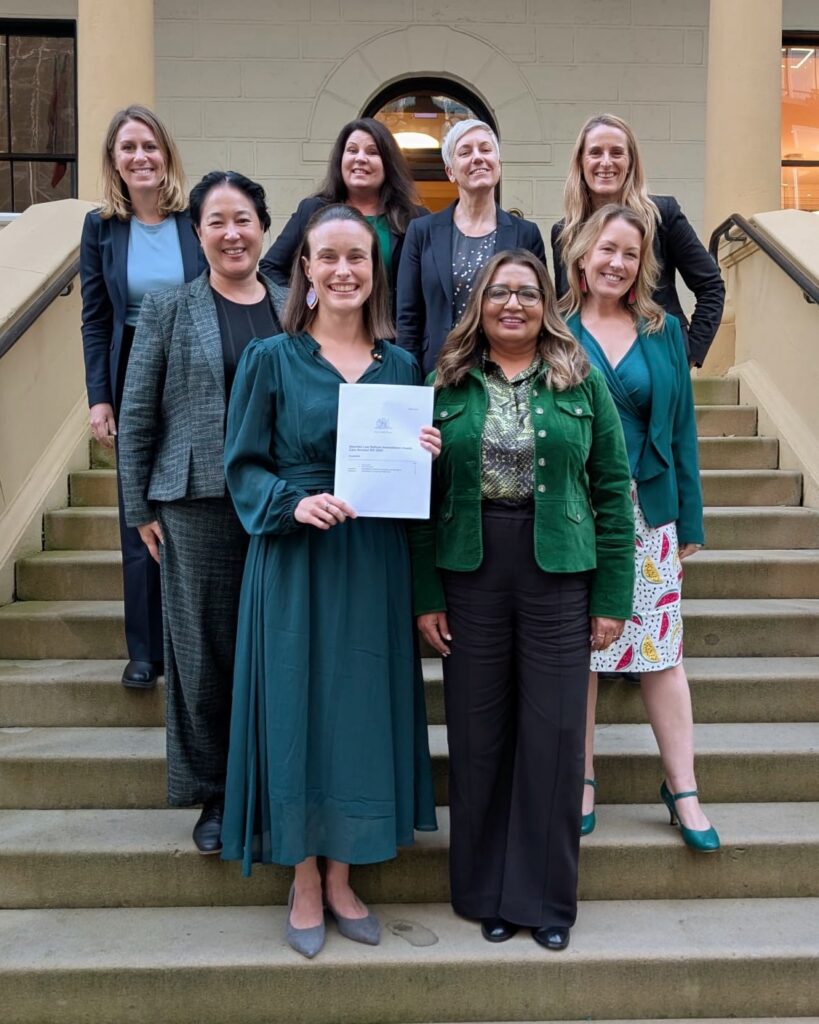
When the overwhelming majority of Australians support access to abortion as a legal health service, the only way to grow anti-abortion campaigns is to rile people up with misinformation. As a result, the debate is getting uglier, just like we have seen in the US. Anti-abortion influencers incite intimidation and threats against anyone who questions them, with consequences in the real world. During debate on the bill I successfully passed last year to improve access to medical abortion tablets in NSW, I was harassed, threatened, stalked, and followed.
It’s not lost on anyone that the conservative politicians claiming to be the saviours of unborn women and girls are missing in action in the fight for pay equity, domestic violence service funding, affordable childcare, access to sport, or other health services like contraception, fertility support or menopause care. Genuine concern for women does not begin and end at birth.
The proposed bill is one step in a longer strategy to erode abortion access, modelled on the American approach that culminated in the overturning of Roe v. Wade. We need to be alert to what’s happening and actively protect our rights. My colleagues in Parliament need to hear from the community that we value our reproductive rights and will fight to protect them.