
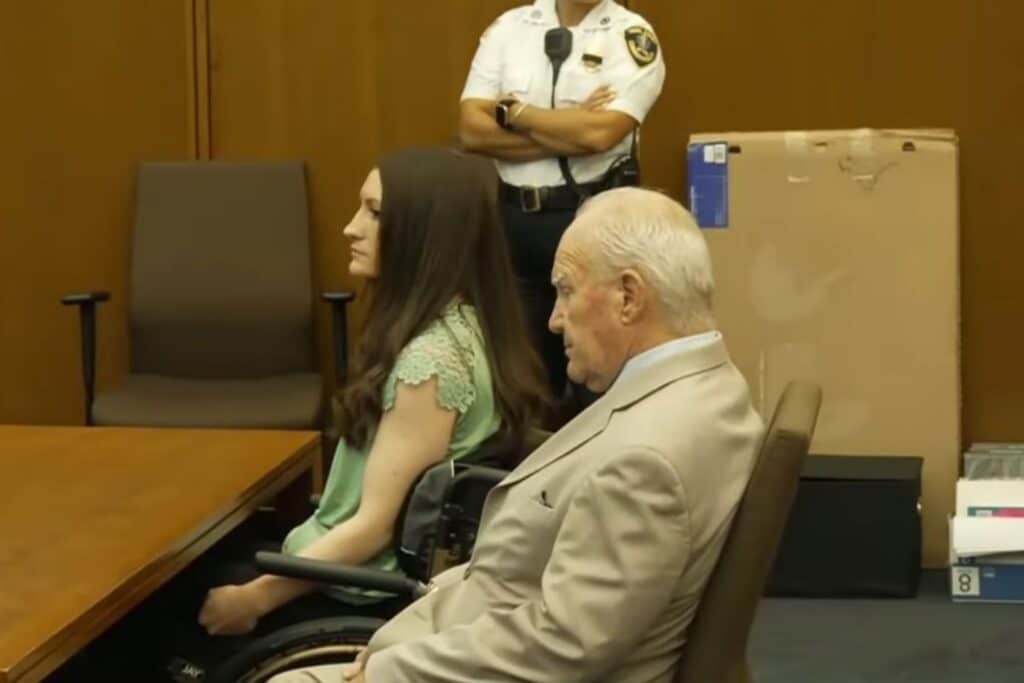
The Lindsay Clancy trial has been difficult to watch from Australia.
For many people, the facts of this case are almost impossible to comprehend: a mother accused of killing her three young children, after a period of profound psychological distress and amid competing claims about the extent of her mental illness.
For me, the most confronting part has not simply been the question of what happened in that Massachusetts home.
It has been watching a woman who appears profoundly broken sit through a criminal trial while the court attempts to answer an extraordinarily difficult question: where does criminal responsibility end and severe mental illness begin?
Clancy has pleaded not guilty on the basis that she was not criminally responsible because of her mental state. Her defence has argued that she was experiencing postpartum psychosis, a rare but devastating psychiatric emergency that can involve hallucinations, delusions, confusion and rapidly changing moods. Prosecution experts have challenged that account, arguing that she understood what she was doing and was criminally responsible.
That disagreement matters.
But beyond the verdict is another question that deserves far more attention: could more have been done before this tragedy occurred?
We cannot wait until a mother is in crisis
One of the most uncomfortable lessons from the Clancy case is that severe maternal mental illness does not necessarily arrive with a flashing warning sign.
A woman can be a loving mother, a professional, a partner and someone who appears to be functioning, and still become desperately unwell.
Postpartum psychosis is rare, but it is a psychiatric emergency. It can emerge rapidly, and early recognition and treatment can be critical. Yet awareness remains limited, including among the people and systems that new mothers encounter after giving birth.
That should concern all of us.
We routinely tell new mothers to monitor their physical recovery after childbirth. We talk about bleeding, blood pressure, feeding, sleep and physical pain.

But how often do we ask a new mother:
Are you frightened by your thoughts?
Are you sleeping?
Are you feeling detached from reality?
Are you hearing or seeing things other people aren’t?
Do you feel safe with yourself and your baby?
And perhaps most importantly:
What happens if the answer is no?
The healthcare system has to be able to recognise the emergency
We should be careful not to retrospectively decide that one particular clinician, medication or medical decision caused what happened.
But we can ask a broader question.
Are our systems designed to catch mothers before they reach the point of crisis?
Because if someone is severely mentally unwell, telling them to make another appointment or handing them a list of services may not be enough.
A person experiencing psychosis may not recognise that they are unwell. They may be terrified. They may not trust the people trying to help them. They may be unable to explain what is happening inside their mind.
That is precisely why severe mental illness requires a system capable of stepping in early and providing intensive, coordinated care.
Compassion does not mean excusing harm
There is an understandable discomfort around expressing compassion for Lindsay Clancy.
Three children died.
Their deaths are devastating, and nothing about discussions of mental illness should minimise the lives that were lost or the unimaginable grief experienced by their family.
But compassion and accountability do not have to be opposites.
We can hold the deaths of those children in our minds while also asking what severe mental illness can do to a person’s perception of reality.
We can believe that the deaths were horrific while still believing that a person experiencing profound psychiatric illness deserves treatment.
And we can ask whether prison is always the appropriate response to someone whose mind was so severely impaired that they could no longer understand reality in the way a healthy mind does.
That is not the same as saying that people with mental illness should never face the criminal justice system. It is asking whether mental illness should be treated as a central part of the response when it is genuinely responsible for a person’s actions.
What would an alternative look like?
Perhaps this is where we need a more sophisticated conversation.
The choice should not simply be:
prison or freedom.
There can be secure psychiatric treatment, long-term clinical supervision, forensic mental health services and intensive rehabilitation for people who are found not criminally responsible because of severe mental illness.
Treating someone as mentally ill does not necessarily mean treating them as harmless. It can mean recognising that they require a different kind of accountability and intervention.
What can Australia learn from this?
This is where the Clancy case should matter to Australian women.
We need to talk much more seriously about maternal mental health , not just depression and the relatively familiar language of “baby blues”, but severe psychiatric illness.
We need better education for health professionals.
We need clearer pathways for families who are watching someone deteriorate.
We need services that can respond quickly when a mother is experiencing psychosis or other severe mental illness.
And we need to make it easier for a partner, parent, friend or doctor to say:
This woman is not okay, and she needs urgent help.
Because by the time someone is in a courtroom, it may be far too late.
The tragedy of the Lindsay Clancy case is that there is no outcome that gives those children their lives back.
But perhaps something useful can still come from the horror.
Perhaps we can stop asking only, “What punishment does this woman deserve?”
And start asking:
“What could we have done when she first began to fall apart?”
That question is uncomfortable.
But it is one worth asking, especially for the mothers who are struggling silently today. Because if we want to prevent the next tragedy, we cannot wait until a mother becomes a headline.