
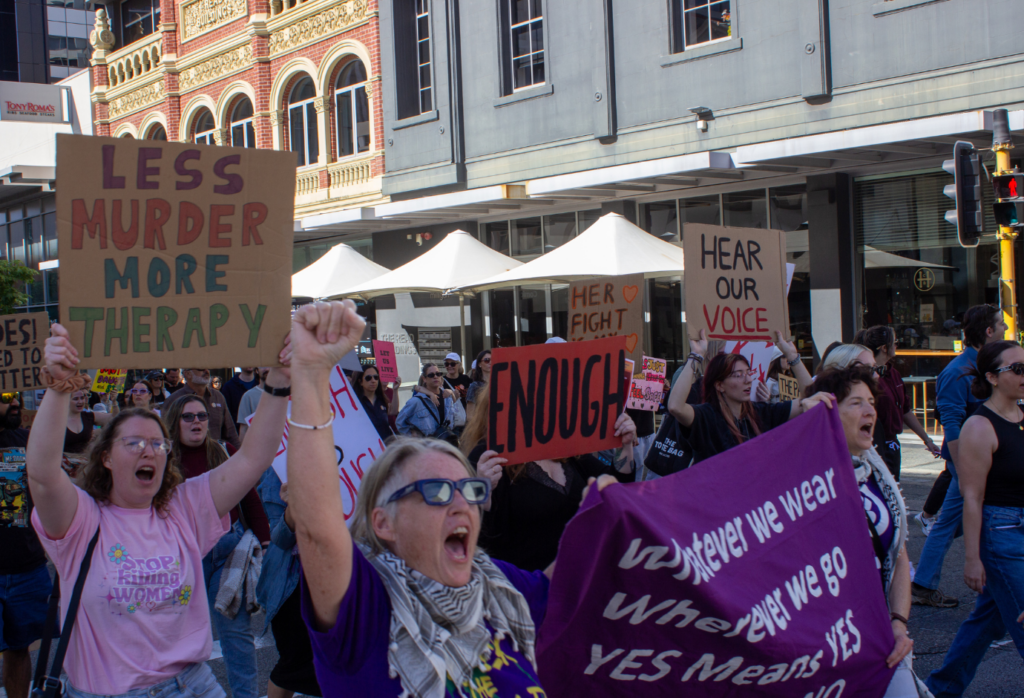
Thousands of Australians turned up in multiple rallies across the country over the weekend to stand against sexual violence.
Nationwide, in major cities and regional towns, “No More” rallies highlighted the widespread scale and urgency of addressing sexual violence. Volunteer survivor advocates and supporters took to the streets to call for a cultural change in the way sexual violence is discussed in public.
Organisers including the group What Were You Wearing Australia (WWYWA) praised the powerful action over the weekend, releasing a statement describing the visibility and momentum the rallies ignited.
“[The rallies were] a clear reminder that survivors are no longer carrying this alone, and that communities are demanding change that matches the scale of harm,” the group said.
“The movement is now calling for urgent reform, including stronger consent education, expanded survivor services, and better protections across both policy and technology.”
WWYWA CEO Sarah Williams, said in a statement last week that confronting victim-blaming attitudes is a crucial step in making sustainable change while reducing stigma and supporting survivor recovery.
“Sexual violence thrives in silence and stigma,” Williams said. “When survivors are asked what they were wearing, where they were, or what they were doing, the focus is placed on the survivor instead of the perpetrator responsible. Clothing is not consent. No outfit, situation or circumstance ever invites sexual assault.”
Williams pointed to recent research that indicated the prevalence of sexual assault across various community environments, including festivals and workplaces. She also noted the research that revealed less than fifty per cent of young Australians believe consent education was covered well in sex education programs.
“[This is] reinforcing the need for more comprehensive education across schools and communities,” Williams said. “Education is one of the most powerful tools we have to help prevent harm and challenge the attitudes that allow sexual violence to persist.”
In Australia, more than a fifth of women have reported experiences of sexual violence, while one in seven Australians said they have experienced sexual violence since the age of 15.
Concerningly, roughly 16 per cent of Australian adults have admitted to having perpetrated sexual harassment or coercion, while almost a quarter report having perpetrated some form of sexual violence.

“These figures underscore the urgent need for prevention, education and cultural change to address the behaviours and attitudes that enable sexual violence, rather than placing responsibility on victims,” WWYW said in a statement.
By centring the voices of survivors in its advocacy, the charity is calling for a national conversation on sexual violence. It is urging communities to challenge victim-blaming narratives that continue to silence survivors and divert attention from perpetrators.
“Being part of this community helped me accept that I am a survivor and that gave me the strength to begin reclaiming the power that was taken from me,” one survivor advocate explained in a statement released by the charity.
“Finding my voice has been life changing and I am not going to stop using it.”