
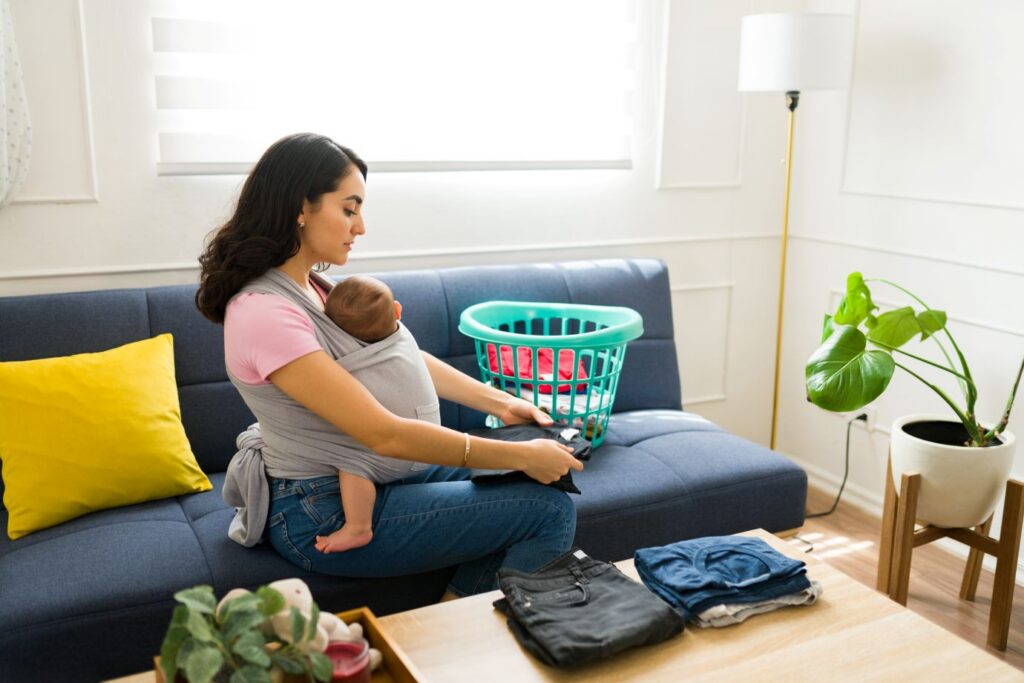
Australians spend 26 hours on unpaid household labour each week, an effort that would be worth $1 trillion or about 37 per cent of Australia’s gross domestic product if it was valued at the market wage.
It’s no surprise that women are taking on the lion’s share of this unpaid labour in households. And for many Australians, this time spent on unpaid household labour is equal to the amount of time they spend in paid employment — but it’s still not counted in conventional economic statistics.
A new report by Mandala and commissioned by DoorDash has highlighted the issue this week, with Managing Partner at Mandad, Amit Singh, saying: “If we’re serious about addressing our chronic unpaid household labour inequalities then we need to do a lot better than a couple of census questions every five years.”
According to the report, women with young children in low-income households perform almost double the unpaid labor hours compared to the wider population, a reality that leaves them more vulnerable to poor mental and physical health outcomes as well as reduced workforce participation and lifetime earnings.
On average, women complete 1.4 times more unpaid household labour than men, primarily on housework, meal preparation and child care.
Meanwhile, full-time carers have rates of depression and anxiety that are 8 percentage points higher than non-carers, while individuals performing over 40 hours of housework a week have a general health score 5.2 points lower than those completing 1–19 hours.
“Women with young children in low-income households…can face compounding pressures and even higher levels of unpaid labour,” the report states, noting the financial consequences of unpaid labour for women are significant.
Properly accounting for unpaid labour in national economic statistics would help narrow the gender pay gap, and could reduce the lifetime earnings gap by about $800,000, the report says.
“What gets measured gets managed and in the UK they maintain an annual household satellite account that estimates the value of domestic work,” Singh said.
“This makes it visible to policymakers so they can pull the right levers. We should follow suit.”
The report also looks at the scope of emerging technologies like smart-home systems, AI meal planners, robotic devices and online platforms in reducing or even eliminating the time Australians spend on household activities.
For example, online grocery ordering and delivery could save the average person 30 hours per year, the analysis found.

By 2036, technology has the potential to save the average person about eight hours of domestic work per week. For parents and women, this figure rises to nine hours and for older people, it could save 11 hours per week.
“Technology has incredible potential to alleviate the pressure of unpaid household labour, but it will only work if it’s supported by government with actual visibility of the problem,” Singh said.
As technology continues to advance, ensuring there is equitable adoption of these time-saving technologies is critical. But it’s also only one part of the solution.
The report suggests reform five key areas, including:
- improving economic measurement of unpaid labour through more frequent time use surveys
- enabling equitable adoption of timesaving technologies through targeted programs and incentives
- strengthening care services including early childhood education and aged care
- encouraging parental leave and flexible work
- improving income and tax incentives for primary carers