
Last week, I was in Brisbane, at the Recovery and Healing: Striving Together Conference. A conference where practitioners, researchers, policymakers and advocates came together to confront what it will actually take to prevent domestic, family and sexual violence in this country, rather than continuing to respond only after harm has already occurred.
There was a deliberate focus on children and young people, reflecting a shift that has been too long delayed, because any serious commitment to prevention requires a clear and sustained understanding of who is experiencing harm and at what point in the life course that harm begins.
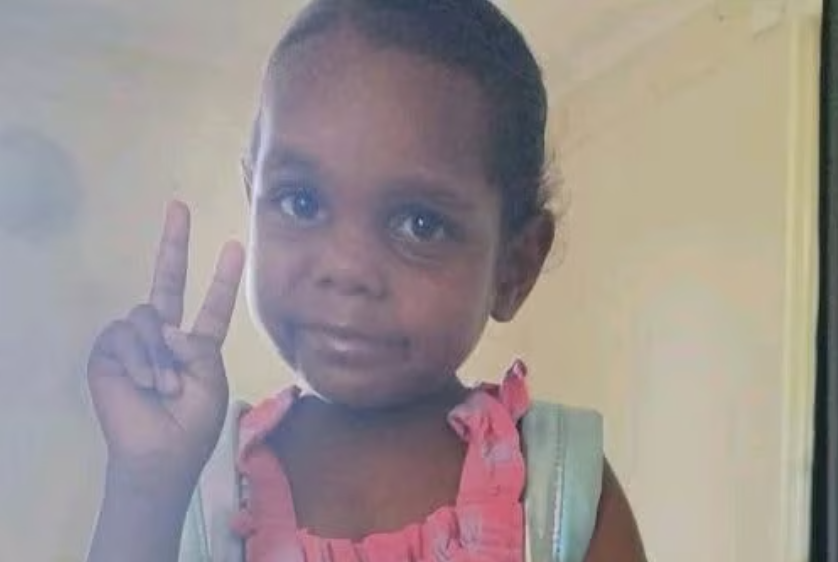
During one session, we sat together in silence to hold space for community following the murder of Kumanjayi Little Baby, and while silence is often described as symbolic, this moment carried a different weight, grounded in a shared recognition that what we are confronting is part of a pattern that continues to define too many lives in Australia. What becomes clear in moments like this is that grief does not sit neatly with individuals or even with communities alone, because it is shaped and amplified by the systems that fail to prevent harm, respond too late, or withdraw too early, leaving people to carry the consequences long after the moment of crisis has passed.
This is the tension that sits at the centre of the work.
We continue to individualise both harm and recovery, even though the conditions that produce that harm are structural, predictable and, in many cases, preventable, which means that the burden being carried by children, families and communities is not only emotional, but systemic. It is from within that tension that a question continues to press itself forward, particularly in spaces where policy and practice intersect with lived experience, and where the gap between what we know and what we fund becomes increasingly difficult to justify.
When we see what it costs our young people, how can you ask us to justify costs?
This question persists because the current policy environment continues to demand that violence be translated into economic terms, requiring advocates, practitioners and communities to demonstrate return on investment and to quantify prevention in ways that can be weighed against competing priorities, as though the central issue is efficiency rather than responsibility. That framing becomes increasingly difficult to sustain when we sit with what children and young people are already telling us through their experiences, because those experiences do not present as contained or resolved, but instead move across time, shaping identity, safety and self-worth in ways that are both immediate and enduring.
What emerges from those accounts is not a picture of individual fragility, but a clear indication that systems are failing to intervene early enough, respond effectively enough, or prevent harm from taking hold in the first place, leaving children to absorb and interpret violence in ways that fundamentally shape who they become.
Recognising children and young people as victims in their own right is therefore not a matter of language, but a necessary structural shift that must reshape how systems are designed, funded and held accountable, because without that recognition, children remain positioned as secondary to adult experiences of domestic, family and sexual violence. This positioning has practical consequences, as it drives policy settings that delay intervention, fragment service responses and limit access to support, ultimately placing the burden of recovery onto individuals who were never meant to carry it alone.
If system prevention is to be understood as more than aspiration, then it must involve a redistribution of that burden, ensuring that systems are designed not only to respond to harm, but to interrupt the conditions that allow it to occur. This requires sustained investment in early intervention, in child-centred service design, and in coordinated responses that recognise the role of alcohol, gender norms, inequality and service fragmentation in shaping risk, while also ensuring that recovery is supported over time rather than treated as a short-term outcome.
The discussions that took place Brisbane reflect an awareness of this complexity, and a growing consensus that recovery and healing cannot sit solely with individuals but must be embedded within systems that are capable of responding to the full scope of harm.
Despite this, the question of cost continues to surface, often as a precondition for action rather than as one consideration among many, requiring prevention to be justified in terms that can be measured within budget cycles rather than in terms that reflect its broader social and human value.

While economic analysis has an important role to play in demonstrating the broader impacts of violence across health, justice, housing and productivity, it does not capture the full reality of what is at stake, nor does it adequately account for the long-term consequences of inaction.
The reality is that Australia remains a country in which children carry the imprint of violence across their lives, and in which the trauma associated with that violence continues to shape communities in ways that are both visible and unseen, while the systems designed to prevent harm remain underdeveloped, under-resourced and too often reactive.
In that context, the language of return on investment begins to feel insufficient, because it cannot fully capture what it means for a child to grow up in safety, or for a young person to move through the world without the enduring impact of violence shaping their sense of self.
It also cannot capture what it would mean to build systems that assume responsibility for prevention, rather than leaving individuals, families and communities to carry the consequences of systemic failure.
These are not questions that can be meaningfully resolved through financial modelling alone, because they are fundamentally about responsibility, about values, and about whether we are willing to build systems that reflect what we already know.
What we know is clear, and it is supported by both evidence and experience, as children experience violence directly and profoundly, early intervention changes outcomes, and systems that recognise children and young people as victims in their own right are more effective, more responsive and more just.
What remains uncertain is not the evidence, but whether we are willing to act on it without requiring that it first be translated into a financial equation.