

The Panama Papers have been all over the news this week, and they’re not about to go away.
For women, what the papers reveal is an issue we should be closely following, one that’s at the heart of the fight for gender equality.
So what’s it all about? Below we offer an explainer.
Please explain what the Panama Papers are?
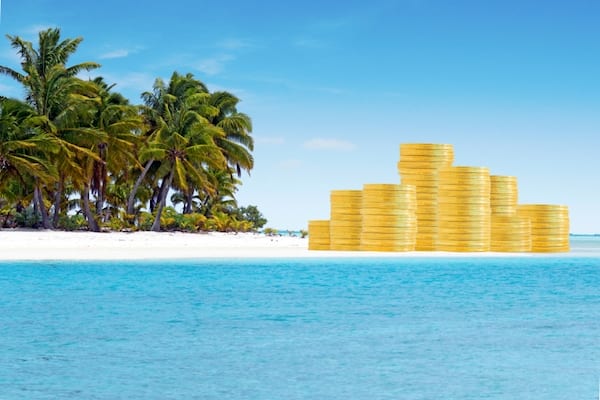
The Panama Papers are the biggest ever data leak, made up of a whopping 11 million files, revealing how thousands of members of the global elite have stashed their money in offshore bank accounts in Panama, to evade tax.
These records come from law-firm Mossack Fonseca, just one of hundreds of similar firms enabling the world’s tax havens. So, the Panama Papers are just the tip of the iceberg, offering a glimpse at how trillions of dollars are siphoned out of national economies by the very people who are meant to be growing those economies.
Right. That’s bad. So why should women care?
The Panama Papers, and global tax evasion, is a feminist issue.
Tax evasion by the global rich allows for a chasm between rich and poor. And in every country in the world, economic inequality amplifies gender inequality.
Whether we’re talking women in developing countries or here at home, the pattern is the same. In every country in the world, women are the most disadvantaged, giving them less opportunities, and making them more vulnerable to violence and exploitation.
So how does this play out in Australia?
Around $8.7 billion is taken out of Australia’s tax-pool through corporate tax evasion alone, before we chuck in wealthy individuals. We know that more than a third of Australia’s top corporations are paying no tax. This leaves our essential services woefully underfunded. These services are critical to Australian women’s health and safety.
Imagine how far that $8.7 billion could go in tackling some of our national epidemics affecting women, like family violence, mental illness and chronic disease.
Imagine if some of those billions were invested in education, a great leveller that helps reduce gender inequality.

Imagine if we could invest that money in Aboriginal women, some of the most disadvantaged on the planet, helping them out of poverty, abuse and imprisonment.
And those are just the budgetary implications of tax evasion. Let’s look at the bigger picture: tax evasion means that income redistribution fails, creating a wider gap between rich and poor. We know that social inequality creates all manner of problems, from the social (crime, gendered violence, substance abuse) to the economic (lower GDP), to the cultural (low social cohesion and trust).
All of these effects are amplified for women, because disadvantaged women have the least resources and opportunities. And with fewer resources, women lose their independence and control over their lives.
A huge proportion of the problems facing Australian women can be traced back to tax evasion. Let’s take just one example: the housing affordability crisis. Australian women take home less pay and have fewer savings, which doesn’t mix well with the nauseating price of rent and mortgages. No one wants to live with their parents into their thirties, or be forced to share a flat in your fifties just because you didn’t find the right person to partner up with.
And yet, there’re 90,000 empty houses in Sydney, the heart of the affordability crisis. Who owns these houses? Well, possibly some of the same people whose pocket-money is conveniently tucked away, tax-free, in far-flung islands like Bermuda, or hidden by savvy accountants in a web of numbers in migraine-inducing spread-sheets.
These examples are just a microcosm of what the siphoning of wealth means for women worldwide. Trillions of dollars are being taken out of developing countries, leaving many in a perpetual cycle of poverty and war. This is the backdrop for global gender inequality and gendered violence. Until we can reinvest this money in developing disadvantaged countries, we can’t hope to lift women out of poverty and violence.
We can’t hope to tackle the global refugee crisis, either, which is fuelled by this same corruption-poverty-war cycle. Let’s not forget that half of the 43 million refugees in the world are women, and 41% are children.
So what can I do about it?
Here’s a quick check-list of what the Australian government could do to help:
· Crack down on Australian corporations who’re avoiding paying company tax.
· Stop talking about lowering the company tax rate from 30% to 25% when a third of companies are already only paying 10%.
· Back global efforts to close tax loopholes.
· Repair the budget shortfall by chasing unpaid corporate tax, and do not re-enter debate on increasing taxes on poorer Australians, like the GST.
President Obama is calling for international tax reform as a result of the Panama Papers. But Malcolm Turnbull hasn’t said a word, despite the 1000 Australian links, including Wilson Security, who’s receiving millions of taxpayer dollars in government contracts (one of which is running our offshore detention centres).
If women are hurt the most, then it’s our job to let our elected representatives know that this is a priority. We can vote for parties taking a stand on tax evasion, and stop voting for tax policies that will hit poor Australian women. With an election around the corner, and the full Panama Papers being released in May, there’s never been a better time.