

Content warning: Aboriginal and Torres Strait Islander peoples are advised that this story is about a person who has died.
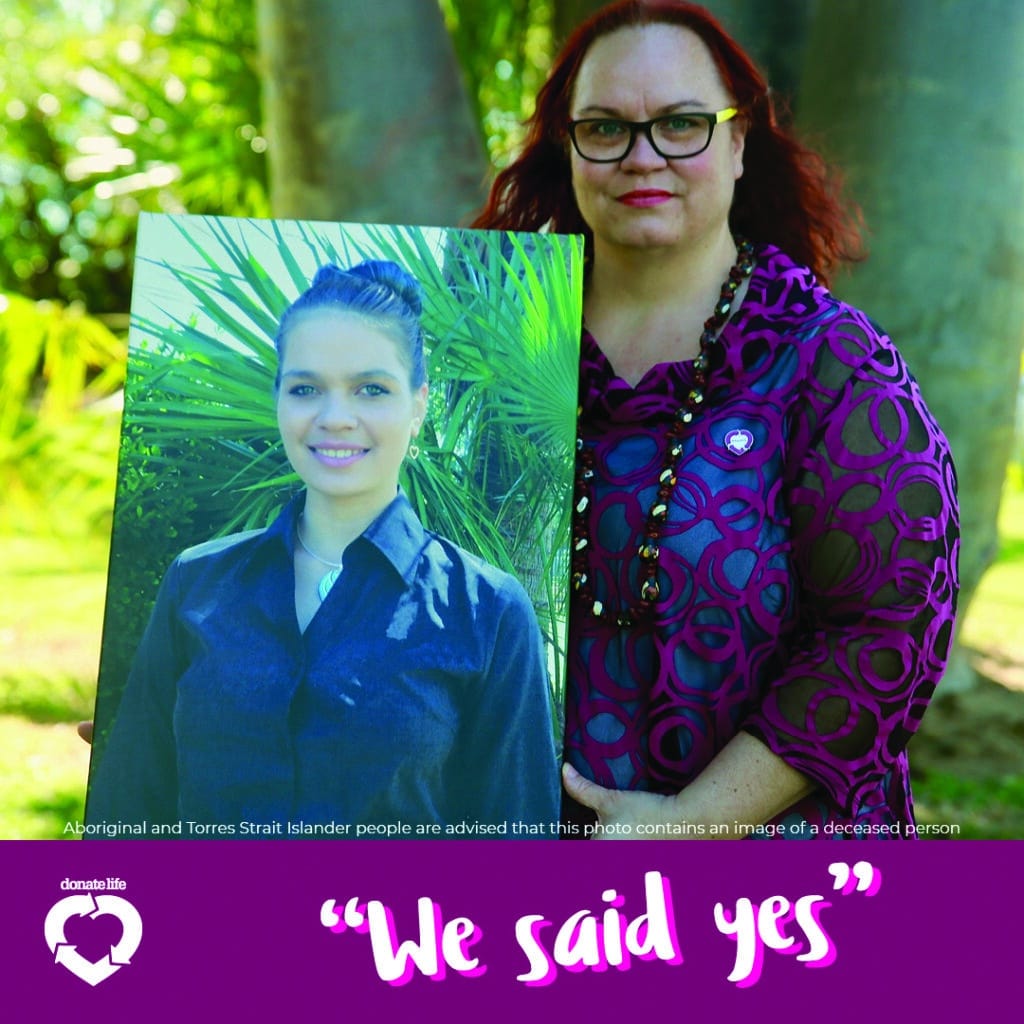
When Rowena Alexander’s 20-year-old daughter Macaiah died suddenly in 2018, her family found themselves dealing with unimaginable pain and grief.
Losing their daughter at such a young age wasn’t something the family had prepared for, and it also meant they had never gotten around to having any conversations about organ donation.
“Although I knew my own wishes about organ donation, I had not actually asked my three children because they were so young,” Rowena, a proud Gooniyandi and Ngarringman woman, tells Women’s Agenda.
“And then you hear the words, ‘There is no hope’. She’s not coming out. This is it. Time to say goodbye.”
When the family were asked at the hospital by medical staff whether they wanted Macaiah to undergo testing to see if organ donation was a possibility, it wasn’t an easy decision.
Rowena said she wasn’t initially on the same page as Macaiah’s father and it took some discussion before they reached a decision.
“We sat in a room and we weren’t on the same page… that’s the reason why I want people to have the conversation because you don’t want to be in that position ever,” she says.
Eventually, the family agreed that Macaiah would undergo the tests. The decision was then made to donate Macaiah’s kidneys and lungs, which went on to help three people.
“This is the only positive thing that came out of our tragedy,” Rowena says.
“Now that I know that there’s three ladies out there living their life, how could we have made any other choice?”
According to DonateLife, there are currently around 2,000 people waiting for a transplant. There are also a further 14,000 on dialysis due to kidney failure who may need a kidney in the future.
Organ donation in Australia
In Australia, only two per cent of people die in a way that makes it possible for them to donate their organs. Macaiah was one of those people.
Rowena says she tapped into her daughter’s generous spirit when making the decision. Macaiah was the kind of person who would give someone the shirt off her back if she thought they needed it more than she did, Rowena said.
“In what scenario? In what world would she say no?” Rowena says. “I just have to believe that.”
For Rowena, the experience reinforced how important it is to have conversations about organ donation earlier, including with young people.
“It’s just so important, regardless of what age your kids are,” she said.
She has since had those conversations about organ donation with her other children.
As a First Nations woman, Rowena is passionate about opening up the conversation around organ donation in a way that is culturally sensitive.
“We don’t like talking about death if we don’t have to because we’re already living the cycle of grief every day,” Rowena says.
“But there’s no right or there’s no wrong in this… It’s up to that family and that individual.”
Anyone in Australia aged 16 and over can register as an organ and tissue donor. It only takes one minute, and has the potential to change lives. After you’ve registered, it’s important to tell your family you want to be a donor.
This conversation can go a long way to easing the burden of indecision for your family during a difficult time.
It’s now been eight years since Macaiah’s death, and Rowena says she often thinks about the people who are now able to live their lives fully because of her daughter.
“That’s my daughter’s legacy. She gave life to these people,” Rowena said.
“I have these silhouette images of them in my mind. I know one was a grandmother, so I have a vision of this older person sitting on the ground playing with her grandkids. Someone else went back to work and someone else travelled.”
Find out more about organ donation at donatelife.gov.au.
It only takes one minute to register as an organ and tissue donor at donatelife.gov.au or through Medicare. Then, tell your family you want to be a donor.