

Only two Australians made Fortune’s 2016 list of the World’s 50 Greatest Leaders. The fact they’re both female is significant.
What’s also significant is the fact they’re not politicians, nor typical business leaders, celebrities or rich-listers.
They’re not of the “pale, male and stale” generation — those men, usually in their fifties and sixties, who tend to dominate the boardrooms of corporate Australia.
And the leadership they’re commended for has not arrived through privilege or birthright, or money, or even through connections.
Indeed both of these women are agents of change. They’re not acting as leaders to fulfil a personal ambition for power, but rather to help see a significant shift in the areas they are personally committed to transform.
The two Australian women are Rosie Batty, who takes the number 33 spot on the list, and Mina Guli, the chief executive of Thirst who takes the 45th spot. They’re interesting and compelling choices, given most people across the world would fail to recognise them.
But the objective of this list — which makes it so refreshing from the usual lists we see — is not to profile the loudest, most glamorous or those with the most access to power. Rather, it’s to highlight those who are genuinely using leadership to inspire and enlist others on their missions for change.
As the list authors write: “We recognise those who are inspiring others to act, to follow them on a worthy quest, and who have shown staying power.”
Not one US president hopeful makes the list, not even the loud and obnoxious man of the moment, Donald Trump. As the editors state, having the power and the resources to apply for the “world’s top job” doesn’t make someone a great leader.
Batty, our 2015 Australian of the Year, has been commended for her work raising the awareness of family violence in a country, “where one in five women has experienced sexual assault after the age of 15.”
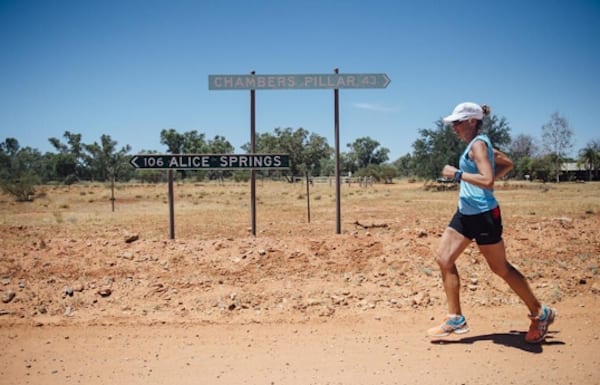
Gully, meanwhile, has been acknowledged as a former corporate lawyer turned activist who launched Thirst to educate people on water conservation. On World Water Day on March 22, Guli completed her incredibly ambitious mission to run 40 marathons across seven deserts and seven continents in seven weeks

Number one on the Fortune list is Amazon chief executive Jeff Bezos, followed by German Chancellor Angela Merkel and National League for Democracy leader Aung San Suu Kyi. There are five women in the top ten, including executive secretary of the UN Framework Convention on Climate Change Christiana Figures, US Supreme Court Associate Justice Ruth Bader Ginsberg and Bangladesh PM Sheik Hasina.
Also on the list is Reshma Saujani, the founder and CEO of Girls Who Code, who takes the 20th spot for the work she’s doing to inspire more women and girls into technology careers. By the end of 2016, more than 40,000 girls will have completed training and internship programs with Girls Who Code
Saujani, like Batty and Guli, are great examples of leadership that’s not about ego or power – nor about climbing a ladder towards the top position in an organisation or country. But rather about genuinely leading a movement that can address a specific global challenge.