
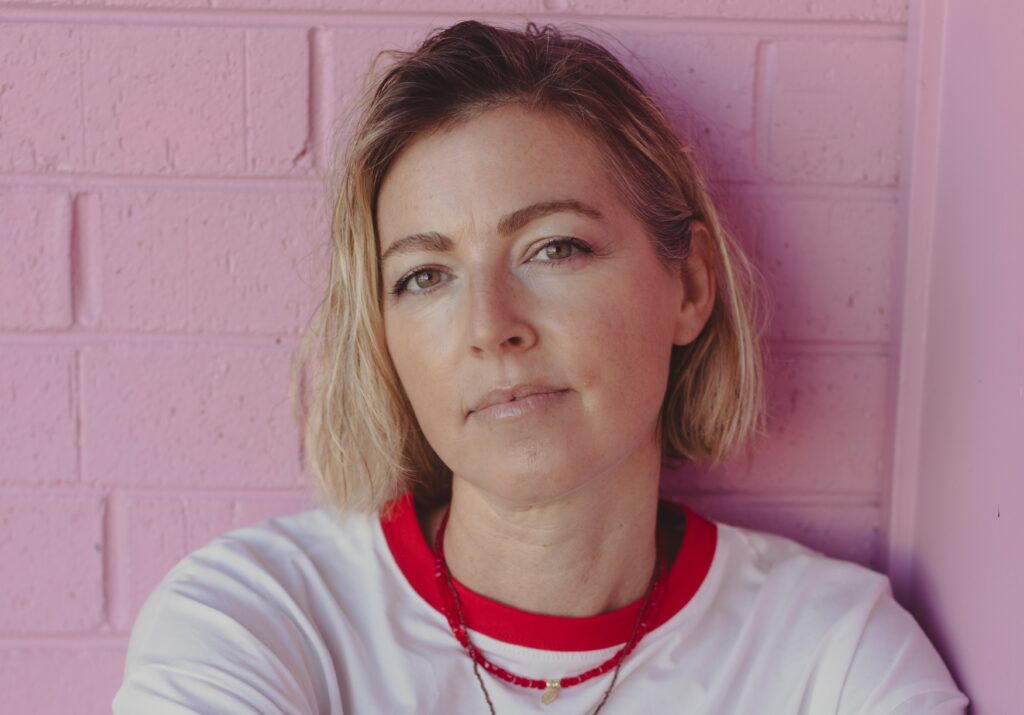
Author Naima Brown knows how the Tate brothers might fare in one of her novels. She writes about harnessing women’s rage as an organising force – a force that can withdraw consent, money, labour, attention, participation and more.
I’ve been asking a lot of women how they feel about Andrew & Tristan Tate’s recent arrest.
For the most part, they report a cynical, reluctant sense of what I have been thinking of as ‘micro-justice’ – a small taste of justice, but not the whole, nourishing meal we are hungry for.
Gone are the days where an arrest is worth our celebration or our hope. Too often, the legal process is just the beginning of a whole new trauma cycle for victim-survivors.
Yes, it’s good that these violent misogynists have been arrested. But do we trust the legal system to protect their victims or keep us safe? We are too full of rage to celebrate ‘micro-justice’ anymore…and that rage just might save us.
I use the word rage and not anger intentionally. I get angry when I stub my toe, or when the lights are too bright. But rage is cumulative. It is rooted in pattern recognition and the collection of data that points to deep injustice.
Consider these statistics: In Australia, one in four women has experienced physical or sexual violence from an intimate partner since the age of 15. In 2024–25, 32 women were killed by an intimate partner, meaning a woman was killed by her current or former partner approximately every 11 days.
And this is the part I cannot reconcile: we know. We know what is happening, and we have spent decades building laws, policies, inquiries, royal commissions, national plans and awareness campaigns around it.
Since the first National Plan in 2010, more than 1,000 recommendations have been made across royal commissions, inquiries and taskforces. And yet, as the Domestic, Family and Sexual Violence Commission reported in 2025, Australia is still not making anything like the progress we need to end violence against women and children. The system is broken.
In my creative life as a writer, I am processing this rage through the art of the revenge fantasy.
In the pages of The Shot and Mother Tongue, my female characters have raged against their constraints, real and imagined. But it is in the Squad Series, beginning with The Cruise, that I’ve really let myself and my readers swim in those darker waters. Here, rage becomes vengeance. We allow ourselves to choose violence in the name of self-preservation and protection.
The Squad are a global network of women united by one common thread: they have survived male violence. And in the Squad, there is one cardinal rule: if one member calls a mission, the others join. The first mission takes place on a reality show called The Cruise, where producer Bailey has decided to cast a very bad man from her past as a contestant so that she, alongside members of the Squad, can take him down. Very bad things befall the very bad men in The Cruise.

As I write these books, I am also imagining what this looks like in the real world – where I am not, in any way, advocating for violence – How might we wield our rage in a way that galvanizes, activates, and effects change? Is women’s rage an untapped natural resource, and if so, how do we tap it?
There is no easy answer to that question, but I am learning that step one is to stop asking women to be patient. We have been playing nice for long enough. We have marched. We have petitioned. We have testified. Nice hasn’t kept us safe. Patience hasn’t kept us safe. And hoping the system will eventually fix itself is not a strategy for survival.
So perhaps the next step is rage. Rage as a political force. Rage that refuses to cooperate. Rage that withdraws consent, money, labour, attention and participation. Rage that organises. Rage that boycotts. Rage that protests. Rage that calls out the institutions failing us and refuses to let them look away.
And if we are going to do that, we must first listen to the women who have been raging about this for generations, particularly Black and Indigenous women around the world, whose communities have experienced the violence and indifference of these systems most acutely. Those of us, like myself, operating from a place of relative safety and privilege should not arrive with answers.
I don’t want a prettier version of the same system. I don’t want another campaign telling women how to recognise violence, another hashtag, another candlelight vigil, another report that sits on a shelf while another woman dies. I want consequences. I want us to become such a relentless nuisance that business as usual becomes impossible.
I want us to learn to play our rage like an instrument. I want us to learn its full range: the low hum of refusal, the sharp note of protest, the deep bass of collective action, until together we make a noise loud enough to shake the institutions that have spent generations asking us to be patient.
Because I don’t think our rage is the problem. I think our willingness to suppress it has been part of the problem. What might happen if we finally learned how to use it? I know how the Tate brothers might fare in one of my novels. In the real world, though, I want something better than revenge: I want consequences for perpetrators, and justice for victims.
Naima Brown’s new book, The Cruise, is out on September 29. Find out more here.